
 English
 简体中文




A homeowner with rooftop solar switches off the oven, glances at the meter box, and watches the register digits creep down instead of up — or, on an older meter, sees the metal disk spinning the wrong way. The first questions are always the same: is the meter broken, did the installer wire something incorrectly, and will this show up on the bill?
Here is the short answer up front: only older electromechanical meters — the kind with a rotating aluminum disk — can physically run backwards. Electronic and smart meters never do. They record imported and exported energy in separate registers, ignore export entirely, or raise a reverse-energy warning. Backward rotation is not a secret credit; it is a signal that the metering arrangement no longer matches how power actually flows at the property. What that means for billing, compliance, and safety is where the details matter.
Why a Spinning-Disk Meter Physically Runs Backwards
The traditional meter most people picture is an induction meter, often called a Ferraris-type meter. Inside, a voltage coil and a current coil generate magnetic fluxes that induce eddy currents in a conductive aluminum disk. The interaction between the fluxes and those eddy currents produces a torque proportional to the real power passing through the meter. Reverse the direction of power flow, and the torque reverses with it — the disk turns anticlockwise and the register counts down.
A disk meter is, by design, direction-agnostic. It measures the net power at its terminals and cannot tell import from export. When a photovoltaic array produces more than the household is consuming, the surplus flows outward through the meter, and the disk responds by turning backwards. Many older designs shipped without any anti-reverse ratchet, so nothing stops the countdown. Some units did include a ratchet or a mechanical stop near the register zero, which is why a few old meters freeze instead of counting down indefinitely. And yes, the trick of physically mounting a meter upside down to reverse it is as old as the technology itself — one of the reasons utilities added ratchets, lead seals, and inspection routines over the decades.
If you want the full mechanism in one place, this explanation of how an electricity meter works covers the induction principle and its electronic successors step by step.
What Digital and Smart Meters Do Instead
Electronic meters have no disk to turn. They sample voltage and current thousands of times per second, compute power in firmware, and accumulate the result in registers. Direction is still detected — the metering chipset knows which way current is flowing — but the response is a bookkeeping decision rather than a mechanical one. Depending on the model and configuration, three behaviors are common:
- Import-only registers: the meter ignores exported energy, so the display simply holds still or climbs slowly while solar covers the on-site load.
- Separate import and export registers: the meter logs both directions, which is what feed-in tariffs and net billing schemes require.
- Reverse-energy flags: when current flows opposite to the meter's configured wiring direction, the LCD may show "REVERSE" and the event is written to the log. This is a diagnostic for wiring faults or tampering, not a display glitch.
That last behavior confuses a lot of people, so it is worth pausing on. A reverse indication on a modern meter usually means the current direction contradicts the meter's configured orientation — swapped line and load terminals, reversed CT polarity on a three-phase supply, or generation connected on the wrong side of the metering point. The instrument is not broken; it is reporting that the installation does not match its configuration. The bidirectional function of a smart power meter explains how import and export are tracked and settled in practice.
Meter Behavior Under Solar Export, Compared
| Meter type | Can it run backwards? | What happens to exported kWh | Typical outcome |
|---|---|---|---|
| Electromechanical disk meter | Yes, in most designs | Deducted from the import register as the disk spins backwards | Unintended net billing; usually treated as a fault once the utility notices |
| Basic electronic meter (import-only) | No | Ignored, or in some firmware counted back as import | Export goes unrecorded or is billed incorrectly; a replacement is needed |
| Bidirectional electronic or smart meter | No | Logged in a dedicated export register | Accurate feed-in or net-metering settlement |
Backwards Rotation, Billing, and Compliance
The billing problem is straightforward. Backward rotation nets export against import at the retail price, effectively letting a property pay only for the difference. Some of the earliest residential solar installations operated this way by accident, and utilities generally do not accept it: an import register that goes down is indistinguishable, from the billing system's perspective, from a metering fault or deliberate interference.
The compliance side is quieter but more consequential. Connection agreements for embedded generation typically require approved export metering before a system is commissioned. If a meter is found running backwards, the utility can re-estimate consumption, replace the meter at the owner's expense, or in some markets treat the situation as a breach of the connection agreement — with civil penalties possible in a few jurisdictions. Backward rotation itself is normally not a criminal matter, but the costs and administrative hassle land squarely on the property owner. In markets rolling out smart metering, installers are increasingly expected to arrange a compatible meter before energizing the array, a lesson several early solar markets learned the hard way.
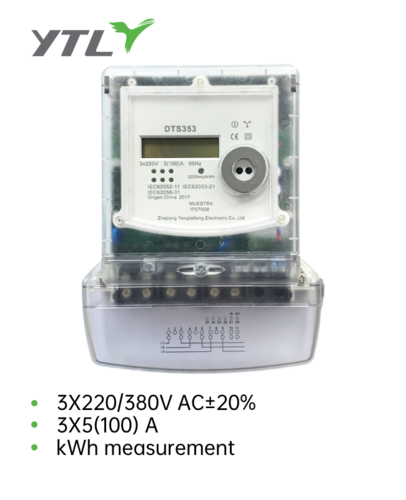
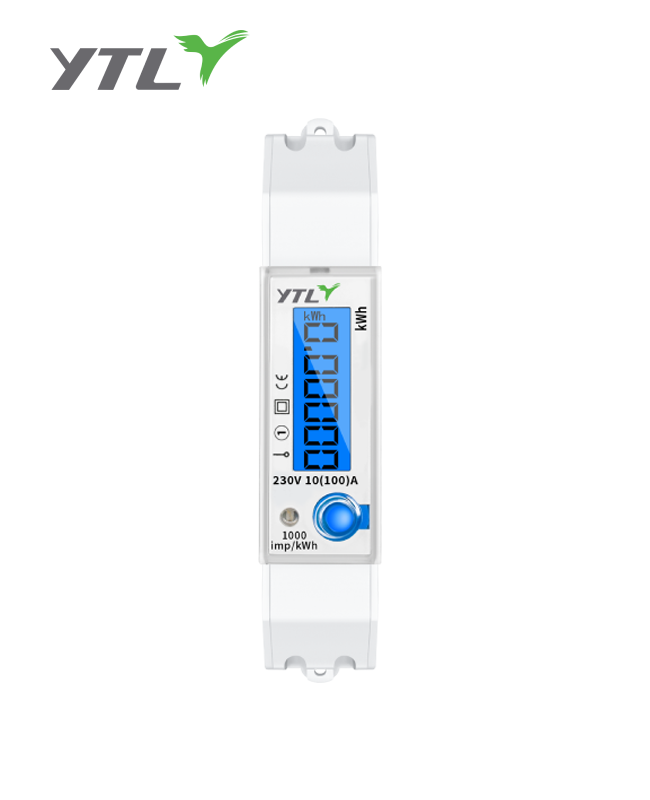
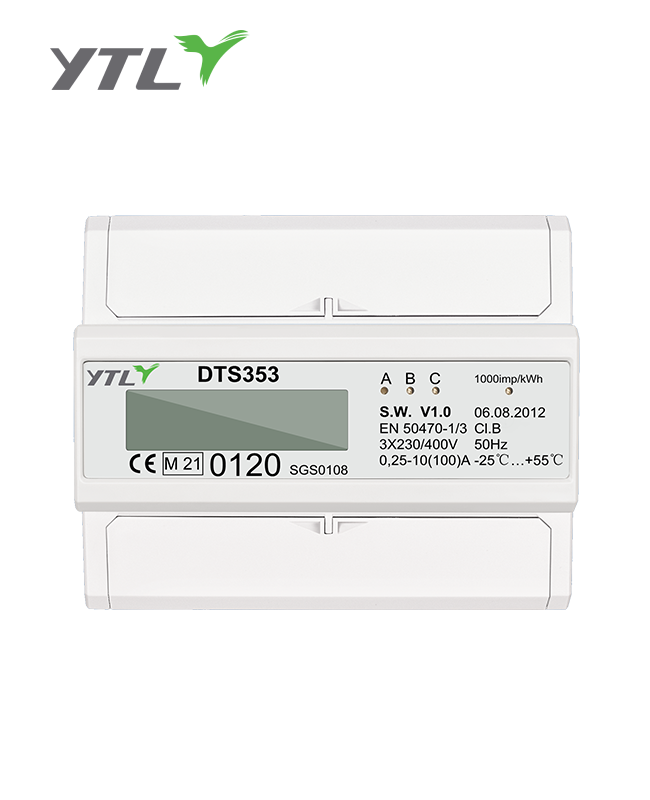
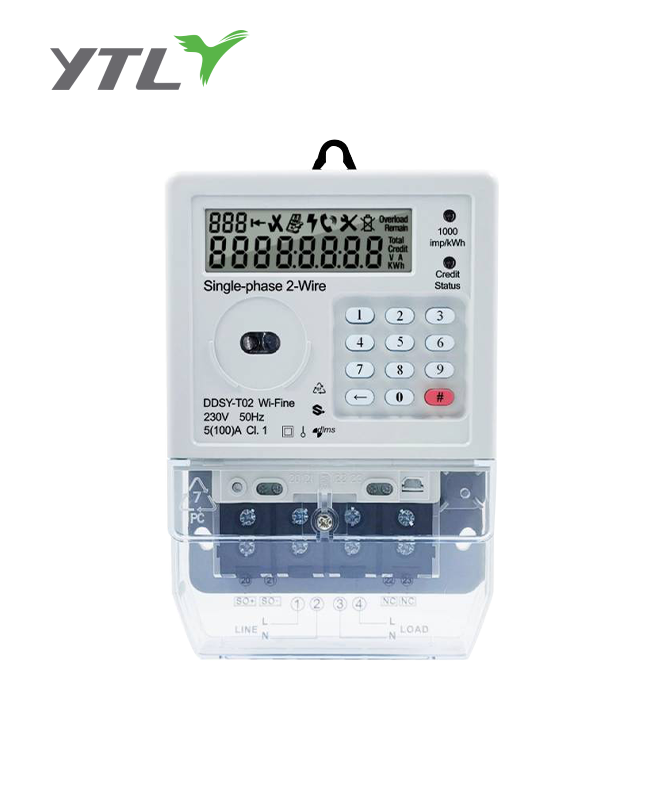
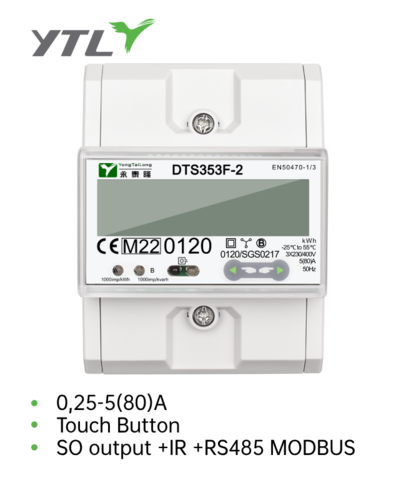
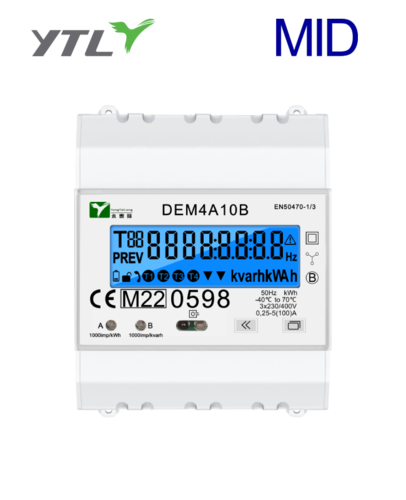
Purpose-built hardware exists for exactly this situation. An export-ready bidirectional energy meter keeps clean, separate totals for each direction of flow — what retailers need to pay feed-in credits, and what an owner needs to prove actual generation during a dispute.
When Reverse Movement Signals a Fault Instead
Backwards rotation without any generation on site is a different story entirely. The usual suspects are swapped incoming and outgoing conductors at the meter, reversed CT polarity on a commercial three-phase supply, or downstream miswiring that lets current loop through the measurement circuit. Odd registrations on temporary supplies — caravan posts, construction connections, RV pedestals — frequently trace back to this kind of wiring error rather than to the meter itself.
Three simple checks narrow it down:
- Switch off the solar or generator and watch whether the disk still turns backwards or the register keeps dropping.
- Run a known load, such as a heater, and confirm the register advances by roughly the expected amount over an hour.
- Ask the utility to test the meter or send a technician; never open terminal covers or break meter seals yourself.
Practical Steps for Homeowners and Project Buyers
For homeowners with rooftop solar
- Identify the meter type. A spinning disk means an electromechanical unit; an LCD with push buttons means an electronic model.
- If you have PV and a disk meter, notify your utility and request a bidirectional or smart replacement rather than relying on the legacy install.
- Ask how export is settled — feed-in tariff, net metering, or not credited at all — and confirm the meter configuration matches that scheme.
- Keep records of generation and export so any billing query can be resolved with data instead of estimates.
Net-metering schemes in particular depend on hardware that records both directions; this overview of net metering with a renewable energy meter walks through how the settlement works end to end.
For project buyers and facility managers
Procurement is where this problem is cheapest to prevent. Any site with solar, battery storage, EV charging, or other on-site generation should specify bidirectional metering in the tender: separate import and export registers per phase, event logging, and certification appropriate to the target market, such as MID in Europe. A meter selected for a purely one-directional grid connection will underperform the moment power starts flowing the other way, and retrofitting mid-project costs far more than specifying it correctly at the start.
An electricity meter running backwards is a legacy-mechanical behavior meeting a modern power-flow reality. Disk meters count net energy and can spin either way; electronic meters log direction instead. Treat backward rotation as an upgrade prompt and a wiring question — never as free electricity — and match the meter to the direction of power flow, because properties that both import and export are quickly becoming the norm rather than the exception.
As a manufacturer of single- and three-phase metering for solar PV and storage, EV charging, and distributed-generation applications, YTL builds bidirectional and net-meter-capable meters for precisely these two-directional installations — the hardware side of turning a backwards-spinning legacy meter into a settled, auditable export account.