









1. What changed on 17 July 2026?
On 17 July 2026, the European Commission adopted COM(2026) 600, a proposal to amend Regulation (EU) 2019/943 on future-proofing electricity bills through lower system costs, electrification and digitalisation. It is a legislative proposal in the ordinary legislative procedure, not an enacted regulation, national rollout order or meter procurement notice.
For AMI teams, the new value is specificity. The proposal would connect smart-meter deployment, smart-grid indicators, grid-data exchange, time-of-use network charges and flexible connections in one electricity-market framework. It therefore adds an operational policy signal to the Commission’s 3 June digitalisation and AI roadmap, which this page previously covered.
This update records the proposal accurately. It does not convert proposed EU targets into a binding purchase requirement, a common technical specification or an awarded programme.
2. The proposed smart-meter coverage targets
Proposed Article 18b would require Member States to deploy smart metering systems covering at least 50% of all final customers by 31 December 2030 and 75% by 31 December 2033. A Member State below 30% at the regulation’s entry into force would receive one extra year for each milestone: 2031 and 2034 respectively.
The draft also states that the cost-benefit assessment under Directive (EU) 2019/944 would apply only beyond the proposed 75% coverage threshold. These are Union-level coverage proposals. They are not a statement that every customer, project or utility will follow the same timetable.
A programme team should therefore treat the dates as planning context. It should still verify the final EU text, the national transposition or implementation route, the competent regulator, the distribution-system operator’s plan and the applicable utility specification before making commercial assumptions.
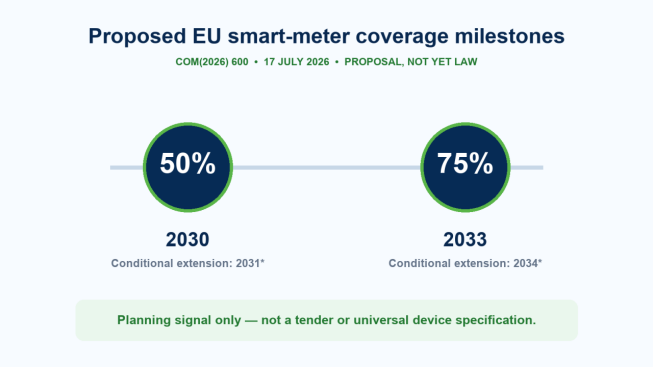
Figure 1. Proposed coverage milestones; the proposal is not yet law.
3. A proposal is not a tender, mandate or product specification
COM(2026) 600 is currently a Commission proposal under procedure 2026/0203(COD). Its final text can change during the legislative process. The proposal does not announce a meter quantity, a supplier award, a country-by-country deployment lot, a PLC, RF or cellular choice, an HES provider, or a single device certificate.
That distinction matters in supplier conversations. A coverage target can increase the need for programme planning, but it cannot by itself prove that a tender exists or that any meter model is eligible. Procurement scope, metrology, cybersecurity, communications, data protection, integration and acceptance remain project- and market-specific.
The correct commercial posture is to monitor legislation and national follow-through, then respond only to verified utility requirements or public procurement documents.
4. What the proposal does and does not standardise
The proposal would create a more structured Union framework for smart electricity-grid indicators, with ACER recommendations and Union-level progress reporting. It would also clarify an operational obligation for transmission and distribution system operators to manage and exchange grid data in a way that enables smart grids.
However, it does not remove the need for a project data model. The proposal does not itself publish a universal meter register list, a DLMS/COSEM object list, a firmware profile, a key-management scheme, a meter-test plan or a universal HES/MDM interface. Future implementing acts and national or utility requirements may add detail.
A practical AMI specification should continue to state data ownership, measured versus calculated values, timestamps, interval length, event definitions, quality flags, user roles, security responsibilities, export interfaces and the party that accepts each interface.
5. Grid data, dynamic tariffs and flexibility
The draft links better grid use with smart metering, smart grids and effective data exchange. It would require tariff methodologies to include time-of-use elements and encourages non-wire, smart and digital solutions, flexibility and storage where these support cost-efficient system use. It also addresses flexible connections and the treatment of congestion.
For a metering project, this is a design prompt rather than a meter feature list. If data will support time-based prices or flexibility, the project needs a clear tariff calendar, clock source, time-zone and daylight-saving treatment where applicable, interval definition, import/export convention, data-validation rules and handover to the responsible billing or market system.
A meter can measure and record the approved values. It does not decide tariff eligibility, calculate every regulated charge, validate an entire flexibility programme or grant grid access. Those outcomes are controlled by the applicable market rules and authorised parties.
6. Data centres, PV, storage and EV charging: the boundary remains important
COM(2026) 600 recognises that data-centre electricity use can put pressure on grids and tariffs. It states that tariff treatment for special user categories, including data centres, must remain cost-reflective, while location, time of use, flexibility, storage and clean generation can support more efficient integration. The text is policy direction, not a data-centre interconnection approval.
The same boundary discipline applies to PV, batteries and EV charging. Project teams should separate point-of-connection import/export, feeder loads, battery AC and DC boundaries, auxiliary consumption, charger input and any customer sub-metering. The authoritative data source for each commercial or operational purpose must be stated before hardware is selected.
Do not describe a monitoring meter as a settlement instrument, or a controller value as an independent measurement, unless the exact legal and technical scope has been confirmed.
7. A buyer workplan for an EU-facing AMI project
First, identify the actual market owner: Member State, regulator, utility or distribution-system operator. Second, check whether a final law, national programme, utility plan or procurement notice exists. Third, turn the intended use into a controlled requirements matrix before selecting a device.
The requirements matrix should include electrical configuration; connection method; required measurements and directions; load-profile and event needs; time and tariff behaviour; communications topology; protocol and data-object mapping; device identity and security; HES/MDM ownership; test cases; local approval route; and batch, pilot and handover evidence.
For multi-vendor work, document the interfaces before issuing an RFQ. ‘Protocol supported’ is not proof of end-to-end interoperability. Sample testing and version-controlled mapping are still needed.
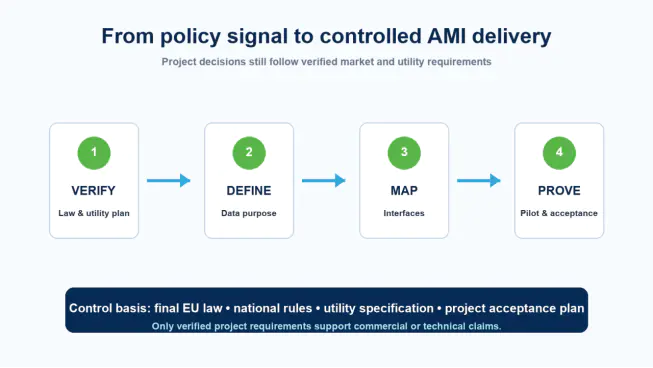
Figure 2. Translate a policy signal into a controlled AMI project workflow.
8. What to update on an existing AMI information page
This page should retain its June 2026 digitalisation-roadmap context and add a dated policy-status section for COM(2026) 600. The new section should state the proposed 50%/75% coverage milestones, the sub-30% extension condition, the proposal status and the absence of a universal procurement or device specification.
The update should link readers to YTL’s DLMS/COSEM integration guide, dynamic-tariff buyer checklist and rollout-acceptance checklist. These pages serve adjacent intent: interface mapping, tariff-related project preparation and field-to-HES acceptance. The canonical URL remains the existing Europe digitalisation roadmap page so that the topic does not split across near-duplicate URLs.
Avoid a second page targeting the same ‘Europe 2026 smart metering roadmap’ query. A standalone article is justified only if a final law, national implementing act, verified tender or a materially different user task emerges.
9. Where YTL fits – and the boundary
A project-fit discussion should begin with the utility or project specification, target country, electrical system, required registers and events, communications environment, protocol/data mapping, HES or MDM responsibilities, compliance route and pilot acceptance plan. YTL’s public smart-meter category can be used to locate product families for an initial conversation.
Exact model availability, ratings, communications options, firmware behaviour, certificates, destination-market suitability and platform interoperability must be confirmed for the selected model and project. A public policy proposal does not establish any of those facts. YTL should not be represented as approving grid connections, setting regulated tariffs, providing every AMI layer or guaranteeing HES compatibility without documented mapping and testing.
That boundary protects buyers as well as suppliers: the right next step is an evidence-led technical review, not a generic claim of Europe-wide compliance.
10. Frequently asked questions
Has the EU adopted a 75% smart-meter mandate? No. COM(2026) 600 is a Commission proposal. The 75% figure for 2033 is proposed Article 18b text and remains subject to the EU legislative process.
Does the proposal create a Europe-wide smart-meter tender? No. It does not publish quantities, suppliers, lots, a communications technology or a common HES requirement.
What is the proposed 50% milestone? At least 50% of final customers by 31 December 2030, or 2031 for a Member State below 30% at entry into force, according to the proposal.
Does a time-of-use tariff policy make a meter billing-approved? No. Billing, settlement and legal-metrology status depend on the applicable rules, the exact model and the approved project design.
Does DLMS/COSEM support prove interoperability? No. The project still needs the agreed objects, security settings, mapping, firmware configuration and end-to-end test evidence.
11. Official sources and status
European Commission, ‘Proposal for a Regulation amending Regulation (EU) 2019/943 – fostering electrification and digitalisation (COM(2026) 600),’ published 17 July 2026.
EUR-Lex, procedure 2026/0203(COD), recording the Commission proposal of 17 July 2026.
European Commission, Strategic Roadmap for Digitalisation and Artificial Intelligence in the Energy Sector, published 3 June 2026, for the earlier roadmap context. Sources accessed 21 July 2026.
