
 English
 简体中文
简体中文



Introduction to Smart Metering Evolution
The global electrical grid is undergoing a significant transformation, moving from traditional analog systems to a digitalized, interactive network known as the smart grid. At the heart of this evolution lies the smart electric meter. Unlike conventional induction meters that merely record cumulative energy consumption for manual reading, smart meters are high-precision electronic devices capable of two-way communication. These devices act as the primary sensory nodes for utility companies, providing real-time data on voltage, current, power factor, and frequency.
The transition to smart metering is driven by the need for better grid reliability, the integration of distributed renewable energy sources, and the demand for more accurate billing systems. For manufacturers and international distributors, understanding the technical nuances—from the internal measurement circuitry to the external communication modules—is essential for navigating different regional markets and regulatory requirements.
Phase Architecture: Single-Phase vs. Three-Phase Smart Meters
One of the most fundamental distinctions in the smart meter market is the phase configuration. This choice is dictated by the power supply infrastructure of the target installation site, whether residential, commercial, or industrial.
Single-Phase Smart Meters
Single-phase meters are the standard for residential applications and small commercial units. They operate on a two-wire system consisting of one live (phase) wire and one neutral wire. In most regions, these meters handle a standard voltage of 110V or 230V. The focus of single-phase smart meters is often on compact design, cost-efficiency, and basic anti-tampering features. Technically, they utilize a shunt resistor or a current transformer (CT) to measure current and a voltage divider for potential measurement.
Three-Phase Smart Meters
Three-phase meters are designed for high-load environments, such as factories, data centers, and large office buildings. They monitor four wires (three phases and one neutral) and are capable of handling much higher current capacities. Three-phase meters are significantly more complex because they must maintain accuracy across all three lines and often calculate total active energy, reactive energy, and apparent energy.
| Technical Feature | Single-Phase Smart Meter | Three-Phase Smart Meter |
|---|---|---|
| Typical Application | Residential / Small Office | Industrial / Large Commercial |
| Wiring Configuration | 1-Phase, 2-Wire | 3-Phase, 3-Wire / 3-Phase, 4-Wire |
| Voltage Range | 110V - 240V | 220V/380V - 240V/415V |
| Current Handling | Usually up to 60A - 100A | Up to 100A (Direct) or 5000A+ (CT) |
| Measurement Complexity | Active Energy | Active, Reactive, Apparent, Harmonics |
| Data Points | KWh, Voltage, Current | Per Phase V/A, Power Factor, Demand |
From AMR to AMI: The Communication Revolution
The term “smart meter” often refers to the communication capabilities of the device. There is a critical distinction between Automated Meter Reading (AMR) and Advanced Metering Infrastructure (AMI).
Automated Meter Reading (AMR)
AMR was the first step toward modernization. It is a one-way communication system where the meter transmits consumption data to the utility provider. This can be done via Walk-by, Drive-by (using short-range radio), or Power Line Communication (PLC). While AMR eliminates the need for manual entry, it does not allow the utility to send commands back to the meter, such as remote disconnection or firmware updates.
Advanced Metering Infrastructure (AMI)
AMI represents the current gold standard. It is a fully integrated, two-way communication architecture. AMI systems allow for real-time monitoring, remote tariff management, and demand-response programs. Through an AMI network, a utility can detect a localized power outage immediately without waiting for a customer to call. It also enables “Time-of-Use” (TOU) billing, where electricity prices vary based on the time of day, encouraging consumers to shift their usage to off-peak hours.
Measurement Technologies: Shunt, CT, and Ultrasonic
The internal sensing mechanism determines the accuracy class and longevity of the meter.
- Shunt Resistors: Commonly used in single-phase meters due to their low cost and DC immunity. However, they lack galvanic isolation and can generate heat at very high currents.
- Current Transformers (CT): These provide excellent isolation and are the standard for three-phase and high-current industrial meters. They are sensitive to external magnetic fields, requiring advanced anti-tampering designs.
- Rogowski Coils: Often used in flexible, high-end industrial meters for measuring large AC currents without the saturation issues found in traditional CTs.
- Ultrasonic Metering (Emerging): While more common in water and gas meters, solid-state ultrasonic sensing is being explored for specific industrial electrical applications to ensure zero wear-and-tear and extreme long-term stability.
Communication Protocols and Interoperability
The success of a smart meter deployment depends on the protocol used to transmit data. Without standardized protocols, utilities risk “vendor lock-in.”
- DLMS/COSEM (IEC 62056): The most widely accepted international standard for utility meter data exchange. It ensures that meters from different manufacturers can communicate with a single central system.
- NB-IoT and LoRaWAN: Low-Power Wide-Area Network (LPWAN) technologies are becoming popular for smart meters in rural or deep-indoor locations where traditional cellular signals are weak. LoRaWAN is often used for private utility networks, while NB-IoT utilizes existing mobile carrier infrastructure.
- PLC (Power Line Communication): Uses the existing power cables to transmit data. Modern G3-PLC and PRIME standards have greatly improved the reliability of this method in noisy electrical environments.
Power Quality Monitoring in Industrial Settings
Modern smart meters do more than count kilowatt-hours. In industrial sectors, power quality is paramount. Sensitive machinery can be damaged by voltage sags, swells, or harmonic distortions. High-end three-phase smart meters are equipped with Power Quality (PQ) analysis modules. These modules monitor:
- Total Harmonic Distortion (THD): Essential for identifying noise introduced by non-linear loads like variable frequency drives.
- Voltage Unbalance: Monitoring the balance between phases to prevent motor overheating.
- Event Logging: Recording the exact timestamp of power interruptions or surges for insurance and maintenance purposes.
Regulatory Compliance and Global Certifications
Exporting smart meters requires adherence to strict regional standards. These certifications ensure the meter is accurate, safe, and secure from cyber-attacks.
- MID (Measuring Instruments Directive): Mandatory for meters sold in the European Union. It ensures high metrological accuracy.
- IEC 62053-21/22: The international benchmarks for static meters for active energy.
- DLMS Certification: Verifies that the meter’s communication layer complies with global interoperability standards.
- STS (Standard Transfer Specification): The global standard for prepaid meters, ensuring that secure “tokens” can be used for electricity credit across different systems.
Cybersecurity in Smart Metering
As meters become connected devices, they also become potential targets for cyber threats. Security is typically handled through:
- Hardware Security Modules (HSM): Dedicated chips for storing encryption keys.
- Encryption Standards: AES-128 or AES-256 encryption for all data packets.
- Digital Signatures: To ensure that firmware updates come from the verified manufacturer and have not been tampered with.
The Role of Smart Meters in Renewable Integration
The rise of rooftop solar and electric vehicles (EVs) has turned consumers into “prosumers” (producers and consumers). Smart meters must now support “Net Metering.” This requires the meter to be bidirectional—measuring energy taken from the grid and energy fed back into the grid. Sophisticated smart meters can even communicate with EV chargers to pause charging during peak demand or prioritize charging when solar production is high.
Conclusion: Choosing the Right Meter for the Market
Selecting the appropriate smart meter technology involves balancing cost, accuracy, and communication reliability. While residential markets may prioritize low-cost single-phase PLC meters, industrial clients require three-phase AMI-enabled units with deep power quality analytics. As the world moves toward a carbon-neutral future, the smart meter will remain the indispensable link between the consumer and the sustainable energy grid.
FAQs (Frequently Asked Questions)
1. What is the main difference between a Class 0.5 and a Class 1.0 smart meter?
The class refers to the accuracy percentage. A Class 0.5 meter has a maximum error margin of 0.5%, making it more precise than a Class 1.0 meter (1% error). Class 0.5 is typically required for large-scale industrial billing, while Class 1.0 is standard for residential use.
2. Can a single-phase smart meter be used for a three-phase supply?
No. A single-phase meter only has one measurement element. A three-phase supply requires a meter with three elements (one for each phase) to accurately calculate the total power consumption across the unbalanced phases.
3. Why is DLMS/COSEM important for international export?
DLMS/COSEM is an international language for meter data. If your meter is DLMS-certified, it can be easily integrated into a utility’s existing Head-End System (HES) regardless of which software they use, significantly increasing marketability.
4. How does a smart meter help in reducing technical losses?
Smart meters provide real-time data on energy delivery. By comparing the energy sent from a substation with the total energy recorded by all consumer meters on that line, utilities can pinpoint exactly where “technical losses” (due to old wiring) or “non-technical losses” (due to theft) are occurring.
5. What is the lifespan of a modern smart electric meter?
Most utility-grade smart meters are designed for a service life of 10 to 15 years. This is largely determined by the longevity of the electronic components and the battery life of the internal Real-Time Clock (RTC) or communication module.
References
- International Electrotechnical Commission (IEC). IEC 62056: Electricity metering data exchange - The DLMS/COSEM suite.
- IEEE Standards Association. IEEE 2030.2: Guide for the Interoperability of Energy Storage Systems Integrated with the Electric Power Infrastructure.
- European Committee for Standardization (CEN). EN 50470: Electricity metering equipment - Static meters for active energy.
- U.S. Department of Energy (DOE). Advanced Metering Infrastructure and Smart Grid Reliability Reports.
- Standard Transfer Specification (STS) Association. STS Specification for Prepaid Metering Systems.
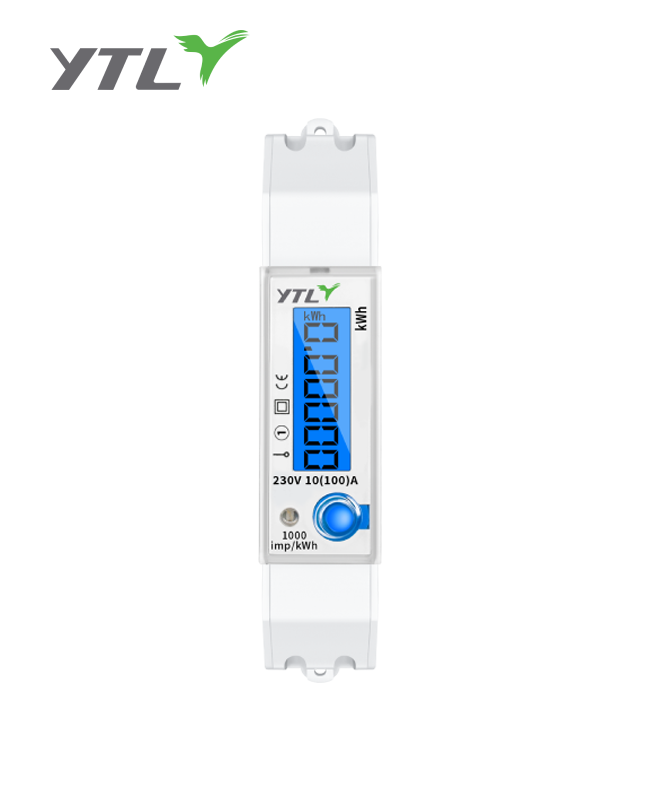
.png?imageView2/2/w/500/h/500/format/png/q/100 "YTL STS Prepaid Wi-Fine Energy Meter Single Phase Wall")
.png?imageView2/2/w/500/h/500/format/png/q/100 "YTL Two Phase Three Wire Big counter Electricity Meter")
.png?imageView2/2/w/500/h/500/format/png/q/100 "YTL China Single Phase IC card Prepayment Electricity Meter")
.png?imageView2/2/w/500/h/500/format/png/q/100 "YTL Single Phase Active Electronic Electricity Meter")