
 English
 简体中文
简体中文



At the entrance or corner of every modern dwelling, there is a device we overlook. It does not partake in our joy, nor intrude upon our sorrows, yet it records every moment energy passes by with utmost precision. The electricity meter – a stranger hanging on the wall – perceives the world in a way entirely alien to us. As we live within space, it counts in time; as we feel warmth, cold, light and shade, it logs watts and joules; as we drift into slumber, its mechanical or digital heart remains wide awake.

The Metaphysics of Mechanics
To observe a vintage induction electricity meter is to marvel at how it transforms abstract concepts into tangible motion. Electric current – an invisible, intangible physical phenomenon – drives an aluminum disk to spin steadily through ingenious electromagnetic design. This rotation is no meaningless circular motion, but visual proof of energy conversion. Each revolution corresponds to a specific amount of power consumption, much like a sundial projecting time as shadow, the electricity meter embodies energy as movement. This mechanical metaphysics grants even the ordinary household a miniature physics laboratory.
An Early Form of Digital Existence
Long before the era of big data, the electricity meter had already begun its work of data collection. It records not users’ behaviors, but the energy traces behind them – a lamp burning late at night reveals someone staying up, a continuously running refrigerator stores a family’s provisions, and the cycling of an air conditioner echoes the turning of seasons. These data involve no privacy, yet outline the contours of daily life. In a sense, the electricity meter is the earliest witness to our digital existence, documenting the energy lineage of modern life in the most unadorned manner.
Fairness on the Wall
The widespread installation of electricity meters marked the shift of energy distribution from privilege to right. Before their advent, power allocation was often rough and inequitable, charged by the number of light bulbs, room size, or conventional standards. The popularization of electricity meters introduced precise metering based on actual consumption, rendering energy usage transparent and fair. Every household only pays for the energy it actually consumes – a simple principle that embodies modern society’s relentless pursuit of fairness. Small as it is, the electricity meter is a material manifestation of the social contract.
The Enlightener of Energy Consumption Awareness
Our awareness of energy consumption often begins with gazing at that small box on the wall. Parents point at the spinning disk and say, “Look, electricity is flowing.” A child realizes for the first time that light is not a given, and warmth comes at a cost. Monthly electricity bills become a vivid lesson in economics and ecology. In the era of smart meters, this enlightenment grows more real-time and refined – we can track how much power the water heater consumes, when the air conditioner uses the most electricity, and which standby devices are quietly “draining power.” The electricity meter is no longer merely a metering tool, but an interactive interface for energy conservation education.
A Time Capsule of Technological Evolution
The design evolution of electricity meters mirrors a condensed history of technological progress. From exquisitely calibrated mechanical dials to full digital displays, from manual meter reading to automatic remote transmission, from unidirectional metering to photovoltaic feedback support, each generation of electricity meters crystallizes the technological features and aesthetic preferences of its era. Collectors seek meters from different periods not just to gather industrial artifacts, but to preserve historical slices of measurement technology. These silent devices bear witness to our increasingly precise understanding and management of energy flow.
An Envoy of Energy Democratization
Amid the rise of distributed energy, the electricity meter is taking on a new role. When households install solar panels, it records power generation; when electric vehicles become mobile energy storage units, it meters charging and discharging; when home microgrids take shape, it coordinates internal and external energy flows. No longer just a yardstick for consumption, the electricity meter has become an envoy of energy democratization – turning ordinary households from passive energy consumers into active energy producers and managers.
The Subtle Boundary Between Privacy and Transparency
The refined metering capabilities of smart meters have raised new ethical considerations. They can identify the characteristics of different appliances and infer household activity patterns; such data hold value for optimizing energy use but may also encroach on sensitive privacy areas. Striking a balance between transparency and privacy has become a key challenge in smart meter design. Future solutions may require tiered data access permissions, allowing users to decide what information to share and what to keep private, safeguarding personal space while enjoying intelligent services.
A Cross-Cultural Energy Translator
Across cultures worldwide, electricity meters carry similar yet distinct connotations. In regions with universal access to electricity, they are symbols of modernization; in areas facing energy shortages, they remind people of the virtue of conservation; in societies with strong environmental awareness, they serve as a visual interface for carbon emissions. Artists use electricity meters as a medium to explore consumer society, poets see the alienation of modern life in them, and engineers regard them as models of precision measurement. This functional device has unexpectedly become a multifaceted symbol connecting technology, culture and social relations.

The Silent Revolutionary
Looking back at the history of the electricity meter, we see a silent technological revolution. Born in the late 19th century from the need for precise measurement, it has evolved through mechanical, electronic and smart phases, and will integrate into the neural network of the energy internet in the future. Each transformation has made energy measurement more accurate, intelligent and integrated. The ultimate goal of this revolution is to help us build a new relationship with energy – from unconscious consumption to conscious management, from one-way extraction to two-way dialogue, from resource waste to civilized restraint.
Next time you pass the electricity meter on the wall, you may feel a new sense of respect. This unassuming device is not only a measurer of energy, but also a marker of modernity, a guardian of fairness, and an enlightener of conservation awareness. In its unique silence, it has participated in the entire dialogue between humanity and energy – from the initial awe of natural forces, to mastering electric power, to learning to coexist harmoniously with energy today. The electricity meter, the scale and eye of the energy world, will continue to watch as we write the next chapter of energy civilization.
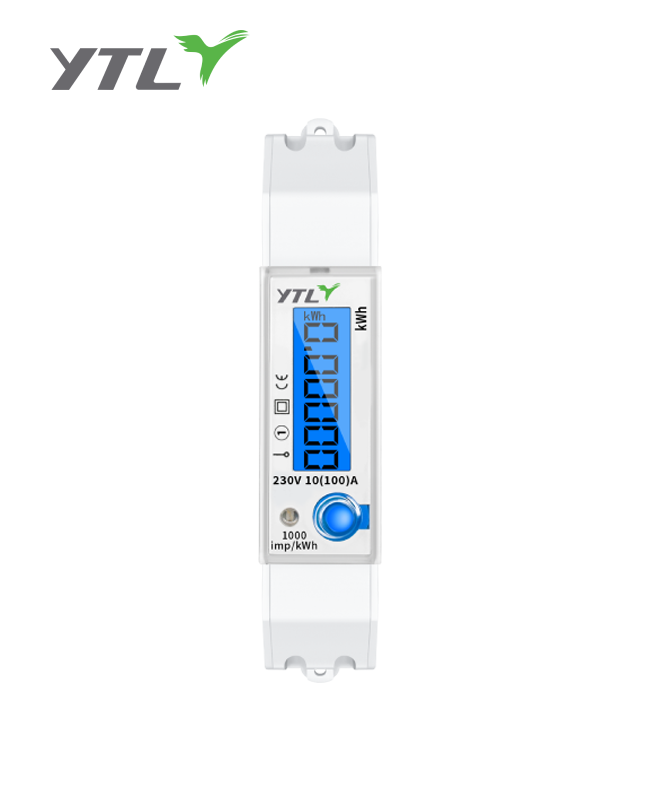
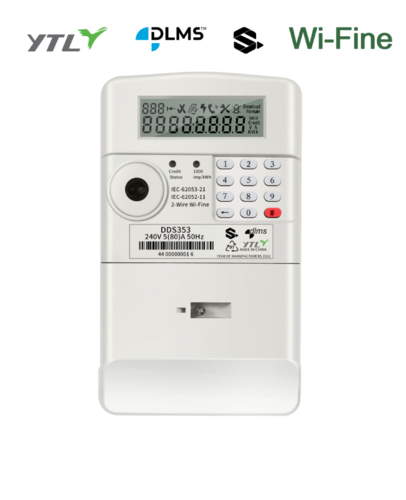
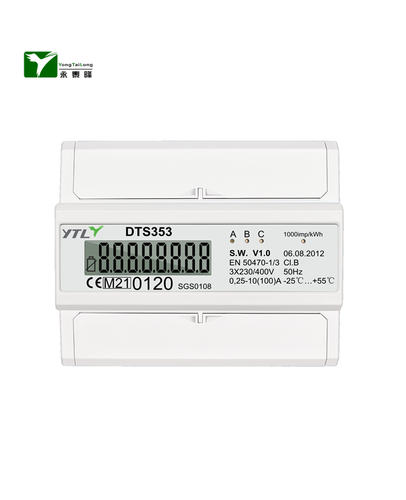
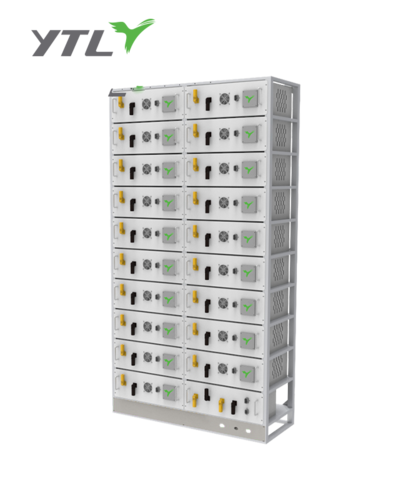
.png?imageView2/2/w/500/h/500/format/png/q/100 "YTL Two Phase Three Wire LCD Shunt sampling Energy Meter")
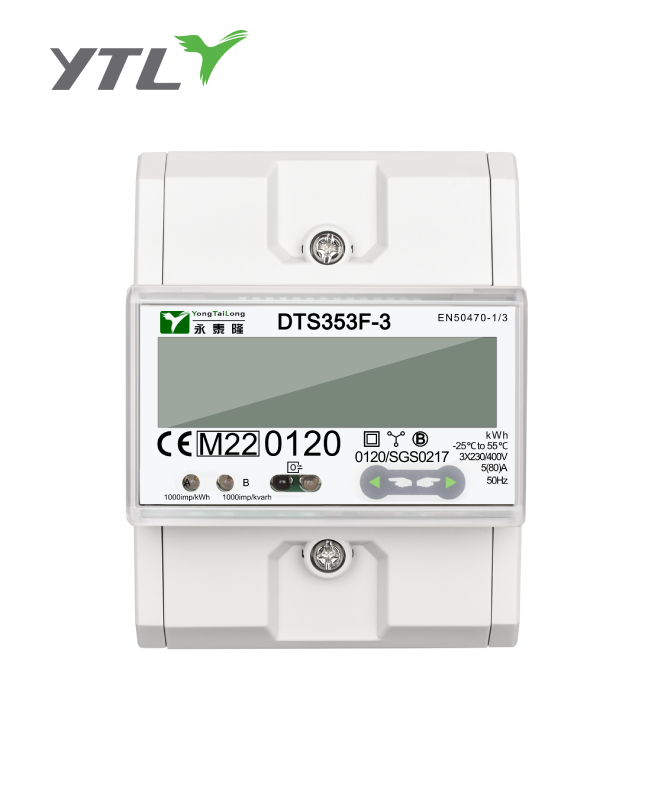
.png?imageView2/2/w/500/h/500/format/png/q/100 "YTL Two Phase Three Wire Big counter Electricity Meter")