Blog

Home / Information Activity / Blog / How to Choose an Energy Meter for EV Charging: AC, DC, MID and Modbus

How to Choose an Energy Meter for EV Charging: AC, DC, MID and Modbus

1. Introduction

Selecting an EV charging energy meter is a system-level decision involving AC or DC measurement, current sensing architecture, installation conditions, communication interfaces and protocols, and the intended application.

EV charging metering performance depends on electrical design, measurement boundary, sensing method and system integration rather than the meter alone.

2. Types of Energy Meters for EV Charging

EV charging energy meters can be categorized by measurement principle, sensing method and installation form.

2.1 Direct-connected energy meters

Direct-connected meters measure current through the meter’s internal terminals.

They are used where the charging current remains within the meter’s rated direct-connection range.

Selection considerations include:

  • Maximum current rating
  • Terminal temperature rise
  • Conductor size and installation conditions
  • Accuracy requirements

2.2 CT-operated energy meters

CT-operated meters measure current through external current transformers.

They are used where current exceeds the direct-connection range.

Selection considerations include:

  • CT ratio
  • CT accuracy class
  • Burden
  • Secondary wiring
  • Phase mapping
  • Complete meter-and-CT measurement-chain accuracy

2.3 Shunt-based DC energy meters

Shunt-based meters use a precision resistive element to measure DC current.

They are used in DC charging architectures where the shunt and metering electronics are designed as a matched system.

Accuracy depends on:

  • Shunt class
  • Temperature characteristics
  • Installation design
  • Calibration
  • Meter-shunt matching

2.4 Hall-effect sensing architectures

Hall-effect sensing uses magnetic field measurement to provide current signals for metering electronics.

Depending on design, it may provide galvanic isolation and bidirectional measurement.

Selection considerations include:

  • Offset drift
  • Temperature stability
  • External magnetic field sensitivity
  • Bandwidth
  • Isolation rating
  • Sensor-to-meter matching

3. AC vs DC Energy Meter Selection

3.1 AC energy meters

AC meters measure AC active energy at a defined point in an AC charging circuit or at the AC input of charging equipment.

They are widely used in residential, workplace, destination charging and commercial AC charging applications.

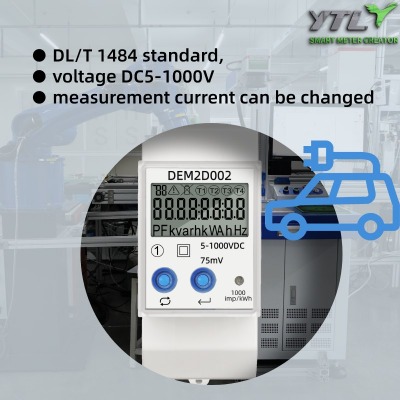
3.2 DC energy meters

DC meters measure DC energy at a defined point on the DC side of charging equipment.

They are used in:

  • DC fast-charging systems
  • DC or DC-coupled EVSE architectures integrated with energy storage, where DC-side measurement is required
  • Vehicle-side, output-side or internal DC energy measurement

DC and AC meters represent different electrical quantities and different energy boundaries.

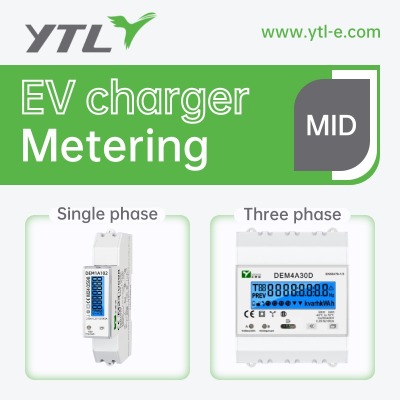
4. Single-phase vs Three-phase Selection

4.1 Single-phase meters

Used in residential EV charging and lower-power AC applications.

4.2 Three-phase meters

Used in higher-power AC charging where three-phase supply is available.

They are commonly used in commercial EV charging environments.

5. Meter Conformity Assessment, MID and MI-011

Where energy measurement is used for regulated billing, applicable legal-metrology requirements must be confirmed for the target market.

Under EU metrology rules, active electrical energy meters are covered under MI-003. Directive (EU) 2026/706 introduces MI-011 for measuring systems for EVSE.

EU Member States must apply national measures transposing Directive (EU) 2026/706 from 10 October 2028. Manufacturers should also confirm the existing national requirements and any transitional provisions applicable to instruments placed on the market before that date.

An active electrical energy meter for which the applicable conformity-assessment procedure has been successfully completed may provide metrological functions within an EVSE measuring system. Its assessment results may be taken into account during system assessment, but they do not establish MI-011 conformity of the complete EVSE measuring system.

EVSE manufacturers should confirm:

  • Meter model and conformity-assessment scope
  • Physical metering point
  • Specified transfer point (where MI-011 applies)
  • AC or DC measurand
  • Firmware and hardware versions
  • Cable and connector configuration
  • Data presentation and handling functions
  • Target-market requirements
  • Applicable implementation and transitional dates
  • Complete-system assessment route

In technical documentation, it is more precise to refer to the meter’s applicable conformity-assessment status and certificate scope rather than the general marketing term “MID-compliant meter”.

6. Communication Interfaces and Protocols

EV charging meters may provide different communication interfaces and protocols depending on system requirements.

Physical interfaces

  • RS485
  • Ethernet
  • Other project-specific interfaces

Application protocols

  • Modbus RTU over RS485
  • Modbus TCP over Ethernet (where supported)

Other outputs

  • Pulse output

Modbus enables local communication between the meter and a charger controller or gateway.

Compatibility must be verified based on:

  • Register mapping
  • Data types
  • Byte and word order
  • Scaling factors
  • Units
  • Addressing
  • Firmware and register-map versions
  • Controller implementation
  • Timeout and retry behaviour
  • Import/export register conventions

A Charging Station may transmit selected meter data to a CSMS via OCPP.

Modbus and OCPP operate at different communication layers and should not be considered interchangeable.

7. EV Charging Energy Meter Selection Checklist

Before selecting a meter, confirm:

  • Charging architecture: AC or DC
  • Physical metering point: input, circuit, internal or DC output
  • Specified transfer point (where MI-011 applies)
  • Required measurand: AC active energy or DC energy
  • Phase configuration: single-phase or three-phase
  • Current measurement method: direct, CT, shunt or sensor-based
  • Voltage and current range
  • Import, export or bidirectional requirements
  • Required measured values
  • Meter accuracy and, where applicable, complete measurement-chain or measuring-system accuracy requirements
  • Installation space and environmental conditions
  • Communication interface and protocols
  • Register map, data types, units and scaling
  • Meter refresh rate and controller polling requirements
  • Hardware, firmware and configuration versions
  • Conformity-assessment or certificate scope
  • Target-market legal-metrology requirements
  • Meter-to-controller integration testing

The meter should be selected only after the required energy boundary and intended use have been defined.

8. Common EV Charging Meter Selection Mistakes

Common mistakes include:

  • Selecting a meter without defining the metering point
  • Treating AC input energy as equivalent to DC output or vehicle-side energy
  • Using AC input metering as a substitute for required DC output or vehicle-side measurement without first defining the intended metering boundary
  • Exceeding direct-connection current limits
  • Incorrect CT ratio, accuracy class or burden
  • Ignoring CT polarity, phase mapping or secondary wiring
  • Ignoring shunt temperature behaviour and meter-to-shunt matching
  • Assuming Hall-effect sensing automatically guarantees accuracy or isolation performance
  • Assuming Modbus guarantees controller compatibility
  • Assuming a meter used for operational monitoring is automatically suitable for a billing-related architecture
  • Ignoring firmware, register-map and configuration versions
  • Failing to test the meter, sensing components, wiring, data mapping and charger controller as an integrated measurement chain

9. Application Scenarios

EV charging energy meters are used in:

  • Residential EV charging stations
  • Commercial parking and destination-charging systems
  • Highway fast-charging stations
  • Fleet charging infrastructure
  • EVSE systems integrated with energy storage
  • EV charging systems integrated with smart building or energy-management platforms

10. Conclusion

Selecting an EV charging energy meter requires alignment between electrical architecture, physical metering point, measurement method, installation conditions, communication interfaces and protocols, and intended application.

There is no universal meter for all EV charging scenarios.

Proper selection supports accurate measurement, stable system integration and reliable operation when combined with correct installation, configuration and system testing.

If you are planning an EV project and need support in selecting the right measurement architecture, YTL provides a complete EV charging metering solution covering AC and DC metering selection, communication integration, and project-specific technical evaluation to help ensure the right meter is matched to your system requirements.

11. YTL Support

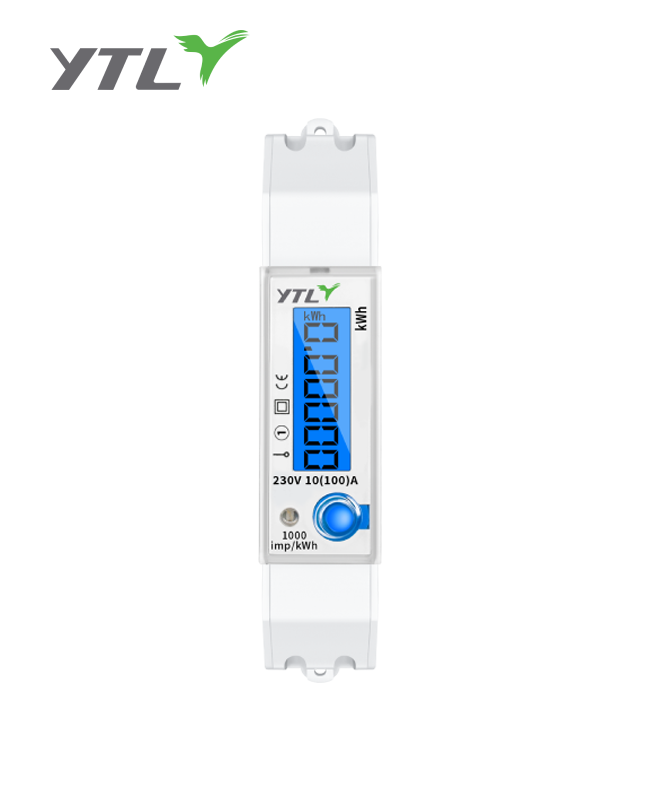
Zhejiang Yongtailong Electronic Co., Ltd. (YTL) provides AC and DC energy-metering products for EV charging applications, including DIN rail meters, embedded metering modules and communication-enabled options depending on the selected model.

YTL can support:

  • Initial model selection based on system architecture
  • Electrical-range and sensing-architecture review
  • Communication-option confirmation
  • Register-map review
  • Sample testing
  • Meter-to-controller integration review
  • Project-specific technical discussion

Product capabilities vary by model, hardware, firmware, configuration, communication interface and conformity-assessment scope. Suitability for regulated billing or use within an MI-011 EVSE measuring-system project must be confirmed according to the selected meter, sensing architecture, target market and complete-system assessment route.

Zhejiang Yongtailong Electronic Co., Ltd.
YTL is a professional supplier of energy meter and AMI solution. the Top 100-enterprise with most investment value in Zhejiang. And“Yongtailong”is the famous brand of Zhejiang. With nearly 20 years' experience in energy metering, we devote ourselves to providing competitive projects and creating value for customers.
Online + Offline. Provide cost-effectiv solutions
● Strict quality control mechanism.High quality assurance
● Five R&D centers,combine with hardware&software design, experiment and testing
Global service capability, provide customers timely and effective solution
● Good customer feedback. Reliable after-sales service

You Might Also Like

View all products
  • D522034

    Apartment Suitable Three Phase Four Wire Electronic kWh Meter

    Apartment Suitable Three Phase Four Wire Electronic kWh Meter
  • D118081

    Pass-Through 230 Volts 100A Din Rail kWh Energy Smart Meter

    Pass-Through 230 Volts 100A Din Rail kWh Energy Smart Meter
  • DTS353

    Strandard Din Rail Installation Smart Power Meter

    Strandard Din Rail Installation  Smart Power Meter
  • D129086

    NB-IoT Smart Street Light Single Light Controller

    NB-IoT Smart Street Light  Single Light Controller
  • CT Groupware A Comprehensive Guide to Collaborative

    CT Groupware A Comprehensive Guide to Collaborative
  • Energy Storage Standard Battery: Design, Standards & App Scenarios

    Energy Storage Standard Battery: Design, Standards & App Scenarios
  • Bidirectional Energy Storage Inverters: Core Tech for Grid-Connected

    Bidirectional Energy Storage Inverters: Core Tech for Grid-Connected
  • D112153

    DDS353L-2 Single Phase Energy Watt Meter DIN Rail Mounting

     DDS353L-2  Single Phase Energy Watt Meter DIN Rail Mounting
  • DDS353B-MID

    YTL DDS353B Active din-rail-singlephase Electricity Meter

    YTL DDS353B Active din-rail-singlephase Electricity   Meter
  • D322010

    YTL Two Phase Three Wire LCD Shunt sampling Energy Meter

    YTL Two Phase Three Wire LCD Shunt sampling Energy Meter
  • 12A080D

    YTL Wall Mounted Singlephase 1 Module Solar System Meter

    YTL Wall Mounted Singlephase 1 Module Solar System  Meter
  • LS1P63I

    single phase smart power switch with Wifi/4G

    single phase smart power switch with Wifi/4G
Feedback

Feedback