
 English
 简体中文
简体中文



Today, amid the convergence of global energy transition and digital revolution, smart meters have evolved from single-function metering tools into core nodes that support new-type power systems and empower intelligent energy management. Consequently, market requirements for smart meter companies have undergone a fundamental shift: they are no longer merely equipment manufacturers, but must be integrated solution providers combining cutting-edge R&D, in-depth scenario understanding, and full-cycle services. A truly outstanding smart meter company possesses core capabilities deeply covering two dimensions: hard technical strength and soft service capacity.

I. Core Technical Capabilities: The Foundation for Product Excellence and Sustainable Innovation
1. R&D and Quality Control of Highly Reliable and High-Precision Hardware
This is the cornerstone of a company’s survival and development, with the focus on:
- Metering chip-level design and application capability: Deep cooperation capabilities with top metering chip suppliers, or independent design capabilities for metering cores and analog front ends. Profound understanding and optimization of sampling algorithms and anti-interference designs ensure that meters maintain ultra-high accuracy and stability of Class 0.5S or even Class 0.2S over the long term in complex grid environments (e.g., high harmonics, transient processes) and wide temperature ranges.
- Core components and reliability engineering: Extensive experience in the selection and customization of core components such as current transformers, power modules, and communication modules. More importantly, a reliability engineering system covering the entire process of design, production, and testing has been established, including strict environmental stress screening (ESS), accelerated aging tests, and electromagnetic compatibility (EMC) tests, ensuring maintenance-free operation of products for more than 10 years in harsh outdoor environments.
2. Integrated Software-Hardware Platform and Ecosystem Construction Capability
The competitiveness of modern smart meters lies in the integration of software and hardware.
- Unified IoT operating system platform: Leading companies are committed to developing or deeply optimizing their IoT operating systems. For example, Power Harmony OS, promoted by the domestic power industry, aims to enable massive terminals to “speak the same language”. Capability to develop products based on such systems means easier interconnection and interoperability between meters and other power equipment, achieving flexible function expansion and unified management.
- Edge computing and local intelligence: High-performance edge computing capabilities should be embedded in excellent meter products. This includes not only local data storage and event judgment, but also local intelligent functions such as non-intrusive load monitoring, in-depth power quality analysis, and potential fault early warning through embedded AI chips or algorithms, reducing cloud pressure and improving real-time response.
3. In-Depth Integrated Security Technology Capability
Security is the lifeline for smart meters to integrate into the Energy Internet. This requires companies to have:
- Full-stack security architecture: An end-to-end active defense system from “chip to cloud”, integrating secure chips or trusted computing modules at the hardware level, secure boot, secure upgrade, and firmware anti-tampering at the software level, and two-way authentication and data encryption based on national cryptographic algorithms at the communication level.
- Continuous security response and maintenance: A lifecycle vulnerability monitoring, response, and patch push mechanism to address evolving cyber threats.
4. Integration and Adaptation Capabilities for Diversified Communication Technologies
Faced with diverse installation environments and application scenarios, top companies provide “combined” communication solutions. This includes in-depth mastery and flexible configuration of multiple communication technologies such as HPLC (High-Speed Power Line Carrier), RF (Radio Frequency), NB-IoT, 4G/5G, and the ability to provide optimal local and remote communication networking solutions based on customers’ existing networks.
II. Comprehensive Service Capabilities: The Key to Creating Customer Value and Achieving Win-Win Results
1. Solution Design Capability Based on In-Depth Industry Insights
Truly excellent companies sell “value” rather than just “meters”. This requires their teams to:
- Deeply understand energy policies and market rules: Be familiar with policies such as power market reform, demand-side response, distributed PV grid connection, and carbon accounting, and closely integrate product functions with customers’ business pain points (e.g., reducing demand charges, participating in auxiliary service markets, realizing green power traceability).
- Scenario-based solution customization: Design customized energy metering and management solutions integrating hardware, software, communication, and data analysis for different scenarios including residential communities, commercial complexes, industrial parks, EV charging stations, and zero-carbon buildings.
2. Large-Scale Delivery and Efficient Project Implementation Capability
Smart meter projects often involve the deployment of millions or tens of millions of terminals, covering warehousing, logistics, installation, commissioning, data access, and other links.
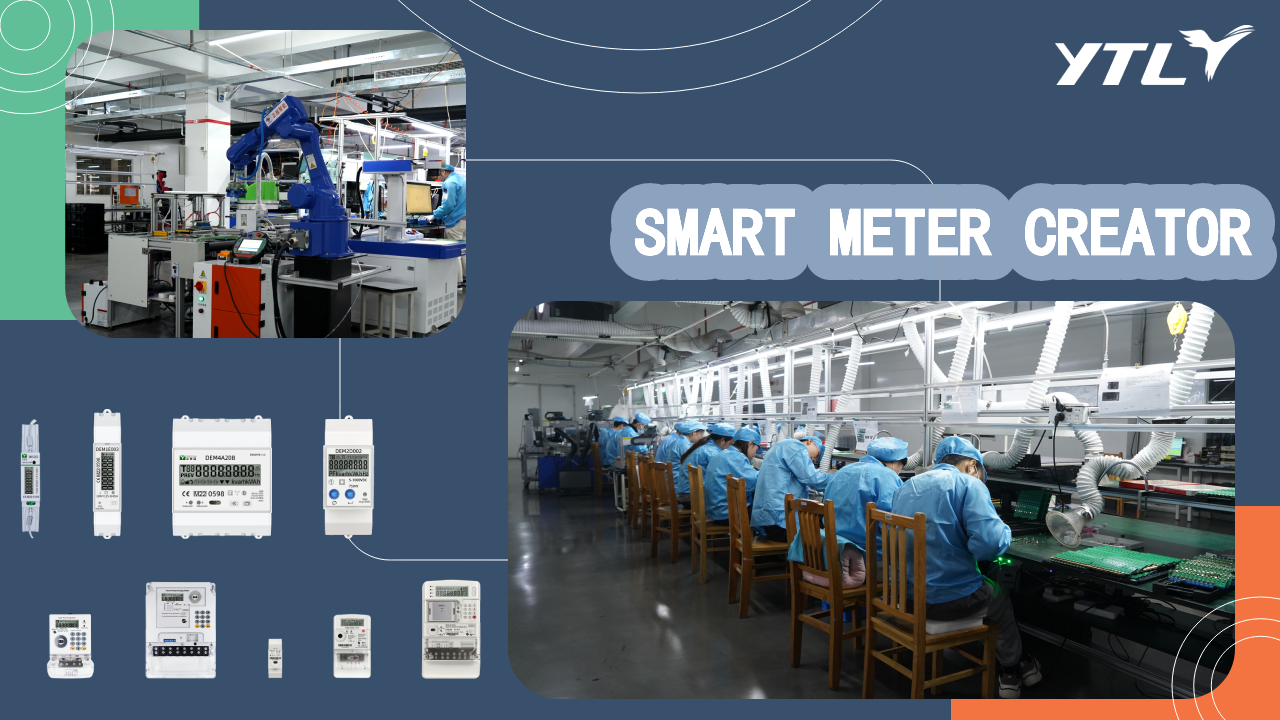
- Supply chain management and lean production: A stable, high-quality supply chain system and flexible intelligent manufacturing lines to ensure timely, high-quality delivery of large-scale orders.
- Professional on-site service system: Standardized on-site operation specifications, and real-time monitoring and management of installation progress and quality of massive terminals through digital tools (e.g., installation Apps, project management platforms) to ensure efficient and compliant project implementation.
3. Full-Lifecycle O&M Support and Data Value-Added Service Capability
Meter installation and delivery mark only the beginning of services.
- Proactive O&M and health diagnosis: Remote monitoring platforms for status inspection, fault early warning, and remote diagnosis of grid-operated meters, shifting from “passive repair” to “proactive maintenance” and greatly reducing customers’ O&M costs.
- Data value mining services: Open APIs and professional energy data analysis platforms to help customers (e.g., grid companies, electricity retailers, energy-consuming enterprises) mine load characteristics, identify energy efficiency vulnerabilities, evaluate equipment status from massive electricity consumption data, and convert data into “information assets” to guide operation and decision-making.
4. Open Cooperation and Ecosystem Construction Capability
In the era of the Energy Internet, no single company can cover all demands. Excellent smart meter companies should embrace openness and a clear ecosystem strategy.
- Platform openness and standard collaboration: Products and platforms comply with mainstream international, national, and industrial standards, with necessary open interfaces and software development kits (SDKs) to attract third-party developers for joint application innovation.
- Industrial chain collaboration: Active cooperation with ecosystem partners such as grid enterprises, communication operators, software developers, and integrated energy service providers to jointly provide customers with an end-to-end complete value closed loop.
Conclusion: Role Evolution from Product Supplier to Value Partner
In summary, the capability model of an excellent smart meter company is a three-dimensional pyramid: the bottom layer is hard-tech foundations centered on metering accuracy and reliability; the middle layer is systematic platform capabilities supported by software, security, and communication; the top layer is customer value creation capabilities with solutions and full-cycle services as touchpoints.
Future competition will no longer be about single-point products, but a comprehensive competition of technical ecosystems, service depth, and industry insight. Only by completing the role evolution from “equipment manufacturer” to “solution provider”, and ultimately becoming a trusted “value partner for energy management and digital transformation” for customers, can companies remain invincible in the new era of the energy revolution. This is not only a necessity for enterprise development but also an inevitable requirement to fulfill the fundamental mission of empowering society to achieve green, efficient, and intelligent electricity consumption.
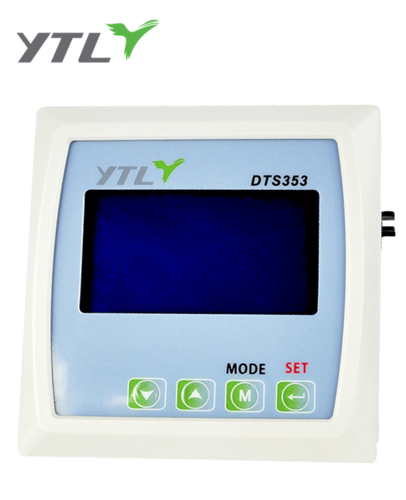
.png?imageView2/2/w/500/h/500/format/png/q/100 "YTL Two Phase Three Wire Big counter Electricity Meter")