
 English
 简体中文
简体中文



In the entire chain of power generation, transmission, distribution and consumption, electric energy metering instruments serve as the legal criterion and intelligent eyes for trade settlement, energy efficiency management and safety monitoring. Whether at the 500kV grid connection points, in millions of households, or at fast-charging interfaces for electric vehicles, the measured values of instruments form the core basis for cost accounting, load control and safety protection. However, errors exist in any measurement. Accuracy class, as the core indicator that quantifies and defines such error ranges, is far more than a simple technical parameter—it is a critical bridge directly linking the red line of power safety and the lifeline of economic operation.

I. The Essence of Accuracy Class: How to Understand and Interpret It?
Accuracy class, also known as accuracy grade, is a standardized representation of the maximum permissible error guaranteed by electricity meter manufacturers under specified standard operating conditions. It directly answers the fundamental question: How far may the metering result of this electricity meter deviate from the true electric energy value?
1. Expression and Meaning
In the field of electric energy metering, accuracy class is usually marked directly by numbers, such as Class 0.5, Class 0.5S, Class 0.2, Class 0.1. The number here represents a percentage, indicating the percentage limit of the maximum permissible error.
- For example, for a single-phase smart meter of Class 1.0, within its specified current range (e.g., 5%Ib ~ Imax), the electric energy metering error at any measuring point shall not exceed ±1.0% of the actual value.
- The suffix “S”denotes special requirements, usually meaning the meter can still meet the accuracy class over a wider current range (e.g., 1%Ib ~ Imax), with higher metering performance under light load, commonly used in scenarios with large load fluctuations.
2. Key Understanding Points
- Commitment based on standard conditions: Accuracy class is calibrated under “ideal laboratory” conditions specified by manufacturers, including reference temperature, humidity, power waveform, and absence of external electromagnetic interference. Actual operating conditions such as temperature changes, harmonic interference and installation inclination will introduce additional errors, which may reduce the on-site operating accuracy of the meter. Therefore, the environmental classof the meter must be considered in model selection.
- Distinction from resolution and repeatability: Resolution is the minimum electric energy unit the meter can display (e.g., 0.01kWh), and repeatability is the consistency of multiple measurements of the same electric energy value. A meter with high resolution and good repeatability may still produce stable, one-sided metering results if it has serious systematic errors (i.e., large basic error and low accuracy class), causing sustained metering unfairness with more concealed hazards.
- Strong correlation with measuring range: The accuracy class of a meter is guaranteed only within its calibrated current and voltage ranges. Operation outside the range or long-term operation at extremely low current near the lower limit may result in errors far exceeding the nominal class.
II. How Does Accuracy Class Act as the “Guardian” of Power Safety and Fairness?
In smart grids and diversified electricity consumption scenarios, electricity meters have gone beyond simple metering to become the cornerstone of safety monitoring and fair trade. Insufficient accuracy class, like an uncalibrated balance, may trigger safety risks and economic disputes.
1. Failure of Electrical Safety Monitoring
Modern smart meters support real-time voltage and current monitoring, as well as overload, phase loss and other alarm functions. The reliability of these safety functions is rooted in measurement accuracy.
- Failure of overload protection: If there is a large negative error in current measurement, the actual line current may approach or exceed the safety limit while the meter reading remains “normal”, potentially leading to insulation overheating and unrecognized fire risks.
- Misjudgment of voltage anomalies: Poor voltage measurement accuracy may cause missing or false alarms during sudden voltage surges or drops, impairing accurate power quality assessment and protection of sensitive equipment.
2. Cornerstone of Distributed Energy Grid-Connection and Settlement
With the popularization of distributed energy resources (DER) such as photovoltaic and energy storage, distribution networks have changed from passive to active, with bidirectional power flow. The accuracy class of bidirectional meters used for grid-feed energy measurement and cost settlement directly affects fair transactions between DER owners and power grid companies.
- Metering disputes: Low-accuracy meters may produce asymmetric errors when measuring “consumption” and “generation” directions, leading to settlement deviations and long-term economic disputes.
- Impact on grid balance: Inaccurate output metering of a large number of DERs will directly affect power flow calculation and dispatch control of distribution networks, bringing uncertainty to the safe and stable operation of the grid.
3. “Legal Criterion” for Trade Fairness
In power market transactions, from power plant grid-feed, inter-provincial power transmission to end-user consumption, settlement at each link relies on gateway electric energy meters, whose accuracy class is legally binding. For instance, China’s Technical Management Code for Electric Energy Metering Devices (DL/T 448-2016) clearly stipulates that all electric energy metering devices for trade settlement must be equipped with measuring instruments of corresponding accuracy classes. Substandard accuracy class means settlement data lacks legal credibility.
III. How Does Accuracy Class Directly Drive Operational Efficiency and Economic Benefits?
For electricity-consuming enterprises, charging operators and power grid companies, the accuracy class of electricity meters is the data source for energy efficiency management, operational efficiency improvement and investment decision optimization.
1. Basis for Energy Efficiency Management and Energy Conservation
Enterprises’ refined energy management and energy-saving renovation projects fully rely on high-precision classified and itemized metering data for effect evaluation.
- Precise positioning of energy-consuming units: Equipping high-precision meters for air conditioning, lighting, power and other circuits in an itemized metering system enables accurate analysis of energy consumption proportion and characteristics. Low-accuracy meters may lead to misjudgment of high-energy-consuming links, making energy-saving investment ineffective.
- Evaluation of energy-saving effects: Calculation of power saved before and after renovation depends on synchronous and same-point power comparison. Measurement uncertainty caused by low-accuracy meters may cover up or exaggerate real energy-saving effects, rendering project management meaningless.
2. Demand-Side Response and Capacity Cost Optimization
For enterprises under two-part tariff or demand charge, their electricity bills include basic charges calculated by maximum demand (MD). High-precision smart meters can monitor maximum demand in real time and accurately, helping enterprises:
- Precisely control demand peaks: Avoid unnecessary demand exceedance caused by measurement errors, thus saving basic electricity charges.
- Safely participate in demand-side response: Accurate metering is the basis for evaluating response effects and obtaining economic compensation when adjusting loads in response to grid dispatch.
3. Guarantee of Charging Operation and User Trust
For electric vehicle charging operators, the DC electric energy meter inside DC charging piles is the sole basis for charging users. Its accuracy class directly relates to business reputation and user trust.
- Avoid billing disputes: High-precision DC meters (usually required to be Class 0.5 or higher) ensure accurate metering of charging capacity, eliminating user complaints caused by “perceived overcharging” at the source.
- Improve operational efficiency: Accurate charging data is also the core basis for operators to analyze pile utilization, optimize pricing strategies and conduct financial forecasting.

Conclusion: A Long-Term Value Investment Beyond Equipment Procurement
Choosing the accuracy class of an electric energy meter for a metering point is never a short-term decision based only on equipment procurement cost, but a strategic investment involving compliance, operational safety, economic efficiency and business reputation.
The limited cost saved by purchasing a low-accuracy meter is highly likely to incur high costs throughout its life cycle due to potential metering disputes, inappropriate energy efficiency decisions, uncontrolled electricity costs and even safety risks. In contrast, selecting a high-quality meter with appropriate accuracy class matching the application scenario means choosing a reliable data cornerstone.
In the era of energy digitalization and power marketization, data is a new production factor, and high-precision, high-reliability electric energy metering instruments form the first and most important gateway to ensuring the authenticity, credibility and usability of such energy data. Investing in appropriate accuracy classes is essentially investing in the transparency, control and sustainable competitiveness of enterprise operations—it is not only a technical choice, but also a reflection of management wisdom.
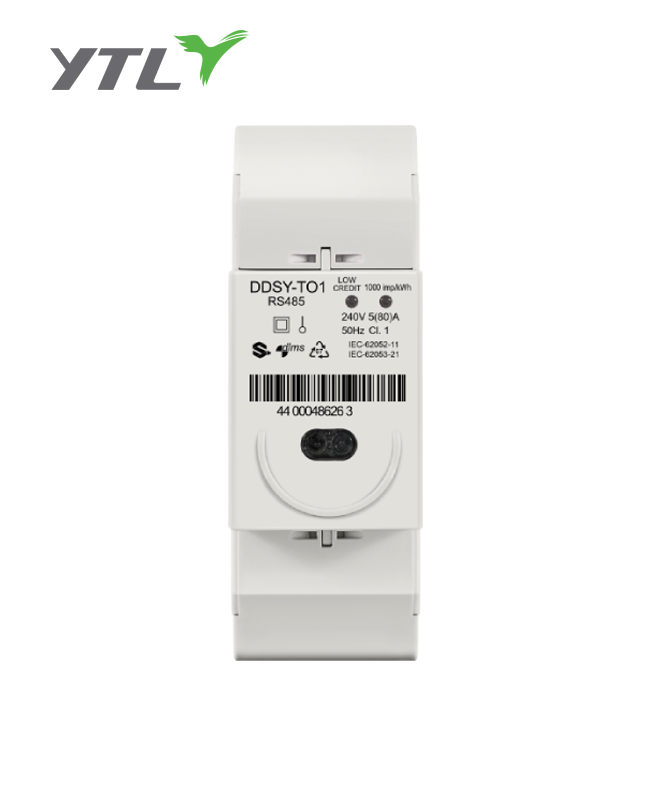
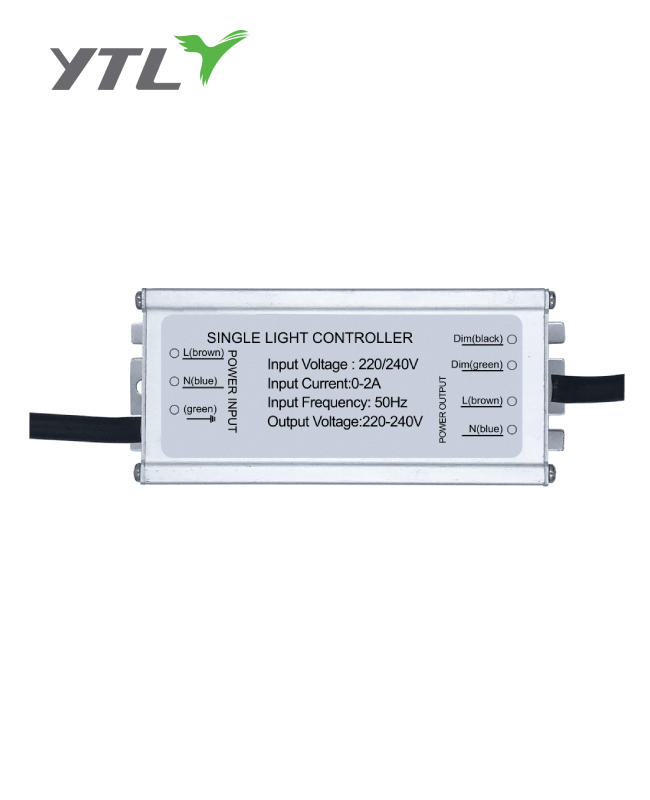
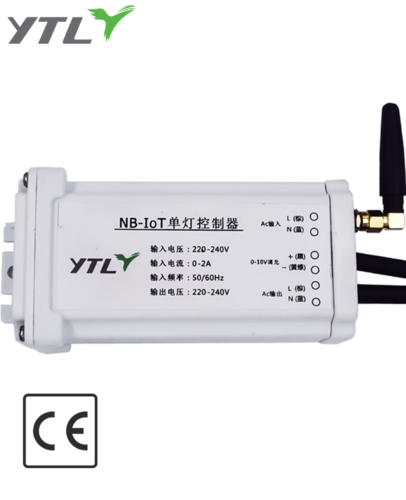
.png?imageView2/2/w/500/h/500/format/png/q/100 "YTL STS Prepaid Wi-Fine Energy Meter Single Phase Wall")
.jpg?imageView2/2/w/500/h/500/format/png/q/100 "YTL Company DTS353C DIN Rail 3P 4 Model Electricity Meter MID")
.png?imageView2/2/w/500/h/500/format/png/q/100 "YTL Two Phase Three Wire LCD Shunt sampling Energy Meter")