
 English
 简体中文
简体中文



1、 Temperature: Hidden electricity thief at charging station
In the fast charging station for new energy vehicles, there is often a contradictory scene: on a cold winter morning, the owner charges 80 degrees of electricity in a -15 ℃ environment, but the vehicle system displays only 76.5 degrees received; In the scorching afternoon, the car owner's charging bill exceeded the battery record by 3.2 degrees. Behind this is the temperature curse encountered by DC meters - the copper sampling resistor inside traditional meters produces a measurement deviation of 0.004% for every 1 ℃ change in temperature. When the charging gun experiences an temperature difference of -30 ℃ (northern winter night) to 85 ℃ (high temperature at the battery end), the cumulative error can reach more than 5%. This means that the charging process of 100 kWh of electricity may result in a difference of 25 kilometers in actual settlement for a vehicle.
2、 Dual core temperature control system for DC electric meter
The key to solving the temperature dilemma lies in the dual sensor architecture of the DC meter:
Low temperature Guardian: Alloy Diverter
In an extremely cold environment of -40 ℃, the shunt made of special metal alloy has a resistance value that is almost unaffected by low temperatures, ensuring a measurement accuracy of 99.8% in cold mornings
High temperature sentinel: digital Hall chip
When the internal temperature of the charging station rises to 70 ℃, it automatically switches to a semiconductor Hall sensor, which suppresses drift within 0.2% through a built-in temperature compensation chip
The intelligent central control of the DC meter scans the ambient temperature every 5 seconds and dynamically adjusts the weight ratio of the two sensors. For example, at 20 ℃, the dual sensor data accounts for 50% each, and at -20 ℃, the weight of the alloy splitter data increases to 85%. This kind of collaboration, similar to the "hybrid mode", enables the electric meter to maintain an accuracy of ± 0.5% in both ice and fire conditions.
3、 Fast charging temperature difference sniper battle throughout the entire process
The particularity of DC overcharging lies in the temperature fluctuations caused by sudden changes in current:
Startup phase (0-3 seconds)
At the moment of 400A current surge, the sensor temperature soared by 30 ℃. Traditional electric meters experience delayed response due to thermal inertia, resulting in a 1.2% underestimation of electricity in the 10 seconds
End phase (last 5 seconds)
The current drops sharply from 300A to 0, and the temperature drop causes a reverse error
DC meters have developed a third-order metering mode for this purpose:
Instant mode (current change rate>100A/second)
Enable millisecond level sampling and compensate in advance with temperature prediction algorithm
Cruise mode (current stable)
Activate dual sensor cross validation
Closing mode (current<10A)
Extend the measurement cycle to 0.1 seconds per time and capture the final 0.5 kWh of electricity
4、 Transparency: The Self Certification Path of DC Meters
To completely eliminate the trust crisis, the new generation of DC meters will build a full link data witness system:
Temperature compensation log
Record the ambient temperature, sensor switching status, and compensation coefficient adjustment value every minute
Raw data storage certificate
Save the original waveform of current and voltage before correction (1000 sampling points per second)
Revise the trajectory diagram
Generate temperature impact curve and compensation effect visualization chart
5、 Operators' tool for reducing losses
For charging station operators, solving temperature drift with DC meters will directly translate into economic benefits:
Reduce disputes over electricity bills
After a charging network launched a new meter, customer service complaints decreased by 73%, saving dispute resolution costs of 420 yuan per 10000 kWh of electricity
Improve equipment lifespan
Accurate measurement to avoid overcharging/undercharging of batteries, extending the lifespan of DC pile core components by 2 years
Participate in the electricity market
High precision data meets the demand response requirements of the power grid and obtains subsidies
6、 Car owners' peace of mind charging bag
When new energy vehicle owners encounter DC meters, the charging experience undergoes a triple upgrade:
Trustworthy billing
Scan the QR code of the charging receipt and directly compare the vehicle data
Abnormal warning
When the potential value of temperature drift during a single charge is greater than 1%, the APP automatically pushes a compensation report
Cross site calibration
Record the error coefficient of each charging station's electricity meter through blockchain, ensuring that A station charges 50 degrees=B station charges 50 degrees
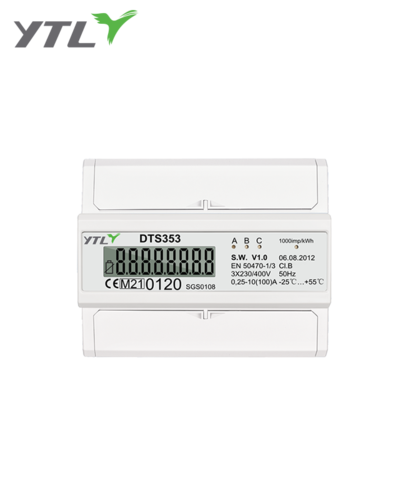
.png?imageView2/2/w/500/h/500/format/png/q/100 "YTL Two Phase Three Wire Big counter Electricity Meter")
.png?imageView2/2/w/500/h/500/format/png/q/100 "YTL China Single Phase IC card Prepayment Electricity Meter")