
 English
 简体中文
简体中文



In the field of electrical energy metering, Direct Current (DC) energy meters and Alternating Current (AC) energy meters are the two fundamental categories. For end-users, they may both appear as simple reading devices, yet their internal principles, technical challenges, and application scenarios are vastly different. A thorough understanding of their fundamental differences is not only the basis for technical selection but also the key to grasping the evolution of the future energy landscape. This paper provides a systematic and in-depth comparison from core principles, metering technologies, performance requirements to typical application scenarios.

I. Differences in Core Principles: Unidirectional Flow vs. Alternating Oscillation
The most fundamental difference originates from the nature of the measured object itself—the properties of current and voltage.
Direct Current (DC) is characterized by constant magnitude and direction over time, much like a steady, broad river where water flows stably in one direction. Typical sources of DC include batteries and photovoltaic panels. Therefore, a DC meter measures electric energy flowing steadily in a single direction, where the product of voltage (U) and current (I) (power P=UI) remains constant under steady-state conditions.
Alternating Current (AC) periodically changes in magnitude and direction following a sinusoidal pattern. The mains frequency in China is 50 Hz (50 cycles per second), similar to tides that surge back and forth periodically. Thus, AC meters measure constantly alternating electric energy. While instantaneous power varies with time, the meaningful value for metering is average power, which introduces the concept of phase angle φ (for purely resistive loads, voltage and current are in phase, φ=0°), and its active power is calculated as P=UIcosφ.
This fundamental difference directly determines the completely distinct technical paths of the two types of meters, from sensors to algorithms.
II. In-depth Comparison of Metering Principles and Technical Challenges
Based on the above principles, DC meters and AC meters face completely different challenges in achieving accurate measurement.
1. Signal Measurement and Conversion
AC Meters: Mature AC metering relies on high-precision ADC (Analog-to-Digital Converter) for high-speed sampling of voltage and current, followed by real-time calculations via Digital Signal Processors (DSP) to obtain RMS values, power, electric energy, etc. Its core technology lies in processing alternating signals and accurately calculating the phase relationship between voltage and current (power factor).
DC Meters: Theoretically, measuring the average value of constant DC is more straightforward. However, its core challenges are accurately acquiring current signals at high potentials and handling potential ripples. Mainstream technologies include:
- Shunt: Current is derived by measuring the voltage drop across a shunt with known resistance (based on Ohm’s Law). Its accuracy and temperature compensation technologies are critical for improving metering precision. Advantages include low cost, good linearity, and no magnetic saturation, but it generates heat loss and requires solving isolated measurement under high common-mode voltage.
- Magnetic Modulation (e.g., Hall sensors, fluxgate technology): Electrical isolation between the main circuit and measuring circuit is achieved via the magnetic balance principle, making it ideal for high-current measurement. However, it faces challenges such as zero drift and temperature drift that require precise compensation.
2. Metering Complexity and Functions
AC Meters: Feature complex algorithms, calculating various parameters including active, reactive, and apparent power, power factor, frequency, harmonics, etc. Smart AC meters have become sensing nodes of the power grid.
DC Meters: Relatively "simplified" functions, focusing on accurately measuring DC voltage, current, power, and cumulative electric energy. Nevertheless, they demand extremely high measurement accuracy and stability, especially in low ranges, since any tiny drift in DC signals will be accumulated as valid data.
III. Divide in Application Scenarios: Traditional Power Grid vs. Emerging Energy
Their application scenarios are determined by power supply forms with clear boundaries, reflecting the transformation of the energy structure.
Main Battlefield of AC Meters: Traditional AC Power Grid and Terminal Power Consumption
This is the largest and most mature market. From power plants, transmission and distribution networks to households, commercial and industrial enterprises, AC meters are mandatory for all facilities connected to the public AC grid. They are the only legal measuring instruments for power trade settlement and energy efficiency management in AC grid scenarios, covering residential single-phase meters to large-scale three-phase meters for substations.
Rise of DC Meters: Emerging DC Power Ecosystem
With energy transition, DC power is naturally generated in power generation, storage, and consumption, making DC meters the "critical eyes" in these emerging fields:
- Photovoltaic (PV) Power Systems: PV modules output DC power. Before inversion to AC, DC meters accurately measure the total power generation of PV arrays for evaluating system efficiency (PR value) and revenue settlement.
- Electrochemical Energy Storage Systems: Batteries store and release energy in DC form. High-precision, bidirectional DC meters must be installed on the DC side of Power Conversion Systems (PCS) to assess battery charge-discharge efficiency, cycle life, and internal cost accounting.
- Electric Vehicle (EV) Fast Chargers: High-power DC fast chargers directly output high-voltage DC to vehicle batteries. The core metering equipment inside is a high-precision, high-current DC meter, whose accuracy directly affects trade fairness and operator profits.
- DC Microgrids and Data Centers: An increasing number of data centers and communication base stations adopt 240V/336V high-voltage DC distribution for higher efficiency. DC microgrids in industry are also booming, all relying on DC meters for energy distribution and management.
- Rail Transit and Ships: Subways and trams use DC traction power supply, while ship power systems often adopt DC networking, both requiring dedicated DC meters.
Conclusion: Complementary, Not Substitutable, Jointly Supporting the Energy Future
In summary, the differences between AC meters and DC meters are essentially technical representations of the AC power grid and DC power ecosystem. AC meters are the cornerstone sustaining the century-old AC power grid system, while DC meters serve as a bridge to an efficient and flexible future of distributed energy.
For meter manufacturers, a deep understanding of these differences means:
- Distinct Technical Routes: Establishing specialized teams to overcome respective technical hurdles (e.g., complex algorithms and harmonic metering for AC meters, ultra-high precision and isolation technology for DC meters).
- Strategic Market Layout: While consolidating advantages in the traditional AC meter market, strategic investment in R&D and market expansion of DC meters is essential, as the fastest-growing sectors—new energy, energy storage, and electric vehicles—are all on the DC side.
- Comprehensive Solutions: Future energy systems will be complex AC-DC hybrid networks. Manufacturers capable of providing both highly reliable AC meters and high-precision DC meters can offer full-chain metering solutions for customers (e.g., integrated energy service providers, charging station operators), securing a core position in the energy transformation.
Choosing between AC meters and DC meters is no longer a mere technical decision but a judgment based on energy application scenarios. Mastering their fundamental differences enables precise demand matching, ensuring accurate metering of every kilowatt-hour of electricity in the magnificent energy revolution.
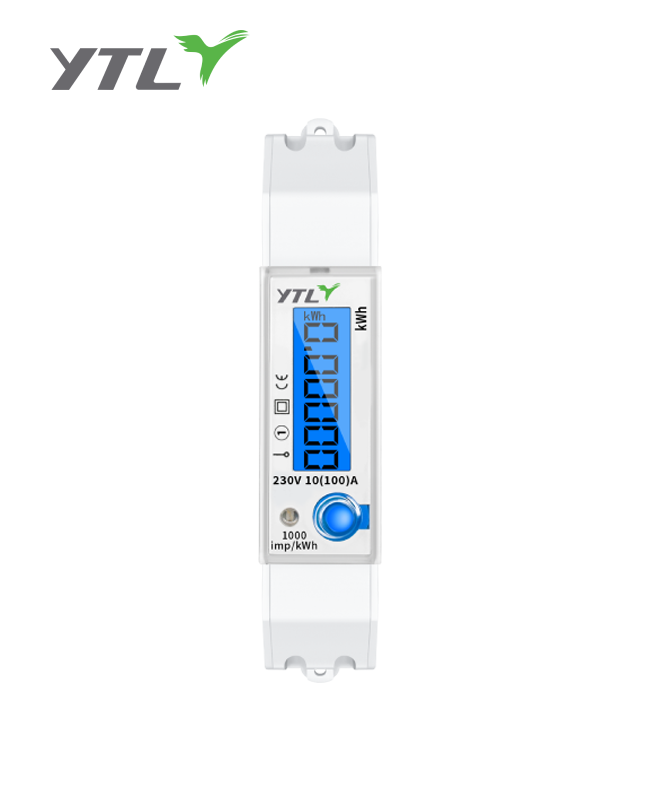
.png?imageView2/2/w/500/h/500/format/png/q/100 "YTL Two Phase Three Wire Big counter Electricity Meter")
.png?imageView2/2/w/500/h/500/format/png/q/100 "YTL China Single Phase IC card Prepayment Electricity Meter")
.png?imageView2/2/w/500/h/500/format/png/q/100 "YTL Single Phase Active Electronic Electricity Meter")