
 English
 简体中文
简体中文



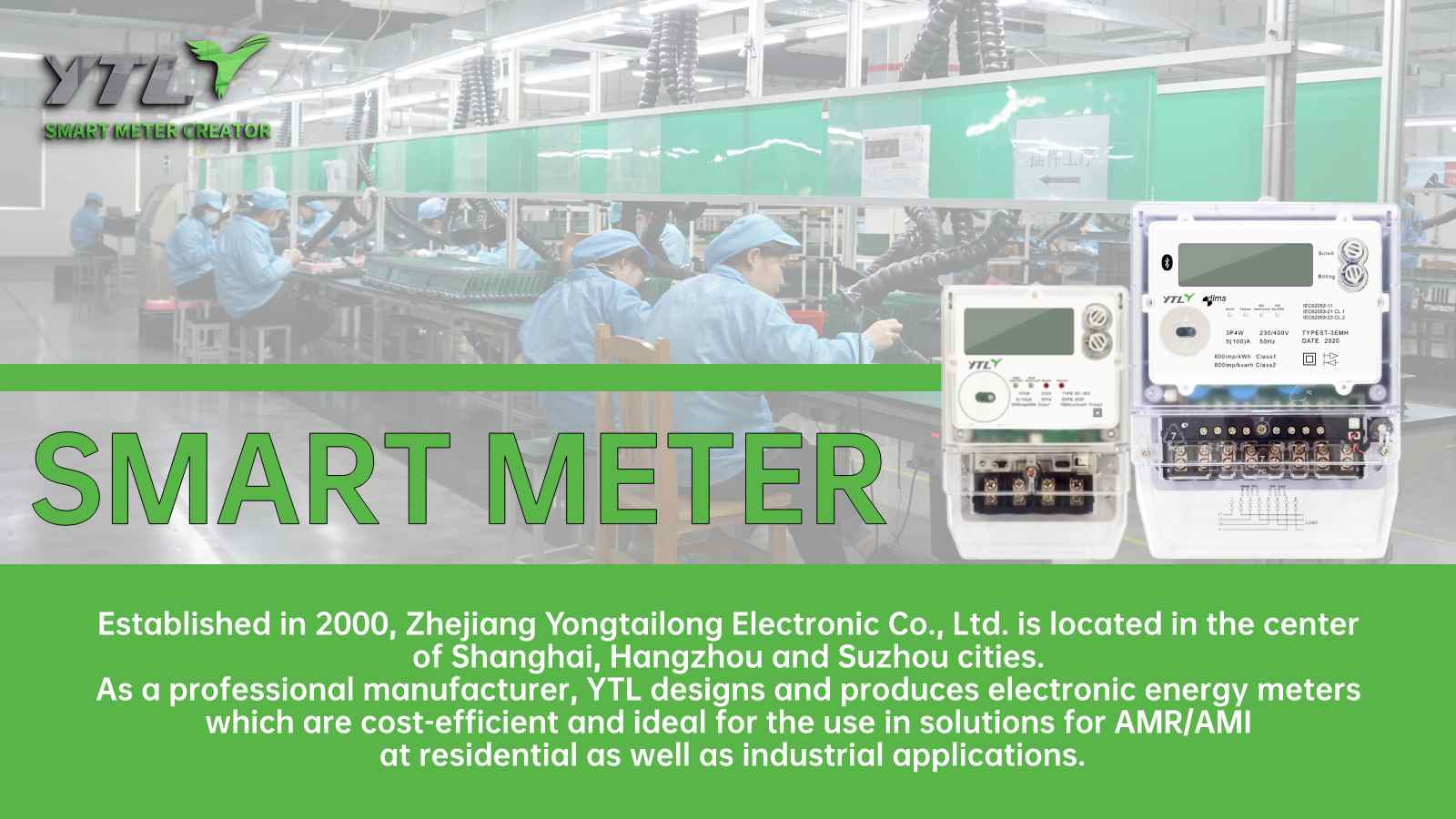
From traditional mechanical meters to today’s intelligent terminals integrating metering, communication and control, the innovation of smart meters is not a simple superposition of functions, but a comprehensive reconstruction of the underlying technical system. It is no longer an isolated metering device, but a sensing node and edge computing unit deeply integrated into the energy internet. To understand the realization of its intelligence, it is necessary to analyze its five core technical modules, which together form the "intelligent brain" and "neural network" of the smart meter.

I. High-Precision Metering Chip and Sensor Technology: The "Heart" Ensuring Fairness
Metering accuracy is the lifeline of electric meters, as well as their most core and fundamental technology. Smart meters completely abandon the electromagnetic principle of mechanical induction, and adopt digital metering technology based on Application-Specific Integrated Circuits (ASIC) or high-performance Microcontroller Units (MCU).
Its core principle is to conduct continuous high-speed sampling of AC voltage and current signals in the power grid through a high-precision Analog Front End (AFE). Current mainstream solutions adopt Σ-Δ Analog-to-Digital Converters (ADC), which sample signals at a frequency of up to several thousand hertz, converting continuous analog quantities into high-resolution digital quantities. Subsequently, the metering chip calculates the effective values of voltage and current, instantaneous power (active, reactive, apparent) in real time through embedded algorithms, and obtains electric energy values (kWh, kvarh) by integrating power.
This technological leap brings three core advantages:
- Ultra-high precision and stability: Within the wide temperature range specified by national standards (e.g., -25℃ to +60℃) and wide current range (e.g., from a few thousandths to the maximum current), it can achieve metering accuracy of class 0.5S, class 0.2 or even higher, without being affected by mechanical wear or magnetic interference.
- Abundant metering parameters: It can not only measure total electric energy, but also accurately measure forward/reverse (corresponding to electricity consumption/power generation) and four-quadrant reactive energy, as well as monitor power quality parameters such as voltage, current, frequency and power factor.
- Flexible digital output: Metering results are transmitted internally in pure digital signals, providing a lossless and reliable foundation for subsequent communication, processing and analysis.
II. Multi-Integrated Communication Technology: Building the "Neural Network" for Connectivity
Communication capability is the key to distinguishing "smart" from "traditional". Smart meters have two-way communication capability, forming the underlying nodes of the Advanced Metering Infrastructure (AMI). Its communication technology presents a hierarchical and integrated architecture of "local + remote".
1. Local Communication (Connecting Home Networks and Terminal Devices)
It mainly refers to the communication between the meter and indoor devices (such as smart sockets, home gateways, photovoltaic inverters). Mainstream technologies include:
- PLC (Power Line Communication): Transmits data through existing power lines without extra wiring, which is the most important local communication method for domestic electricity information collection systems at present. Among them, High-Speed Power Line Communication (HPLC) has become a new standard, with wider bandwidth, faster speed (up to Mbit level) and better real-time performance, supporting advanced applications such as active power failure reporting, phase identification and topology identification.
- RF (Radio Frequency): Such as micro-power wireless, Zigbee, etc. It is flexible in deployment, especially suitable for reconstruction scenarios where wiring is difficult. Some new smart meters integrate PLC and RF dual-mode communication modules, which are mutually backup and more reliable.
2. Remote Communication (Connecting Data Centers and Management Systems)
It is responsible for aggregating and uploading meter data to the master station system. Main technologies include:
- Cellular mobile communication: From 2G/4G Cat.1 to the latest NB-IoT (Narrow Band Internet of Things). Due to its low power consumption, wide coverage and massive connectivity, NB-IoT is especially suitable for terminals like electric meters with wide distribution, small data volume and low delay sensitivity, making it one of the mainstream remote solutions for low-cost and efficient access of massive electric meters.
- Optical fiber private network: Mainly used in important station gateways, distribution automation sites and other occasions with extremely high requirements for communication speed and reliability.
III. High-Reliability Power Supply and Power Consumption Management Technology: The "Energy Engine" for Sustainable Operation
Smart meters are usually directly powered by the power grid, but their internal chips and communication modules require stable and clean low-voltage DC power. The high-reliability switching power supply module is one of the core technologies, which must provide a continuously stable working voltage for the system in harsh electrical environments with large grid voltage fluctuations (e.g., under-voltage, over-voltage, surges) and harmonic interference.
More critically, power consumption management technology. To achieve low-power operation throughout the life cycle, especially when relying on built-in batteries to maintain the clock and key communication (e.g., reporting power failure events) after a power outage, smart meters adopt multi-level power management and dynamic power control strategies. For example, in normal working mode, the main control MCU and communication modules can be in sleep state and wake up regularly; in battery-powered mode, the system turns off all non-essential functions and only maintains minimal operation, ensuring that the battery can sustain key circuits for several years.
IV. Hardware and Software Security Technology: Building a Trusted "Immune System"
As part of the cyber-physical system, the security of smart meters is crucial, and its security technology runs through the whole process of hardware, software and data.
- Hardware security: The core is a Security Element (SE) or embedded Secure Element (eSE). It acts like a "safe" for the meter, providing a secure storage and computing environment for keys, key parameters and sensitive transaction data, with physical anti-tampering and anti-detection capabilities. Identity authentication, data encryption/decryption and digital signatures realized through security chips can effectively prevent attacks such as terminal forgery, data theft and illegal instruction injection.
- Software and communication security: At the application layer, strict security protocols (e.g., security modules based on national cryptographic algorithms) are followed to authenticate and encrypt all uplink and downlink control instructions, parameter settings, fee control commands, etc., ensuring the confidentiality, integrity and non-repudiation of the communication process. Secure boot and secure upgrade mechanisms of firmware are also important defenses against malicious software tampering.
V. Embedded System and Edge Computing Technology: Realizing Local "Intelligent Decision-Making"
Modern smart meters are essentially high-performance embedded computer systems. Their core is one or more MCUs/MPUs running a deeply tailored and optimized Real-Time Operating System (RTOS), responsible for coordinating the scheduling and management of all tasks such as metering, storage, communication, display and fee control.
Edge computing capability is the latest embodiment of its intelligence. New smart meters no longer only passively upload raw data, but can perform preliminary data processing and analysis locally, such as:
- Load profile recording: Storing users' electricity load data for a long time and at high density.
- Abnormal electricity consumption analysis: Locally identifying potential electricity theft patterns (e.g., cover opening events, current imbalance, abnormal neutral current).
- Power quality assessment: Counting events such as voltage sags and short interruptions.
- Local decision-making and control: Automatically controlling load switches according to preset strategies or real-time electricity price signals. This "edge intelligence" reduces data pressure on the master station system, improves response speed, and enables advanced applications such as demand response and non-intrusive load monitoring.
Conclusion: Technology Integration Drives Future Evolution
In summary, the core technology of smart meters is a complex system integrating high-precision sensing, reliable communication, efficient energy management, robust security protection and embedded intelligence. These technologies do not exist in isolation, but are deeply coupled and work collaboratively in a unified architectural design. Future technological evolution will move towards more accurate metering (e.g., based on quantum benchmarks), more integrated communication (5G RedCap, dual-mode or even multi-mode), stronger edge computing capabilities (integrated AI coprocessors), more proactive security (endogenous security), and more open external interfaces (supporting access to a wider range of energy internet of things devices), continuously consolidating its position as the core sensing and execution unit of the smart energy system.
.png?imageView2/2/w/500/h/500/format/png/q/100 "YTL STS Prepaid Wi-Fine Energy Meter Single Phase Wall")