
 English
 简体中文
简体中文



In industrial and commercial operations, power management is directly related to operational costs, compliance and energy efficiency. Unlike residential power consumption, industrial and commercial scenarios feature large load fluctuations, complex power consumption environments, strict billing rules and refined energy management demands. A smart meter is no longer a simple metering tool, but core equipment for enterprises to realize cost control, energy consumption optimization and compliant operation. A scientific selection avoids metering deviation, data disconnection and low management efficiency, and builds a solid foundation of energy management for long-term business operation.
1. Accurate Metering: Match Load Characteristics and Eliminate Metering Deviation
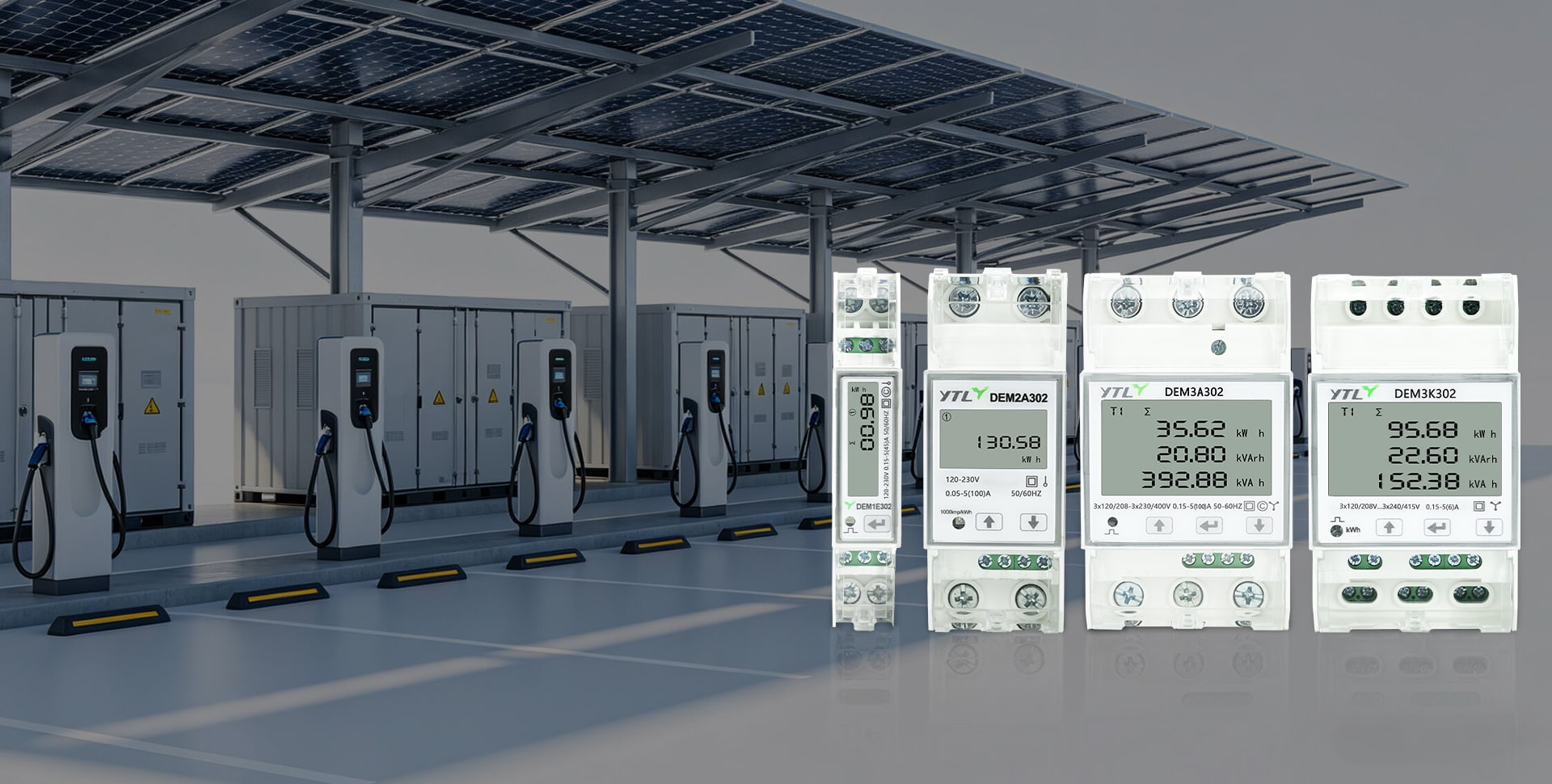
Metering accuracy is the fundamental core of electric meters. Given the huge load differences in industrial and commercial scenarios, priority must be given to matching actual power consumption characteristics to avoid insufficient accuracy or excessive redundant configuration.
Large manufacturing factories, data centers and high-energy-consuming enterprises face drastic load fluctuations and contain numerous non-linear loads such as inverters and motors, which easily generate harmonic interference. Such scenarios must adopt 0.5S high-precision meters with wide-range metering capability. They maintain stable and accurate measurement under both light low-power load and heavy high-power load conditions. Meanwhile, they support harmonic monitoring, accurately distinguishing fundamental wave energy and harmonic energy, and providing reliable data support for power quality improvement.
For commercial complexes, office buildings, chain stores, medium and small industrial parks with relatively stable power loads, the core demands include tenant apportionment and internal cost accounting. Class 1.0 compliant meters are sufficient for such scenarios, featuring high metering consistency, fair and credible data, effectively avoiding billing disputes among tenants and ensuring accurate internal accounting.
Special attention should be paid that low-precision meters will produce cumulative errors after long-term operation. Seemingly minor deviations will result in considerable economic losses under the large power consumption of industrial and commercial scenarios. Therefore, accuracy matching is the first principle of meter selection.
2. Functional Integration: Fit Management Needs and Empower Refined Operation
The value of modern industrial and commercial meters far exceeds basic metering. Rich built-in functions are the key to realizing refined energy management and reducing power costs. Selection must closely align with enterprises’ actual management goals.
Maximum demand metering is a rigid requirement for enterprises adopting the two-part electricity tariff. It accurately records the maximum average power within a set cycle, helps enterprises grasp real-time power consumption peaks, reasonably regulate loads, avoid high penalties caused by demand over-limit, and greatly reduce basic electricity expenses.
Time-of-use multi-tariff metering adapts to local peak-valley electricity tariff policies. It accurately measures power consumption during peak, flat and valley periods respectively, providing data basis for enterprises to formulate peak-shifting power consumption plans. By adjusting the operating hours of high-energy-consuming equipment, enterprises can maximize peak-valley arbitrage benefits and effectively save electricity costs.
Load curve recording continuously collects core electrical parameters such as voltage, current and power at high-density time intervals to form a complete power consumption data archive. By analyzing power consumption curves, enterprises can accurately locate high-energy-consuming equipment and abnormal power consumption periods, providing scientific support for energy-saving renovation, equipment operation and maintenance, and power consumption strategy optimization, and boosting efficient energy utilization.
3. Communication Capability: Ensure Data Interconnection and Avoid Information Isolation
In the era of energy digitalization, smart meters need to connect with energy management systems and cloud platforms to realize data sharing. The compatibility of communication methods and protocols directly determines data transmission stability and system integration difficulty.
Communication methods shall be selected according to on-site conditions:
- RS485 wired communicationfeatures strong stability and outstanding anti-interference performance, suitable for factories and workshops with convenient wiring and strong industrial interference.
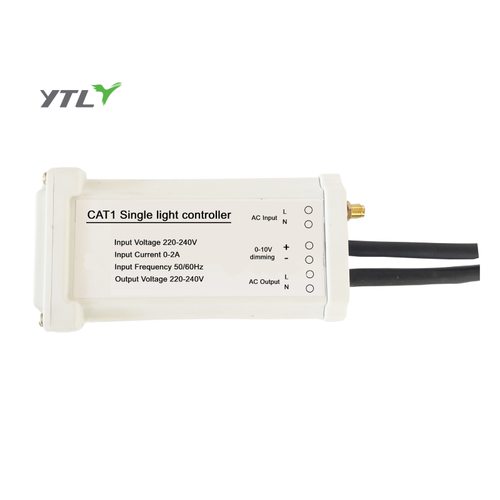
- NB-IoT and Cat.1 wireless communicationoffer flexible deployment without complicated wiring, ideal for renovation scenarios such as industrial parks and commercial buildings, lowering construction costs.
Communication protocols are the core of data interconnection and must be compatible with back-end management systems:
- For international projects or connection with high-end IoT systems, compatibility with DLMS/COSEM and MQTTis required to ensure seamless data upload and stable interaction, preventing information isolation caused by protocol incompatibility and reduced energy management efficiency.
4. Compliance & Reliability: Adapt to Industrial Environments and Guarantee Long-Term Stable Operation
Industrial and commercial meters need to run continuously 7×24 hours for years, while coping with harsh industrial conditions including voltage fluctuation, temperature variation and electromagnetic interference. Compliance and reliability are the bottom line for long-term stable operation.
Compliance certification is the prerequisite for legal use:
- For international projects, products shall pass MID and CE certificationsand meet IEC international standards to comply with global market access requirements.
Product reliability must adapt to industrial scenarios: Choose industrial-grade meters with a wide operating temperature range and strong electromagnetic interference resistance, capable of withstanding high temperature, low temperature and strong electromagnetic environments to reduce failure rates. Meanwhile, they shall support recording and alarming of abnormal events such as overload, overvoltage and electric leakage, promptly detect potential power safety hazards, guarantee equipment and power consumption safety, and lower operation and maintenance risks.
Summary
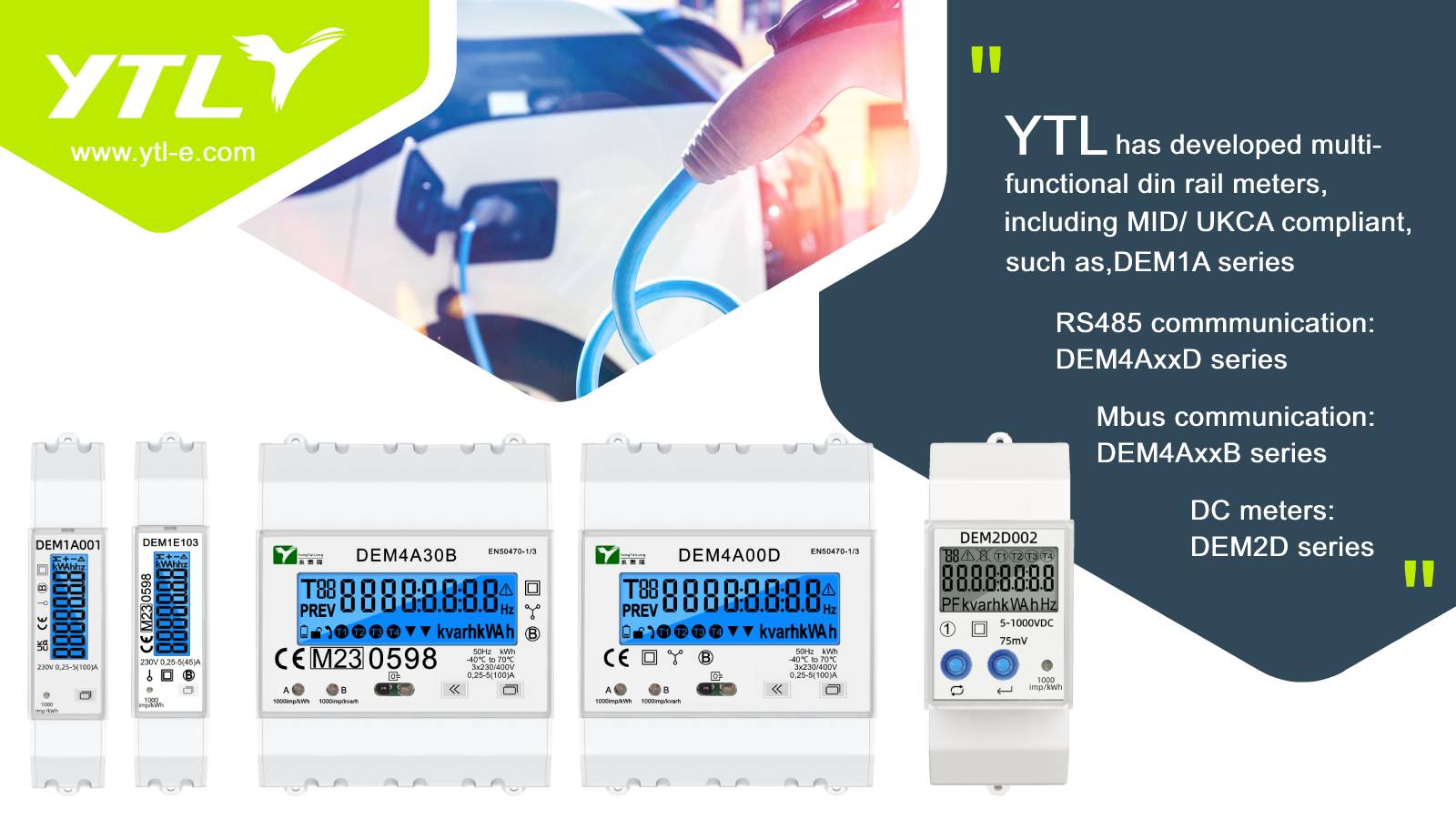
The selection of industrial and commercial smart meters is a systematic decision covering metering performance, functional requirements, communication integration, compliance and reliability. There is no need to blindly pursue high-end configuration, nor ignore core performance merely to cut costs. The core lies in precisely matching meter performance with enterprise power consumption scenarios and management goals.
A properly selected smart meter not only meets basic metering and billing demands, but also empowers enterprises to achieve refined energy management, reduce operational costs, ensure compliance and safety, and inject continuous momentum into high-quality business development.
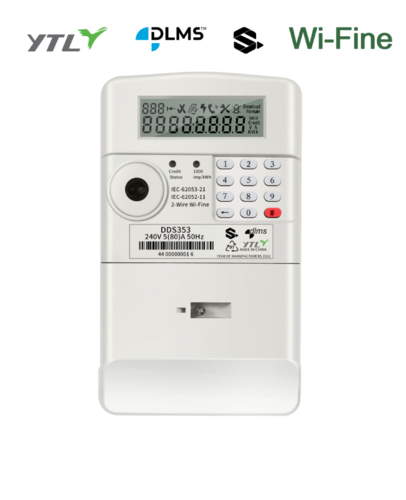
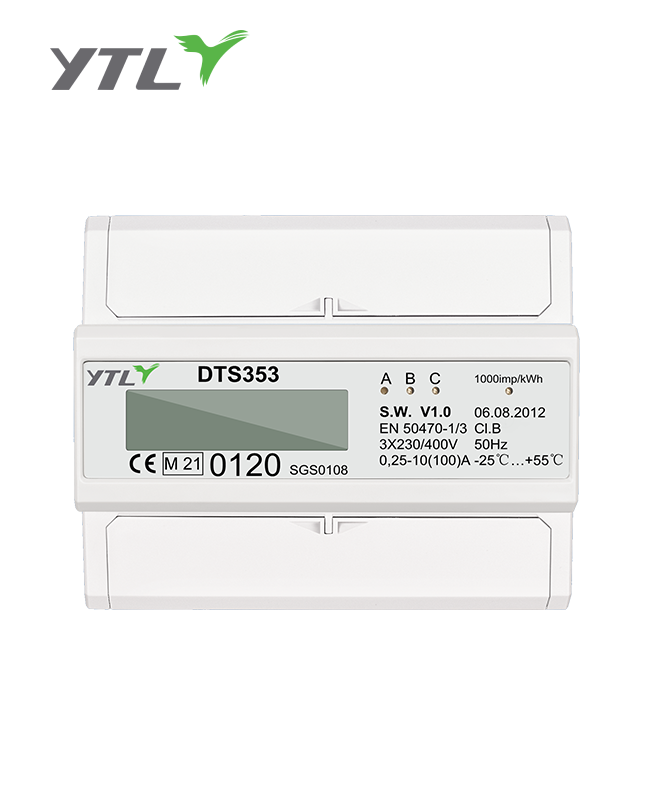
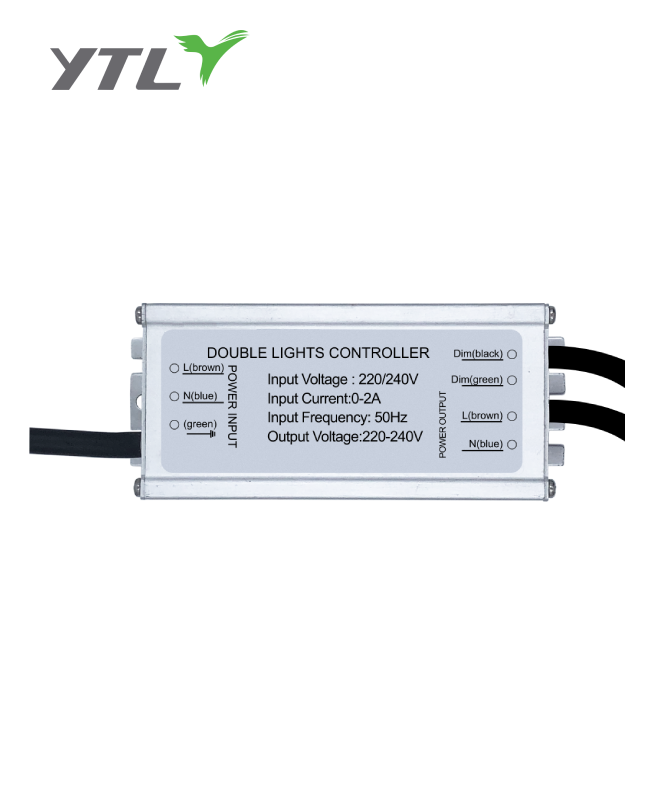
.png?imageView2/2/w/500/h/500/format/png/q/100 "YTL STS Prepaid Wi-Fine Energy Meter Single Phase Wall")
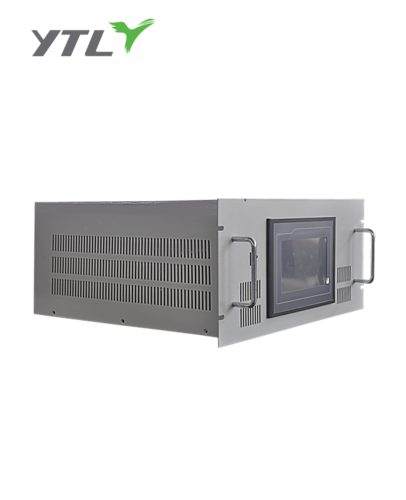
.png?imageView2/2/w/500/h/500/format/png/q/100 "YTL China Single Phase IC card Prepayment Electricity Meter")
.png?imageView2/2/w/500/h/500/format/png/q/100 "YTL Single Phase Active Electronic Electricity Meter")