
 English
 简体中文
简体中文



Against the backdrop of the large-scale and market-oriented operation of electrochemical energy storage systems, the accurate measurement of internal energy flow within battery assets has become the cornerstone for achieving efficient, safe, and cost-effective operation. The bidirectional DC energy meter, installed on the DC side of the energy storage converter (PCS), serves as the core device providing this critical insight. It not only acts as an independent benchmark for evaluating system efficiency and economic benefits, but also constitutes a vital data source for realizing refined battery management and intelligent operation and maintenance (O&M).

I. Why are Bidirectional DC Meters Indispensable for Energy Storage Systems?
The core function of an energy storage system is to shift electrical energy across time, involving two opposite energy flow directions: charging and discharging. Traditional unidirectional DC meters are unable to distinguish energy flow directions, leading to measurement failure. Therefore, purpose-built bidirectional DC meters are the inevitable choice for DC-side metering in energy storage systems, with their core values embodied in the following aspects:
- Accurate Evaluation of System PerformancePrecise measurement of charging and discharging capacities is the core basis for calculating the round-trip efficiency of energy storage systems, directly impacting the validation of project economic models and the assessment of revenue returns.
- Support for Refined Battery Asset ManagementBy providing real-time, high-precision data on charging/discharging power and energy, it serves as a key independent data source for battery management systems (BMS) to perform state estimation, health status assessment, and equalization strategy optimization.
- Enable System O&M and DiagnosticsContinuous monitoring of key DC-side parameters such as voltage, current, and power establishes a foundational data layer for system condition monitoring, fault tracing, and performance analysis.
II. Working Principles and Core Technologies of Bidirectional DC Meters
Bidirectional metering achieves intelligent identification of current direction and energy accumulation through dedicated hardware design and software processing.
1. Working Principles
Based on the directional characteristics of DC current, the meter continuously measures the voltage and current of the DC bus via high-precision sampling circuits.
- Direction Judgment: Real-time determination of current direction is implemented through hardware circuits or algorithms (typically defined as: energy flow into the battery is "charging/forward direction", and the reverse is "discharging/reverse direction").
- Energy Accumulation: The meter is equipped with two sets of independent energy registers internally, which separately accumulate forward and reverse energy, and finally output the "total charging energy" and "total discharging energy".
2. Core Technical Challenges
- Wide-Range and High-Precision Measurement: It is necessary to maintain high linearity and low error (e.g., meeting Class 0.5 or higher accuracy standards) across the entire operating range, from near-zero to full power conditions.
- Ultra-Low Zero Drift: This is the key to achieving accurate measurement of small currents and correct direction judgment, relying on the selection of precision components and advanced automatic calibration technologies.
- Rapid Dynamic Response: To accurately track the rapid power changes when the energy storage system responds to dispatching commands, high sampling rates and fast data processing capabilities are required.
III. Selection Guide for Bidirectional DC Meters in Energy Storage Systems
1. Accuracy and Range: Matching System Specifications
- Accuracy Class: Select according to the importance of the application. Class 1.0 or Class 0.5 is commonly used for internal performance evaluation; for critical efficiency acceptance or as a reference for internal settlement, Class 0.5 or Class 0.2 should be considered (in accordance with standards such as IEC 62053-41).
- Current/Voltage Range: The rated value should be higher than the maximum operating current/voltage of the system with an appropriate margin (20-30% is recommended), while paying attention to the accuracy indicators under small current conditions.
2. Key Functions and Interfaces
- Bidirectional Independent Metering: Ensure the meter is equipped with two sets of independent energy accumulators and supports separate data reading.
- Real-Time Data Monitoring: It should be able to read key parameters such as voltage, current, power, power direction, and cumulative energy of each direction through communication interfaces.
- Communication Interfaces and Protocols
- Basic Configuration: RS-485 + Modbus RTU, suitable for industrial integration scenarios.
- Advanced/International Configuration: Support for Ethernet (TCP/IP), DLMS/COSEM (applicable to European and high-end markets), or IEC 61850 (applicable to standardized integration of large-scale power stations).
- Data Logging: Built-in load profile recording and event logging functions facilitate O&M analysis and fault diagnosis.
3. Environmental Adaptability and Reliability
- Operating Temperature Range: Must match the extreme environment of energy storage containers, with typical requirements of -30℃ to +70℃ (wide-temperature design).
- Protection Class: Select according to the installation location (indoor cabinet/container interior). It is usually not lower than IP20; for scenarios with dustproof and waterproof requirements, IP54 or higher should be chosen.
- Electromagnetic Compatibility (EMC): Excellent EMC performance is essential to resist high-frequency interference generated by equipment such as PCS.
4. Certifications and Compliance (Crucially Important)
- Domestic Market (China): The meter should be equipped with the CPA (Pattern Approval Certificate for Measuring Instruments).
- International Markets: Must comply with the mandatory access requirements of the target market, such as:
- Europe: CE certification (including EMC and LVD directives); if metrological functions are involved, compliance with the MID directive or RED requirements should be evaluated.
- North America: UL or cUL certifications (e.g., UL 61010, UL 2735).
- Other Regions: KC certification for South Korea, INMETRO certification for Brazil, etc.
Choosing products with corresponding certifications for the target market is a prerequisite for the smooth delivery and long-term compliant operation of projects.
IV. Installation and Application Recommendations
- Installation Location: It is recommended to install the meter on the main DC busbar between the battery cluster outlet and the PCS input, ensuring that the measurement covers all energy flows to be metered.
- System Integration: Stably connect the DC meter to the energy storage management system (EMS) to ensure that the software can correctly parse and utilize bidirectional energy data for efficiency calculation, report generation, and O&M decision-making.
- Regular Calibration: As a key measuring device, it is advisable to include the meter in the regular maintenance plan and conduct on-site accuracy verification using traceable DC standard sources to ensure long-term data credibility.
Conclusion: Enabling Visualized and Value-Oriented Management of Energy Storage Assets
In the era where energy storage systems operate as important power assets, the precise tracking of every kilowatt-hour of electricity is the foundation for optimizing operations, ensuring revenue, and validating business models. A properly selected and reliable bidirectional DC meter provides an indispensable data support for realizing the visualization, quantification, and optimization of battery asset performance.
For system integrators and operators, investing in a high-precision bidirectional DC metering solution goes beyond simple equipment procurement; it is essentially a strategic investment in building asset digital management capabilities, enhancing operational transparency, and improving the scientificity of decision-making. Selecting professional bidirectional DC meters that meet stringent standards and possess global compliance certifications lays a solid data foundation for the long-term value and safe operation of energy storage assets.
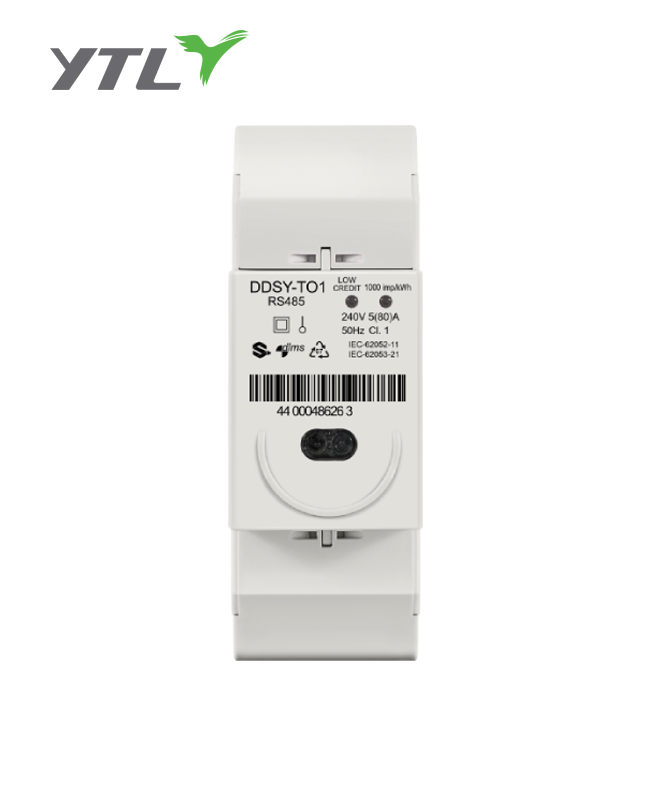
.png?imageView2/2/w/500/h/500/format/png/q/100 "YTL STS Prepaid Wi-Fine Energy Meter Single Phase Wall")
.png?imageView2/2/w/500/h/500/format/png/q/100 "YTL China Single Phase IC card Prepayment Electricity Meter")