
 English
 简体中文
简体中文



In energy management for the industrial and commercial sector, the selection of smart electricity meters is a critical decision that directly impacts operational costs and management efficiency. Compared with residential power consumption, industrial and commercial scenarios feature complex electrical loads, diverse billing methods and in-depth data requirements, thus imposing higher-level demands on the functions and performance of smart electricity meters. Selecting the appropriate smart electricity meter is not only to meet basic metering needs, but also a strategic measure to build a refined energy management system, achieve energy conservation, consumption reduction and cost optimization.

I. Core Requirements Based on Accurate Metering and Load Analysis
The primary step in selecting smart electricity meters for industrial and commercial use is to conduct a comprehensive assessment of one's own metering needs and load characteristics. Industrial and commercial premises of different scales exhibit significant differences in the fluctuation range of electrical loads, harmonic content and requirements for metering accuracy. For scenarios with large and highly variable loads such as large manufacturing enterprises or data centers, it is necessary to select meters with a wide measuring range, high accuracy and long-term stability to ensure precise metering under all operating conditions including light and heavy loads. Meanwhile, such scenarios usually have a large number of non-linear loads that are prone to causing grid harmonic pollution. Therefore, the meters need to be equipped with harmonic measurement and analysis capabilities, which can accurately measure fundamental wave energy and harmonic energy, providing a data basis for power quality management. For scenarios that require internal cost allocation such as commercial buildings and chain stores, high requirements are placed on the standard accuracy and consistency of meters to ensure the fairness and credibility of allocation data. An in-depth analysis of one's own load characteristics and metering accuracy requirements is the foundation for avoiding over-configuration or under-configuration in meter selection.
II. Function Integration and Data Support for Management Needs
The value of modern smart electricity meters for industrial and commercial use far exceeds simple metering, and their selection needs to focus on how their functional integration supports enterprises' energy management decisions. Basic electrical energy metering is a necessary function, while the advanced demand measurement function is crucial for users implementing two-part electricity pricing or demand management. It can record the maximum average power within a specific period, helping users avoid additional electricity fees caused by exceeding demand limits. In addition, the multi-tariff billing function allows users to measure electricity consumption separately according to electricity price policies in different time periods such as peak, flat and valley, providing a data basis for implementing peak-shifting power consumption and saving electricity costs. In terms of data collection and recording, meters with load curve recording capabilities should be selected, which can record key parameters such as voltage, current and power at high-density time intervals to form historical data files. These data are valuable resources for energy efficiency analysis, load characteristic research, abnormal power consumption diagnosis and optimization of power consumption strategies. Therefore, the selection of meters should be closely aligned with the management goals that the data ultimately serve.
III. Considering Communication Protocols and Scalability for System Integration
With the increasing popularity of the Internet of Things and intelligent management systems, the selection of smart electricity meters must fully consider their communication capabilities and system integration potential. As end devices for data collection, meters need to upload data to energy management systems or cloud platforms through various communication methods. Common communication methods include RS-485 wired communication and wireless communication technologies such as 4G, LoRa and NB-IoT. Wired communication is stable and reliable, while wireless communication has the advantage of flexible deployment, and the selection should be based on on-site wiring conditions and cost budgets. More importantly, the communication protocols supported by the meters must be compatible with the back-end management system. At present, standard protocols such as Modbus and DL/T645 are widely used, and with the development of the industry, support for IoT-friendly protocols such as MQTT has become increasingly important. Ensuring that meters can seamlessly access existing or planned management platforms is a technical prerequisite for maximizing data value and avoiding the formation of "information silos".
IV. Ensuring Reliability and Compliance Certification for Long-Term Operation
Industrial and commercial electricity meters usually need to operate continuously for a long time in industrial environments with possible voltage fluctuations, temperature changes and electromagnetic interference. Therefore, their reliability, safety and compliance are indispensable factors in selection. Products should have good anti-interference performance and a wide operating temperature range to adapt to complex on-site environments. In terms of safety, meters must comply with relevant electrical safety standards to ensure reliable insulation and protection performance. In addition, in accordance with national or regional regulatory requirements, meters used for trade settlement must obtain the corresponding type approval certificate for measuring instruments, which is a mandatory prerequisite for the legal use of meters in electricity fee settlement. Selecting products with complete certification qualifications and a reliable quality system is the basic guarantee for the long-term benefits of investment.
In summary, selecting the right smart electricity meters for industrial and commercial scenarios is a systematic process that requires a comprehensive consideration of metering performance, functional requirements, communication integration, and compliance reliability. Its core lies in the accurate matching of the performance characteristics of meters with the actual management goals and operational scenarios of enterprises. A prudent and scientific selection can not only meet the basic needs of metering and charging, but also open a smart door for enterprises to achieve refined energy management and sustainable development.
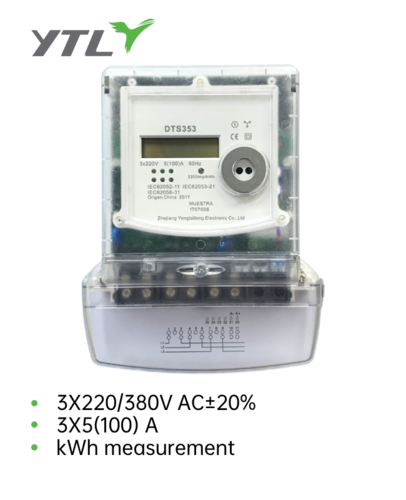
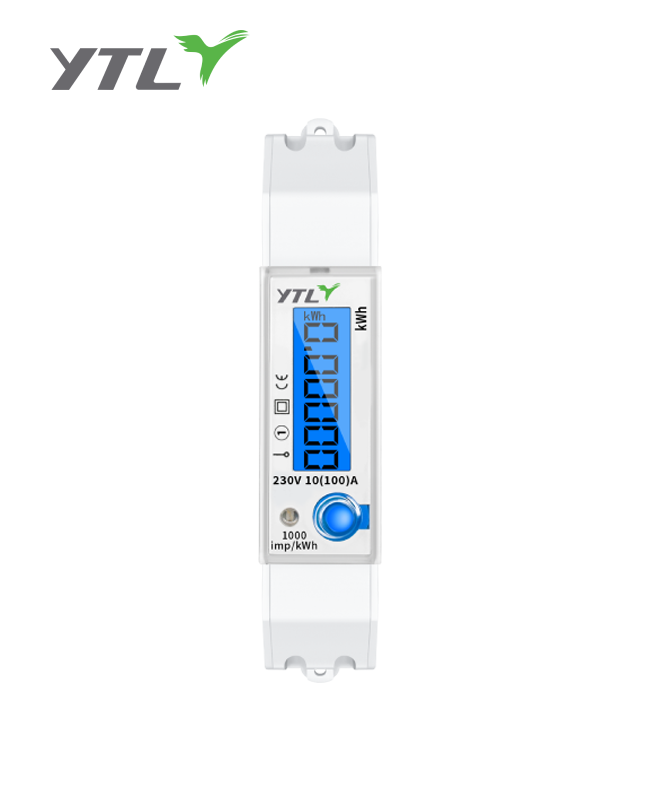
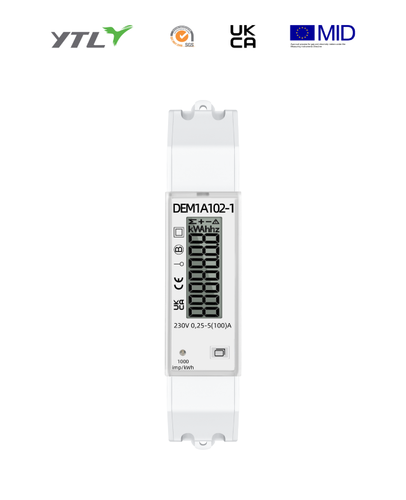
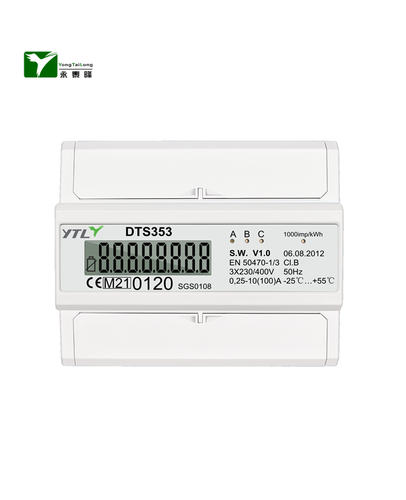
.png?imageView2/2/w/500/h/500/format/png/q/100 "YTL Two Phase Three Wire Big counter Electricity Meter")
.png?imageView2/2/w/500/h/500/format/png/q/100 "YTL China Single Phase IC card Prepayment Electricity Meter")
.png?imageView2/2/w/500/h/500/format/png/q/100 "YTL Single Phase Active Electronic Electricity Meter")