
 English
 简体中文
简体中文



1. Introduction: The Silent Sentinels of Your Energy Consumption
Every home and business relies on a crucial, often overlooked device to manage one of the most vital modern services: electricity. This device is the electric meter.
Electric meters are the indispensable silent sentinels positioned at the boundary between the power grid and your property. Their primary purpose is to accurately quantify the amount of electrical energy consumed over a period of time. This measurement is not just a technical detail; it forms the foundation for your monthly utility bill, ensuring you are charged precisely for the power you use and enabling effective energy conservation efforts.
While the end result—a reading in kilowatt-hours (kWh)—is simple, the technology behind this accurate measurement is sophisticated. Electric meters must continuously and reliably perform two key functions:
- Measure Power (Wattage) Instantly: Determine the rate at which energy is being used at any given moment.
- Integrate Over Time: Track and total this power usage over hours, days, and months to calculate the total Energy Consumption.
This article aims to demystify the science that powers your electricity bill. We will explore the fundamental principles of electricity and then dive into the ingenious mechanics of electromechanical (induction) meters and the advanced processing of electronic (digital) meters. By the end of this comprehensive guide, you will understand exactly how electric meters measure wattage and ensure precise billing.
| Term | Abbreviation | Definition | Unit of Measure |
|---|---|---|---|
| Power | P | The rate at which electrical energy is consumed or produced. | Watt (W) |
| Energy | E | Total power consumed over a period of time. | Kilowatt-hour (kWh) |
| Voltage | V | The electrical potential difference that drives the current. | Volt (V) |
| Current | I | The rate of flow of electric charge (electrons). | Ampere (A) |
2. Basic Electrical Concepts (Revised)
Before delving into how meters measure power, it is essential to understand the fundamental building blocks of an electrical circuit: voltage, current, and power (wattage).
Voltage (Potential Difference)
Voltage is the electrical potential difference between two points in a circuit. Think of it as the pressure or force that pushes electrons through a conductor.
- Concept: The energy required to move a unit of electric charge.
- Analogy: In a water system, voltage is equivalent to the water pressure in a pipe.
- Unit of Measure: The Volt.
Current (Flow of Electrons)
Current is the rate at which electric charge, carried by electrons, flows past a point in a circuit.
- Concept: The directed movement of electric charge.
- Analogy: In a water system, current is equivalent to the rate of water flow (volume per unit of time).
- Unit of Measure: The Ampere, often shortened to “Amp.”
The Relationship: Power (Wattage)
Power—often referred to as wattage—is the rate at which electrical energy is transferred or consumed. It is the crucial measure that combines both the force driving the electrons (Voltage) and the volume of electrons flowing (Current).
The relationship between these three concepts is the cornerstone of electrical measurement:
Power (Watts) is the product of Voltage (Volts) and Current (Amps).
This means that an appliance using 120 Volts and drawing 10 Amps is consuming 1,200 Watts of power. Electric meters are engineered precisely to continuously sense and combine these two inputs, Voltage and Current, to calculate this instantaneous Power value.
3. Types of Electric Meters
To accurately measure the power and total energy consumed, two primary types of meters have been developed and deployed worldwide.
- Electromechanical Induction Meters (Analog Meters): These are the classic meters featuring a spinning disc and mechanical dials. They rely on the physical interaction of magnetic fields to measure energy. They calculate consumption by mechanically integrating the instantaneous power over time.
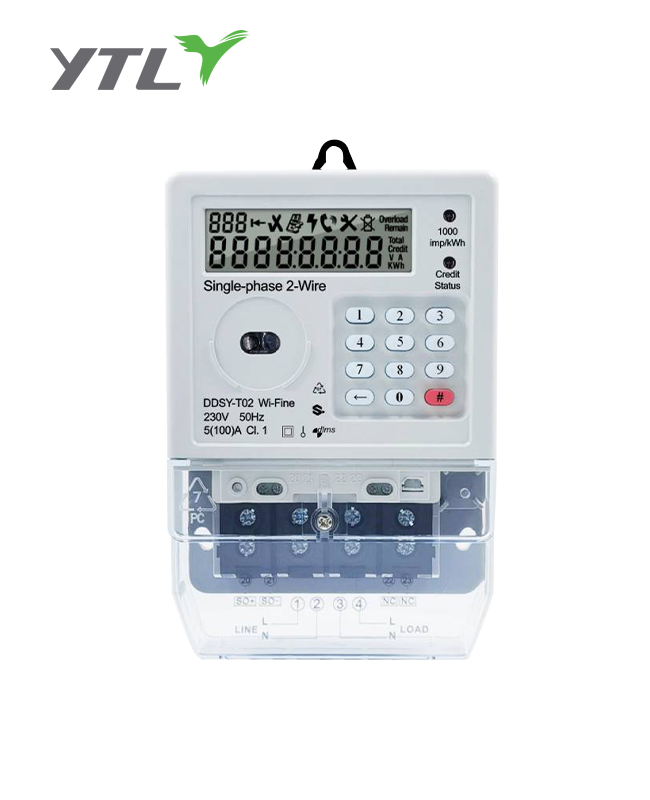
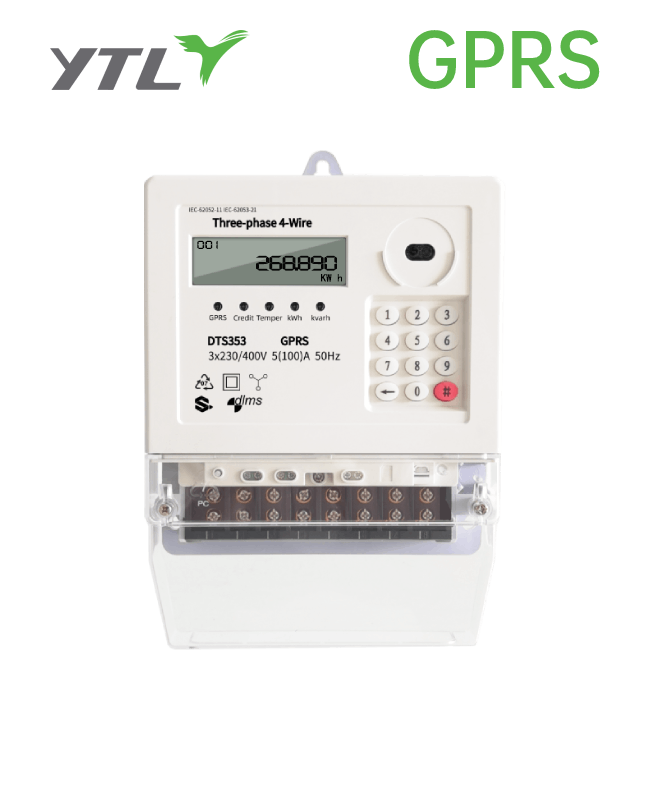
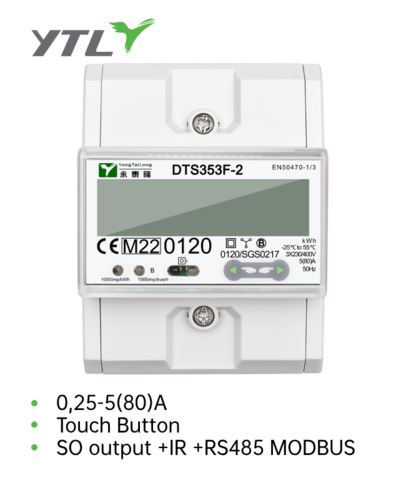
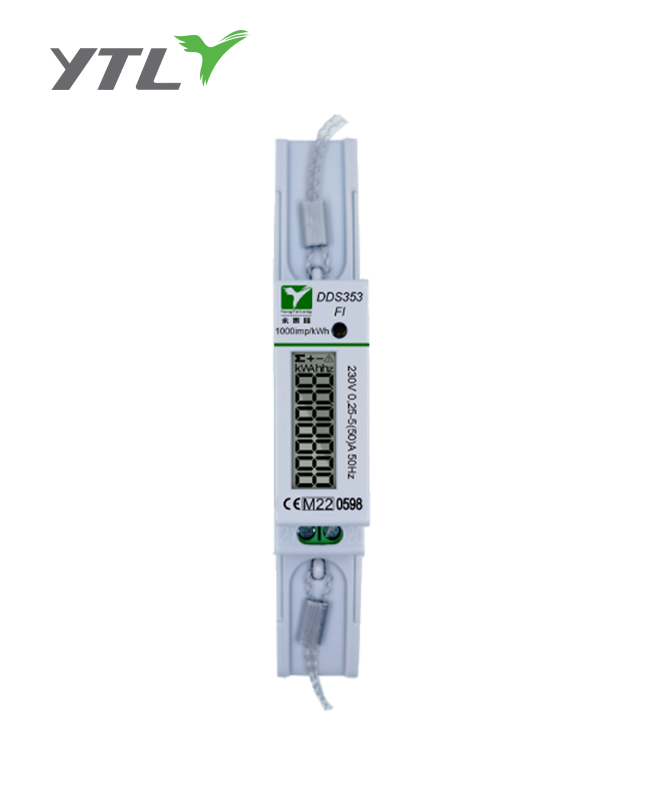
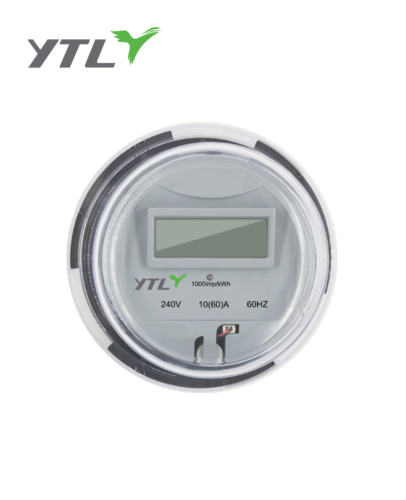
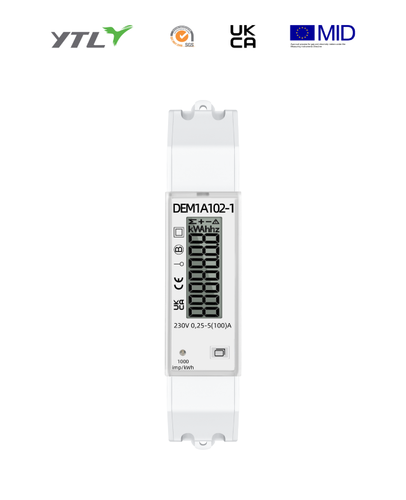
- Electronic Meters (Digital Meters): These are modern meters that use electronic components, sensors, and microprocessors to digitally sample and calculate power consumption. They offer greater accuracy and advanced features. This category includes modern Smart Meters.
4. How Electromechanical (Induction) Meters Measure Wattage
The electromechanical induction meter, often called the analog meter, is a masterful device of physics and engineering. It uses the principles of electromagnetism to perform a continuous analog calculation of energy consumption.
The Components
An induction meter operates through the precise interaction of four main components:
- Voltage Coil (Potential Coil): This coil, consisting of many fine wire turns, is connected across the supply line (in parallel) to sense the system voltage.
- Current Coil (Series Coil): This coil, consisting of a few turns of heavy wire, is connected in series with the load to sense the system current.
- Rotating Aluminum Disc: A lightweight, non-magnetic aluminum disc is positioned in the air gap between the two coil systems.
- Gears and Dials: A system of gears connected to the disc’s spindle that drives the mechanical register (the dials) to record the total usage.
The Measurement Mechanism
The measurement process relies on creating opposing forces proportional to the electrical load: a Driving Torque and a Braking Torque.
1. Creating the Driving Torque
- Magnetic Field Generation: When electricity flows, the Voltage Coil creates a magnetic field proportional to the voltage, and the Current Coil creates a magnetic field proportional to the current.
- Interaction and Eddy Currents: These two time-varying magnetic fields pass through the aluminum disc. According to Faraday’s Law of Induction, the change in magnetic flux induces swirling electric currents within the disc, known as eddy currents.
- Driving Force: The interaction between the eddy currents and the magnetic field of the opposite coil (e.g., the eddy currents from the voltage coil interacting with the magnetic field of the current coil) produces a rotational force, or Driving Torque, on the aluminum disc.
- Torque is Proportional to Wattage: Crucially, the magnitude of this driving torque is directly proportional to the product of the voltage and current, meaning the torque is directly proportional to the instantaneous power (wattage) being consumed.
2. Regulating the Speed
- Braking Magnet: A permanent magnet, known as the Braking Magnet, is strategically placed near the edge of the disc.
- Braking Torque: As the disc rotates, it cuts through the braking magnet’s field, inducing new eddy currents that create a magnetic braking force (Braking Torque). This braking torque is proportional to the speed of the disc.
3. Measuring Energy
- Stable Rotation: The disc’s speed quickly stabilizes when the Driving Torque (proportional to Wattage) equals the Braking Torque (proportional to speed). Therefore, the rotational speed of the disc is directly proportional to the wattage being consumed.
- Energy Integration: The total number of rotations made by the disc over time is accumulated by the gear system. Since the speed represents power (rate of energy use), the total number of rotations represents the total energy consumed in kilowatt-hours (kWh).
5. How Electronic (Digital) Meters Measure Wattage (Revised)
Electronic meters, often referred to as digital meters or smart meters, represent a significant technological leap from their mechanical predecessors. They utilize advanced electronics and digital signal processing to achieve high accuracy and enable sophisticated features.
The Components
An electronic meter functions essentially as a highly specialized computer designed to measure and calculate power consumption. Its core components include:
- Voltage Sensors: Circuits that tap into the line in parallel to accurately measure the electrical pressure.
- Current Sensors (Shunts or Current Transformers): Devices connected in series to measure the rate of electron flow. These sensors can measure a voltage drop across a precise resistance or measure the magnetic field created by the current.
- Analog-to-Digital Converter (ADC): A crucial component that takes the continuous, wave-like electrical signals from the sensors and converts them into discrete numerical digital values.
- Microprocessor (or Digital Signal Processor - DSP): The “brain” of the meter. It performs calculations, stores data, manages communications, and controls the display.
- Digital Display: An LCD or LED screen to clearly present the energy consumption data in kilowatt-hours.
The Measurement and Calculation Process
The process in a digital meter is one of high-speed sampling and computation:
1. Real-Time Sensing and Conversion
The voltage and current sensors continuously monitor the power line. Unlike mechanical meters, electronic meters measure the instantaneous values of both voltage and current thousands of times every second. The Analog-to-Digital Converter instantly changes these wave-like signals into streams of clean, numerical data.
2. Calculating Instantaneous Power (Wattage)
The microprocessor takes the digitized voltage and current values for each tiny sample period and calculates the instantaneous power by performing a simple multiplication:
Power is determined by multiplying the instantaneous digital value of Voltage by the instantaneous digital value of Current.
This calculation is performed continuously and at high speed to accurately capture the exact power being consumed at every moment.
3. Calculating Energy Consumption
To find the total energy consumption (kilowatt-hours), the microprocessor performs a process called digital integration. It sums up all the instantaneous power readings over a period of time.
The meter continuously adds up the power used over time to determine the total energy consumed.
This digital accumulation is highly accurate and is the fundamental mechanism for tracking total energy usage.
4. Data Display and Storage
The calculated total energy data is stored securely in the meter’s memory and clearly shown on the digital display as a total in kilowatt-hours. Modern electronic meters can also store detailed consumption profiles, allowing for advanced analysis and reporting of energy usage.
6. Accuracy and Calibration
The function of an electric meter is critical, as it serves as the official register for financial transactions between the utility provider and the customer. Therefore, accuracy is paramount. Meter accuracy ensures fair billing for consumers and proper revenue recovery for providers.
The Importance of Accuracy
An inaccurate meter, whether running too fast or too slow, can lead to significant financial discrepancies over time:
- Under-registration (Slow Meter): The utility company loses revenue, and the consumer gets electricity for free, which is unsustainable for the grid.
- Over-registration (Fast Meter): The consumer is overcharged, leading to increased costs and mistrust in the utility service.
Both international and national organizations, such as the International Electrotechnical Commission (IEC) and various governmental bodies, set strict standards for meter performance, often mandating that modern meters maintain an accuracy class of 1.0, 0.5, or even higher.
Calibration: Ensuring Precision
Calibration is the precise process used to test and adjust a meter to ensure its readings are consistently within the acceptable tolerance levels defined by regulatory standards.
- The Process: Meters are tested against highly accurate reference standards (often called “working standards” or “master meters”) in controlled laboratory environments. This process verifies that the meter’s output (disc rotation speed or digital calculation) perfectly matches the known power input under various load conditions (light load, full load, and balanced loads).
- Adjustment: For electromechanical meters, calibration involves physically adjusting the position of the coils or magnets to fine-tune the torque. For electronic meters, calibration is done digitally, adjusting the multiplication factors within the microprocessor firmware.
- Sealing and Certification: Once a meter passes the calibration tests, it is officially certified and often sealed. These seals confirm that the meter has been tested and that its internal mechanisms cannot be tampered with or altered without breaking the seal.
Standards and Regulations
Regulatory bodies establish the legal requirements for meter accuracy and testing frequency. These standards ensure uniformity and consumer protection. Key standards cover areas such as:
- Starting Current: The minimum current required to make the meter register usage.
- Measurement Range: Accuracy must be maintained from minimal loads up to the maximum rated current.
- Drift Over Time: Meters are expected to maintain their accuracy over their entire service life, typically 10 to 20 years, often necessitating periodic re-calibration or replacement.
7. Factors Affecting Meter Readings
While electric meters are designed for high precision, various internal and external factors can influence their performance and the accuracy of the recorded readings. Understanding these factors is essential for maintaining the integrity of the billing process.
Voltage Fluctuations
Electric meters are calibrated for a specific nominal voltage (e.g., 120 V or 240 V).
- Impact: Significant or sustained deviations from this nominal voltage—either sags (low voltage) or swells (high voltage)—can affect the accuracy, particularly in older electromechanical meters. These fluctuations change the magnetic forces acting on the disc.
- Mitigation: Electronic meters are designed with built-in voltage regulation and compensation features to maintain accuracy across a wider operating voltage range.
Harmonics in the Electrical System
Harmonics are distortions of the pure sinusoidal (smooth wave) shape of the alternating current (AC) waveform. They are typically caused by modern electronic devices with switching power supplies, such as computers, LED lights, and variable speed drives.
- Impact: Harmonics create electrical “noise” that can challenge measurement. Older induction meters are designed to measure power at the fundamental frequency (50 Hz or 60 Hz) and may under-register power consumption when high levels of harmonics are present.
- Mitigation: Digital meters, especially those employing advanced Digital Signal Processors (DSPs), are specifically engineered to sample the waveform fast enough to capture and accurately measure the energy content of these harmonics, leading to a more accurate total power calculation.
Temperature Variations
Ambient temperature can affect the physical properties of the meter’s components.
- Impact: In both types of meters, temperature changes can subtly alter the resistance of coils, the magnetic strength of magnets, or the behavior of electronic circuits, leading to slight inaccuracies.
- Mitigation: Meters are manufactured using temperature-compensating alloys and materials. They must also pass rigorous type-approval tests that demonstrate accuracy maintenance across a broad operating temperature range.
Meter Tampering
Meter tampering refers to unauthorized, intentional interference with the meter to prevent it from accurately recording energy consumption.
- Methods: This can range from simple attempts to physically slow the disc in an old induction meter to more sophisticated attempts to manipulate the firmware or sensors in digital meters.
- Detection: Modern Smart Meters have built-in security and advanced monitoring features that can detect and log various forms of tampering, including changes in magnetic fields, terminal cover openings, and sudden, impossible drops in consumption. This data is often relayed immediately to the utility via the communication network.
8. Smart Meters and Advanced Metering Infrastructure (AMI)
The evolution from mechanical meters to electronic meters has culminated in the widespread adoption of Smart Meters, which form the backbone of the Advanced Metering Infrastructure (AMI). Smart meters do everything a digital meter does—measure voltage, current, and calculate energy—but add a two-way communication capability.
Smart Meter Capabilities
Smart meters are fundamentally digital energy measurement devices enhanced with sophisticated communication technology. This allows them to move beyond simple consumption tracking to become integrated network endpoints.
- Two-Way Communication: Unlike traditional meters that require a utility worker to manually read the display, smart meters can securely transmit consumption data back to the utility and receive commands (like updates or tariff changes) from the utility. This communication typically occurs over various networks, including cellular, radio frequency mesh, or power line carrier (PLC).
- Remote Reading: This eliminates the need for manual site visits, reducing operational costs and ensuring timely, accurate billing.
- Time-of-Use (TOU) Pricing: Smart meters can record consumption at short intervals (e.g., every 15 minutes or every hour). This granular data enables utilities to implement Time-of-Use pricing, where electricity costs are higher during peak demand hours and lower during off-peak hours. This incentivizes consumers to shift energy use, helping balance the grid.
- Outage Detection and Restoration: Smart meters can immediately notify the utility when power goes out and when it is restored. This dramatically improves the utility’s ability to quickly and accurately identify outage locations and speed up restoration efforts.
- Detailed Energy Consumption Data: Consumers can often access their consumption data through portals or in-home displays, giving them unprecedented visibility into when and how they are using energy. This is a powerful tool for energy management and conservation.
Advanced Metering Infrastructure (AMI)
AMI is the complete system that integrates smart meters, communication networks, and data management systems. It is the platform that turns raw meter readings into actionable information for the utility and the consumer.
| Component | Function | Benefit |
|---|---|---|
| Smart Meters | Collect and transmit detailed consumption data. | Enables granular billing and customer insight. |
| Communication Network | Securely relays data between the meters and the utility’s office. | Allows for remote reading and real-time management. |
| Meter Data Management System (MDMS) | Stores, processes, and validates the enormous volumes of data collected. | Ensures data accuracy and prepares information for billing and analysis. |
By providing near real-time data and advanced functionalities, smart meters are a critical component in building a smarter, more resilient, and efficient electricity grid.
Conclusion: Mastering the Measurement of Energy
The electric meter, whether a classic electromechanical device or a modern electronic smart meter, stands as a sophisticated instrument vital to modern life. Its core function—the precise measurement of power usage—is accomplished through ingenious application of electrical physics and digital technology.
We have explored the dual approaches to decoding wattage:
- Electromechanical Meters: These utilize the physical principles of electromagnetism. By creating a driving torque proportional to the product of voltage and current (Wattage) and balancing it against a braking torque, the meter ensures the aluminum disc’s rotational speed is directly proportional to the instantaneous power consumption. The cumulative rotations mechanically integrate this power over time to yield the total energy (kilowatt-hours).
- Electronic Meters: These employ sensors, Analog-to-Digital Converters (ADCs), and microprocessors. They digitally sample the voltage and current waveforms thousands of times per second, accurately calculate the instantaneous power, and digitally sum these values over time to determine the total energy consumed.
The journey of the electric meter continues with the rollout of Smart Meters and the Advanced Metering Infrastructure (AMI). These modern devices not only provide highly accurate measurement across a wide range of electrical conditions but also introduce two-way communication, enabling crucial functions like time-of-use billing, faster outage detection, and providing consumers with detailed insight into their energy habits.
Ultimately, the science behind the meter guarantees that your bill is a precise reflection of your consumption. This accuracy is fundamental, supporting the financial stability of utility grids while empowering consumers to manage their energy use efficiently.
Frequently Asked Questions (FAQs)
Q1: What is the difference between Wattage and Kilowatt-hour (kWh)?
A: Wattage (Watts) is the measure of instantaneous power—the rate at which electricity is being consumed at any given moment. Think of it like the speed of a car (miles per hour).
Kilowatt-hour (kWh), on the other hand, is the measure of total energy consumption. It is Wattage used over a period of time. This is the unit used for billing. Using the car analogy, kWh is the total distance traveled. If you use 1,000 Watts (1 Kilowatt) for 1 hour, you have consumed 1 kWh.
Q2: How does a digital meter measure energy more accurately than an electromechanical meter, especially with modern appliances?
A: Digital meters achieve higher accuracy through digital sampling and processing. Modern electronic devices (like computers and variable speed drives) often introduce harmonics (distortions) into the electrical waveform.
Electromechanical meters are primarily designed to measure power at the standard frequency and may struggle to accurately account for the energy content within these harmonics. Digital meters use high-speed Analog-to-Digital Converters (ADCs) to sample the full, distorted waveform thousands of times per second. This allows the internal microprocessor to accurately calculate the true power consumption, including the energy from harmonics, ensuring a more precise reading.
Q3: What is “calibration” and why is it important for my electric meter?
A: Calibration is the process of testing and adjusting an electric meter to ensure its measurements are consistently accurate and compliant with strict national and international regulatory standards (e.g., accuracy class 1.0 or 0.5).
Calibration is critical because the meter acts as the cash register for electricity consumption. A meter that is running too fast leads to overbilling consumers, while a meter running too slow results in revenue loss for the utility. Regular calibration guarantees fairness and trust in the billing system.
Q4: How does a Smart Meter help me manage my electricity costs?
A: Smart Meters provide two main advantages for cost management:
- Time-of-Use (TOU) Pricing: They record when energy is used in short intervals (e.g., every 15 minutes). This allows utilities to charge different rates based on the time of day (higher during peak demand, lower during off-peak). You can save money by shifting high-energy activities (like running a washing machine) to cheaper, off-peak hours.
- Detailed Visibility: Smart meters allow you to access your consumption data in near real-time, often via an online portal. This high level of insight helps you identify specific appliances or times of day where your energy use spikes, enabling you to make informed decisions for conservation.
Q5: Can external factors like voltage fluctuations or temperature affect a meter reading?
A: Yes, external factors can influence meter readings, although modern meters are designed to compensate for them:
- Voltage Fluctuations: Significant deviations from the standard voltage can affect the magnetic fields in older electromechanical meters. Electronic meters are generally better at compensating for these shifts.
- Temperature: Extreme temperature variations can subtly alter the physical properties of internal components (like resistance of coils or magnet strength). Meters are manufactured with temperature-compensating materials and rigorously tested to maintain accuracy across a wide range of operating temperatures.

.png?imageView2/2/w/500/h/500/format/png/q/100 "YTL Two Phase Three Wire Big counter Electricity Meter")