
 English
 简体中文
简体中文



In the commercial and industrial power metering sector, systems are primarily categorized into high-voltage (HV) and low-voltage (LV) metering based on the supplied voltage class. High-voltage metering generally refers to measurement at medium-voltage (MV, e.g., 10kV, 20kV, 35kV) and higher voltage levels, while low-voltage metering applies to distribution voltage levels (e.g., 400V, 480V, 415V). As core metering devices, three-phase energy meters exhibit systematic differences in technical schemes, supporting equipment, and management objectives between these two scenarios. This paper aims to analyze their distinctions and provide professional configuration insights.
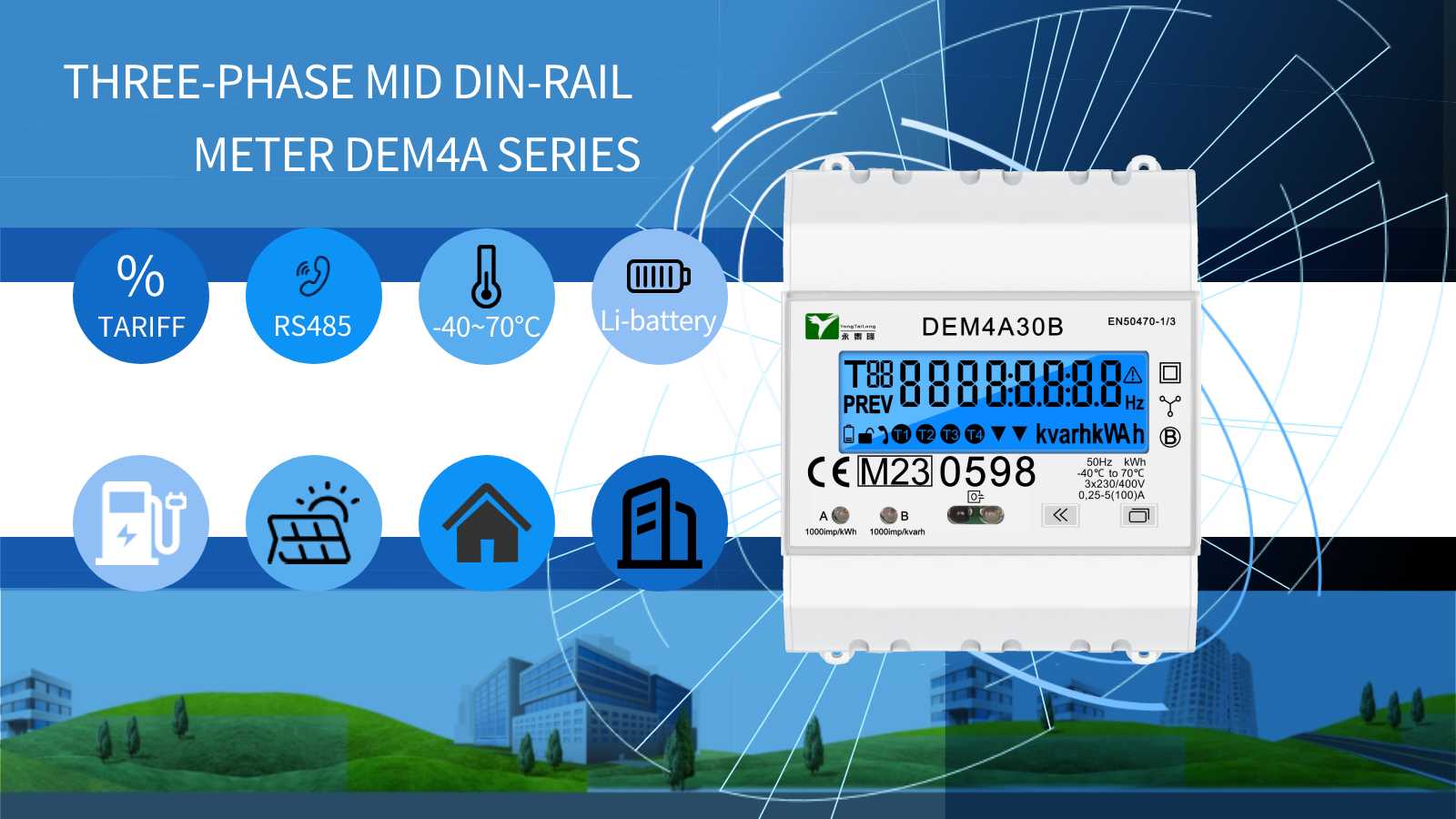
I. Core Differences: Technical Essence and Application Objectives
Low-Voltage Metering: Measures power consumption at distribution terminals either directly or through low-voltage current transformers. Characterized by low voltage levels and intuitive, flexible technical solutions, its core objectives include internal energy cost allocation, refined energy efficiency management, and equipment monitoring.
High-Voltage Metering: Must rely on high-voltage voltage transformers (VTs) and current transformers (CTs) to convert high voltage and large current from the primary system into standard secondary signals for measurement. Centered on highly reliable and accurate system integration, it primarily serves as a statutory or standard metering point for trade settlement with power grid companies, while imposing extremely high requirements on system safety.
II. High-Voltage Metering (Trade Settlement Point) Configuration Scheme
This is a systematic project prioritizing accuracy, reliability, and regulatory compliance.
1. Core Configuration Elements
- High-Precision Revenue Meters: Select wide-range, high-precision three-phase smart meters, such as Class 0.5S (IEC 62053-22)or Class 0.2 Mandatory functions include time-stamped event recording (e.g., under-voltage, under-current, phase loss, reverse phase sequence), as well as tariff management, demand measurement, data freezing, and remote communication capabilities.
- High-Precision Measuring Transformers: The cornerstone of system accuracy. The accuracy classes of CTs and VTs must match those of the energy meter, with typical selections being Class 0.2 or 0.2S (IEC 61869). CT ratio selection should ensure that the user's normal load operates within 30%-100% of its rated current to avoid light-load measurement errors.
- Independent Metering Cabinets/Enclosures: Metering VT/CT secondary circuits, energy meters, and junction boxes shall be installed in independent, sealable metering cabinets, strictly isolated from protection and monitoring circuits to ensure metering chain independence and data security.
- Secondary Circuit Requirements: Use dedicated wires with sufficient cross-sectional area to minimize VT secondary voltage drop. All terminals must be securely fastened and sealed.
2. Wiring Systems and Selection
- Three-Phase Three-Wire System: Applicable to three-phase three-wire power supply systems without a neutral line (common in medium and high voltage scenarios), utilizing 2 VTs and 2 CTs.
- Three-Phase Four-Wire System: Suitable for three-phase four-wire systems with a neutral line, employing 3 VTs and 3 CTs.
- Key Meter Selection Note: The meter’s wiring system (3-wire / 4-wire) must be strictly consistent with the transformer wiring method and system configuration.
III. Low-Voltage Metering (Internal Energy Management) Configuration Scheme
Low-voltage metering solutions are versatile, guided by data acquisition and value mining.
1. Core Configuration Elements
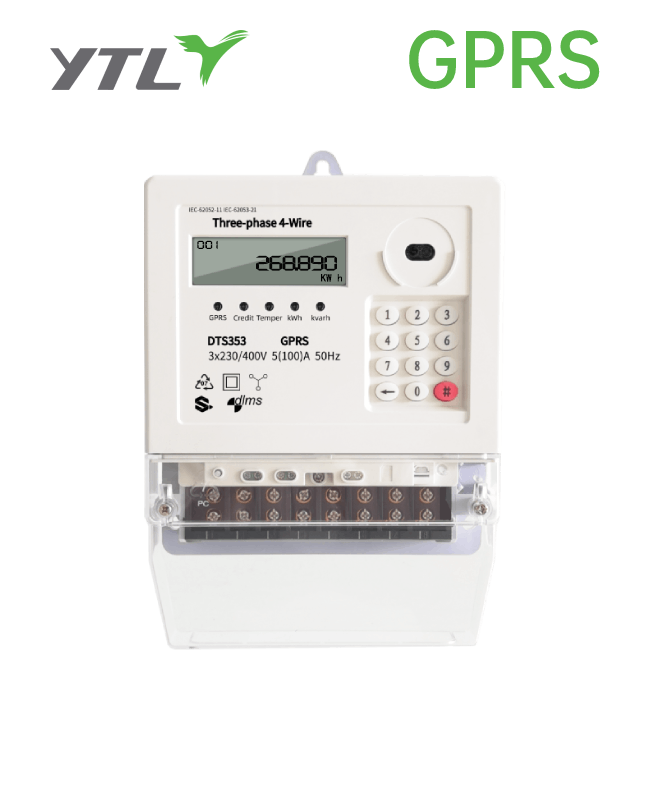
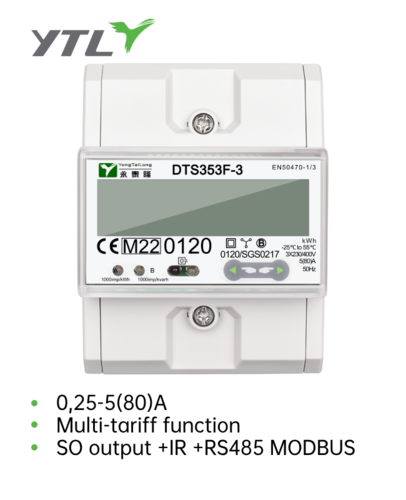
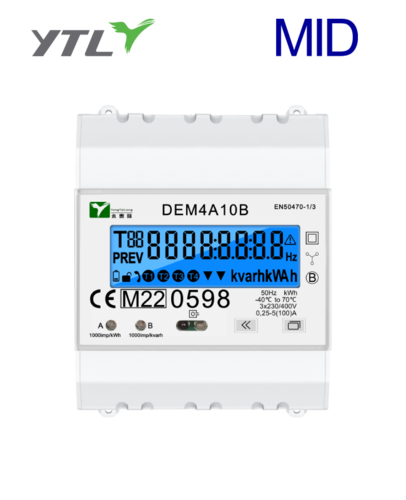
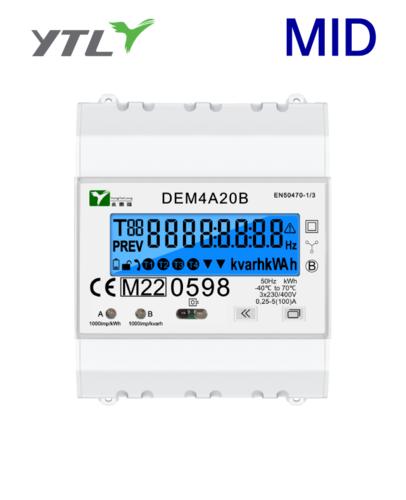
- Multi-Functional Smart Meters: Choose Class 1.0 or Class 0.5three-phase meters based on management needs. Beyond basic metering functions, prioritize features such as power quality parameters (harmonics, flicker, voltage sag/swell), high-density load profile recording, demand measurement and control, and diverse communication interfaces.
- Low-Voltage Current Transformers: Deployed when load current exceeds the meter’s direct connection limit (typically 60-100A). An accuracy class of Class 0.5is recommended. Selection should also follow the principle of range adaptation.
- Communication and Integration: Communication protocols are critical. In addition to the industrial standard Modbus, evaluate support for protocols like DLMS/COSEM (global utility standard), IEC 61850 (for large substations), or M-Bus (European building standard)to meet system integration and future expansion needs.
2. Typical Application Layers
- Main Incoming Line Metering: Install top-tier multi-functional meters to achieve enterprise-wide power consumption monitoring (energy, demand, power factor, power quality).
- Zonal/Sub-Item Metering: Implement independent metering for air conditioning, lighting, process equipment, etc. Cost-effective "economy-grade" multi-functional meters can be selected, provided communication consistency is ensured.
- Critical Equipment Metering: For high-power, variable-frequency, or harmonic-generating equipment, meter selection must emphasize dynamic response characteristics and harmonic measurement capabilities.
IV. Universal Principles for Selection and Configuration
- Accuracy Chain Matching Principle: The overall error of the metering system is determined by the least accurate component. Ensure the accuracy classes of the meter, CTs, and VTs are coordinated.
- Range Adaptation Principle: Transformer ratio selection should be centered on long-term operating load to maintain operation within the optimal accuracy range.
- Functionality Appropriateness and Forward-Looking Principle: Avoid under-configuration or over-configuration. Reserve communication bandwidth and data storage capacity for future data applications (e.g., energy efficiency analysis, carbon accounting).
- Compliance Principle: High-voltage settlement point schemes must fully comply with local regulations and utility technical requirements. Low-voltage internal metering schemes should ensure internal data recognition and auditability.

Conclusion: From Accurate Metering to Data Value Empowerment
High-voltage and low-voltage metering represent distinct roles of energy meters in the power value chain: the former acts as a precise arbiter ensuring fair trade and regulatory compliance, while the latter serves as a data engine driving energy efficiency improvements and management optimization.
For meter manufacturers, the ability to provide comprehensive solutions—ranging from high-voltage revenue metering systems (including transformers and cabinet integration) to low-voltage IoT smart meter clusters—is the cornerstone of serving diverse markets. Deeper competitiveness lies in integrating these two layers of data flow to deliver end-to-end value-added services for customers, spanning from compliant settlement to energy efficiency insights.
For users, a professional configuration scheme holds significance beyond equipment procurement. It is the first step in converting intangible power consumption into visible, manageable, and optimizable digital assets, laying a solid data foundation for sustainable operations and enhanced competitiveness.
.png?imageView2/2/w/500/h/500/format/png/q/100 "YTL Two Phase Three Wire Big counter Electricity Meter")