
 English
 简体中文
简体中文



1 Introduction to Industrial Power Quality and Metering
The global manufacturing landscape is undergoing a radical transformation. As Industry 4.0 matures in 2026, the reliance on sensitive electronic equipment, automated assembly lines, and high-capacity robotics has made power quality a top priority for facility managers. Industrial environments are notoriously harsh on electrical systems. Rapid load switching, the presence of non-linear loads, and high-frequency noise create a chaotic electrical ecosystem.
High-precision electric meters are no longer just billing tools; they are the primary diagnostic sensors for the modern factory. In this article, we explore how advanced metering technology addresses the specific challenges of demanding manufacturing environments, ensures operational continuity, and optimizes energy costs through precision data.
2 The Economic Impact of Poor Power Quality
Poor power quality is a silent profit killer. For a large-scale manufacturing plant, even a micro-fluctuation in voltage can trigger a system-wide shutdown, resulting in hours of downtime and thousands of dollars in wasted raw materials. High-precision meters help identify these issues before they lead to catastrophic failure.
The following table summarizes the common power quality issues and their direct impact on manufacturing operations:
| Power Quality Issue | Potential Cause | Impact on Manufacturing |
|---|---|---|
| Voltage Sags | Starting of large motors | PLC resets, motor stalling, and equipment damage |
| Harmonic Distortion | Variable Frequency Drives (VFDs) | Overheating of transformers and erratic sensor readings |
| Transients | Lightning strikes or heavy switching | Electronic component failure and insulation breakdown |
| Power Factor Lag | Inductive loads (motors, pumps) | Increased utility penalties and system inefficiency |
3 Technical Requirements for High Precision in Factories
In a residential setting, a basic accuracy class is sufficient. However, in an industrial setting where megawatts of power are consumed daily, a 0.1% error in measurement can translate to massive financial discrepancies.
3.1 Accuracy Classes and Standards
Modern industrial meters must adhere to strict international standards such as IEC 62053-22. High-precision meters typically fall into Class 0.2S or Class 0.5S. These standards ensure that the meter maintains its precision even at very low load currents, which is vital for monitoring standby equipment or precise batch processes.
3.2 Wide Dynamic Range
Industrial loads are highly variable. A meter must accurately capture data during a low-load night shift and a peak-load production cycle. High-precision meters use advanced Analog-to-Digital Converters (ADCs) to ensure that the dynamic range covers everything from milliamps to kiloamps without losing linearity.
4 The Role of Smart Connectivity in Industrial Environments
The value of an industrial electric meter is multiplied by its ability to communicate. In 2026, the integration of Industrial Internet of Things (IIoT) protocols has become the standard for smart factories.
4.1 Modbus TCP and RTU Protocols
Most factory automation systems rely on Modbus for communication between the meter and the Programmable Logic Controller (PLC). This allows the plant’s SCADA system to make real-time adjustments based on the meter’s data.
4.2 Ethernet and Wireless Integration
For older facilities being retrofitted, wireless protocols like NB-IoT or LoRaWAN allow for the installation of high-precision meters without the need for expensive new data cabling. For new builds, Ethernet-based meters provide the high-speed data throughput required for waveform capturing and detailed harmonic analysis.
5 Advanced Features for Demanding Environments
Manufacturing plants are electrically “noisy.” High-precision meters designed for these environments include specific hardware and software features to filter out this noise and provide clean data.
5.1 Harmonic Analysis up to the 63rd Order
Non-linear loads like VFDs and LED lighting systems introduce harmonics into the power system. Advanced meters perform Fast Fourier Transform (FFT) analysis to break down these harmonics. By identifying which order of harmonics is most prevalent, engineers can design better filtering solutions.
5.2 Waveform Capture
When a power event occurs, such as a sudden voltage spike, a high-precision meter can capture the actual waveform of the event. This “black box” functionality is essential for forensic engineering to determine the root cause of equipment failure.
6 Enhancing Energy Efficiency and Sustainability
Global regulations are increasingly requiring manufacturers to report their carbon footprint. Precision metering is the foundation of any Corporate Social Responsibility (CSR) or Environmental, Social, and Governance (ESG) strategy.
6.1 Sub-Metering for Departmental Accountability
By installing high-precision meters at the departmental or even machine level, factory managers can implement “internal billing.” This encourages shift managers to optimize their energy use and helps identify specific machines that are operating inefficiently compared to their peers.
6.2 Carbon Footprint Calculation
Modern meters can be programmed with carbon intensity factors, automatically converting kilowatt-hours into CO2 equivalents. This real-time data is invaluable for annual sustainability audits and green certifications.
7 Durability and Physical Robustness
The physical environment of a factory is often characterized by high temperatures, dust, vibration, and electromagnetic interference (EMI). A meter that works in an office will fail in a steel mill.
7.1 Ingress Protection (IP) Ratings
Industrial meters should feature high IP ratings (such as IP54 or higher) to prevent the entry of fine industrial dust or moisture. Furthermore, the casing should be made of flame-retardant materials that can withstand high ambient temperatures near furnaces or heavy machinery.
7.2 Electromagnetic Compatibility (EMC)
Because they are often installed near large motors and high-voltage switchgear, industrial meters must have superior EMC shielding. This prevents the meter’s internal electronics from being disrupted by the massive magnetic fields generated by industrial equipment.
8 Comparative Analysis of Metering Technologies
To help procurement officers make informed decisions, it is important to compare the different types of metering technologies available for industrial use.
| Feature | Standard Electronic Meter | High-Precision Industrial Meter |
|---|---|---|
| Accuracy Class | Class 1.0 or 2.0 | Class 0.2S or 0.5S |
| Harmonic Monitoring | None or Basic (up to 7th) | Advanced (up to 63rd or higher) |
| Communication | Pulse output only | Modbus, Profibus, Ethernet, MQTT |
| Data Logging | Minimal | Extensive (Event logs, Load profiles) |
| Waveform Capture | No | Yes (High-speed sampling) |
| Environmental Shielding | Standard | Enhanced (High EMC and IP rating) |
9 Implementation Strategy for Factory-Wide Metering
Upgrading a factory’s metering infrastructure should be done in phases to minimize disruption.
9.1 Phase 1: The Main Incomer
Start by installing the highest precision meter at the main utility entrance. This provides the “master data” to verify utility bills and monitor the overall health of the incoming power.
9.2 Phase 2: Critical Load Monitoring
Identify the most expensive or sensitive machines in the facility. Placing high-precision meters here ensures that these critical assets are protected and their energy consumption is tightly controlled.
9.3 Phase 3: Integration and Analytics
Once the hardware is in place, integrate the meters into a centralized Energy Management System (EMS). This software layer allows for trend analysis, predictive maintenance alerts, and automated reporting.
10 Conclusion and Future Outlook
As we move further into 2026, the intersection of energy management and digital technology will only grow deeper. High-precision electric meters are no longer peripheral devices; they are the heart of the intelligent, sustainable, and profitable factory. By investing in high-quality metering infrastructure, manufacturers can protect their equipment, satisfy regulatory requirements, and gain a significant competitive advantage through energy optimization.
The choice of a meter is a choice for the long-term stability of the manufacturing environment. For facilities that demand the highest levels of uptime and efficiency, high-precision electronic metering is the only viable path forward.
Frequently Asked Questions
FAQ 1: Why is Class 0.2S accuracy essential for industrial manufacturing?
In large scale industrial operations, even a minor deviation in measurement can lead to significant large-scale discrepancies. Class 0.2S meters provide a 0.2 percent accuracy margin and maintain this precision even at low load conditions. This is critical for high-volume billing and for monitoring expensive machinery where precise energy data is needed for ROI calculations.
FAQ 2: How do electric meters help in identifying power quality issues?
Modern high-precision meters are equipped with advanced diagnostic features such as harmonic analysis and waveform capture. They monitor total harmonic distortion and detect voltage sags or swells in real time. This allows engineers to identify whether a machine failure was caused by internal electrical noise or an external grid fluctuation.
FAQ 3: Can these meters integrate with existing factory SCADA systems?
Yes. Most industrial-grade electric meters support standard communication protocols such as Modbus RTU via RS485 or Modbus TCP via Ethernet. This ensures seamless integration with Programmable Logic Controllers and Supervisory Control and Data Acquisition systems, enabling automated energy reporting and real-time load management.
FAQ 4: What is the impact of harmonic distortion on factory equipment?
Harmonic distortion is caused by nonlinear loads like variable frequency drives and large switching power supplies. If left unmonitored, harmonics can cause transformers to overheat, motors to vibrate excessively, and sensitive electronic sensors to malfunction. High precision meters help locate the source of these harmonics to implement effective filtering. High-precision meters durable enough for harsh industrial environments?
Professional industrial meters are designed with high Ingress Protection ratings and robust Electromagnetic Compatibility shielding. They are built to withstand high temperatures, industrial dust, and intense electromagnetic interference common in steel mills, chemical plants, and heavy assembly lines.
References
- International Electrotechnical Commission. IEC 62053-22: Static meters for AC active energy (classes 0.1S, 0.2S and 0.5S). 2026 Edition.
- IEEE Standards Association. IEEE 1159: Recommended Practice for Monitoring Electric Power Quality in Industrial Applications.
- European Union Directive 2014/32/EU. Measuring Instruments Directive (MID) for Legal Metrology and Billing Integrity.
- Smart Grid Forums 2026. Global Progress in Advanced Metering Infrastructure for Industrial Sustainability.
- Journal of Industrial Automation and Energy Management. The Role of IIoT Sensors in Achieving Net Zero Manufacturing Goals.
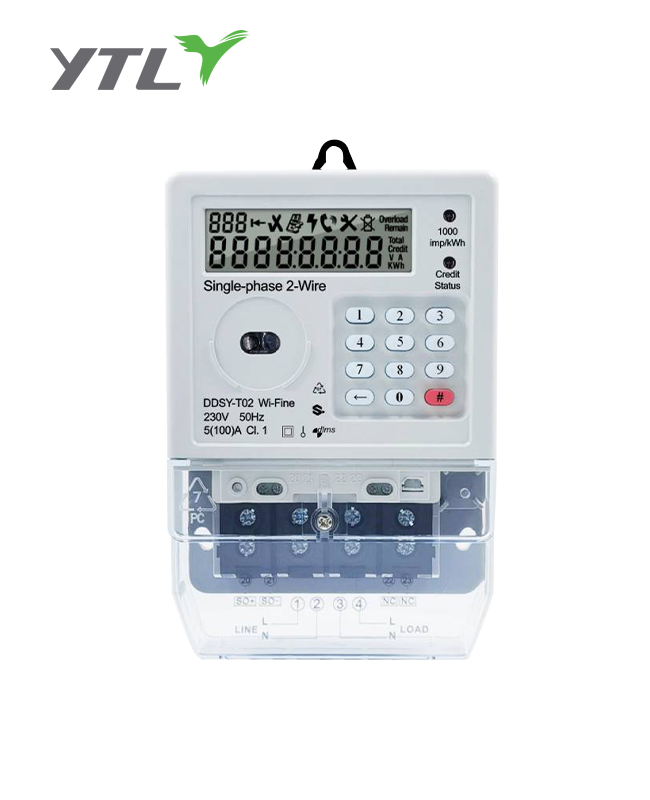
.png?imageView2/2/w/500/h/500/format/png/q/100 "YTL Single Phase Active Electronic Electricity Meter")