As the summer peak electricity consumption period arrives, various rumors about smart electric meters have resurfaced again. Claims such as "meters being accelerated", "self-power consumption being passed on to users", and "manual control of metering speed" have caused doubts among many residents. Based on authoritative expert interpretations and experimental verification, these claims have no scientific basis. The truth is as follows:
1. "After replacing with a smart meter, electricity bills increase because the meter is accelerated"? The misunderstanding stems from "more accurate metering"
Many users feel that electricity consumption "rises" after replacing with a smart meter. In fact, this is because the sensitivity of smart meters is far higher than that of traditional mechanical meters – they can capture tiny currents that mechanical meters cannot detect, rather than being "accelerated".
- Accurate metering covers "invisible power consumption": Devices such as televisions with power plugs not pulled out, smart toilet seats with heating functions (in standby mode), and aging electrical appliances will all consume small amounts of electricity. Traditional meters can hardly measure this "invisible power consumption", while smart meters record it accurately, making users mistakenly believe that "power consumption has increased".
- Better stability in metering: Smart meters use electronic chips for metering, and their accuracy will not decrease with the increase of service life. In contrast, traditional mechanical meters are prone to wear and tear after long-term use, leading to a gradual decline in metering accuracy.

2. "The self-power consumption of smart meters is passed on to users"? The power supply company bears all the costs
Online rumors claim that "the power consumption of smart meters for battery charging and function operation is borne by users", which is completely inconsistent with the facts.
- Clear division of responsibilities in design: During the R&D and design stage of smart meters, their self-power consumption has been taken into account. The metering module of the meter only counts the electricity used on the user's side. The power consumption generated by the meter's own operation is fully borne by the power supply company and will not be included in residents' electricity bills.
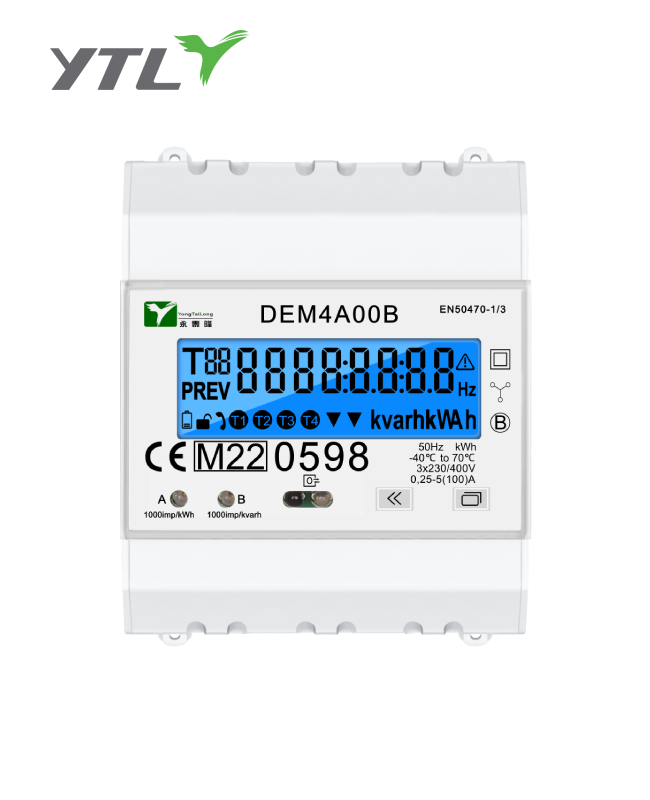
- Residents can verify by themselves: On the premise of ensuring no electricity leakage at home, turn off the main household switch. If the pulse light of the meter stops flashing, it indicates that no metering is taking place at this time, and there is no "passing on of additional power consumption".
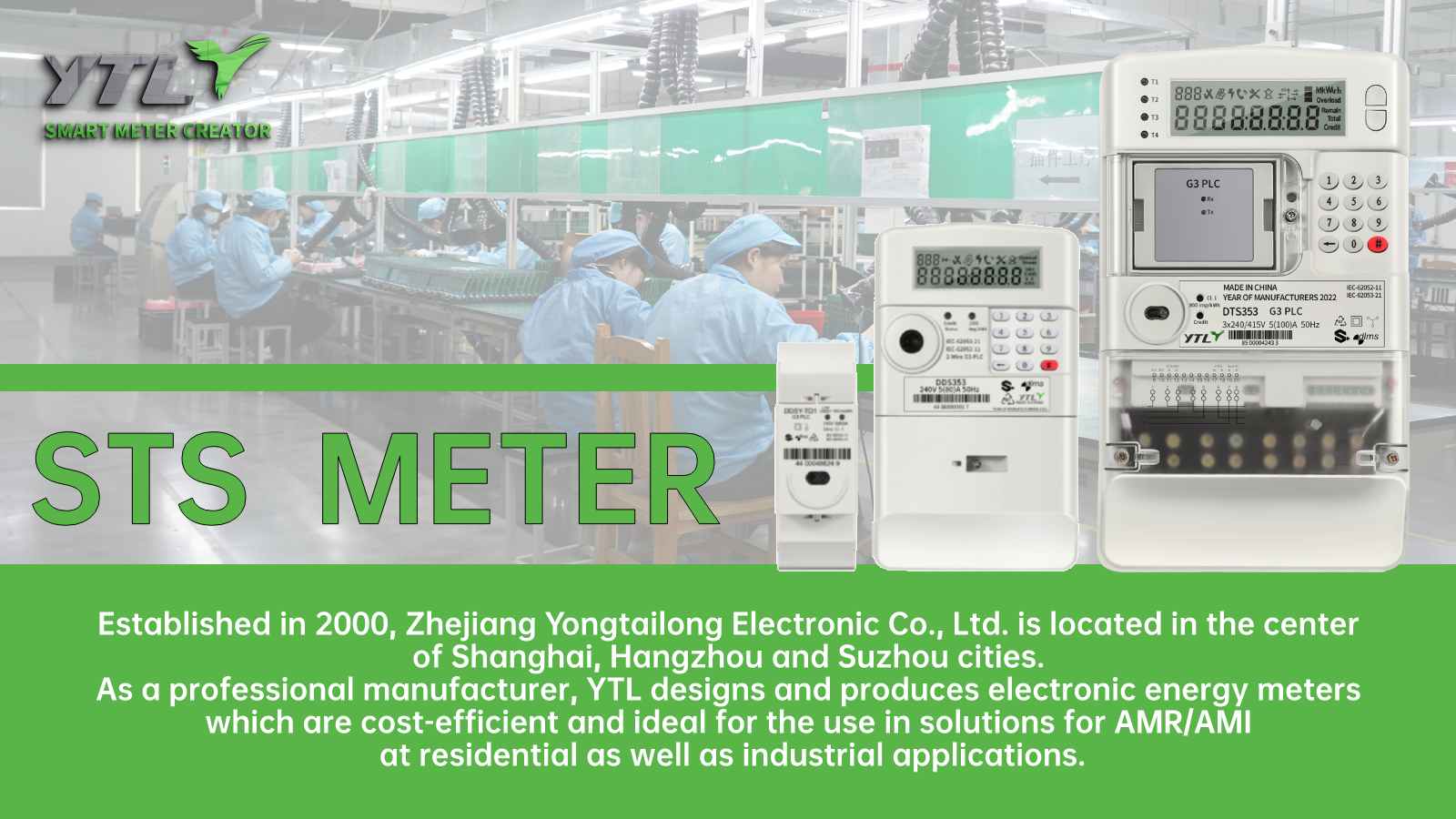
3. "The metering speed of meters can be controlled by knobs or strong magnets"? Both experiments and regulations prove it wrong
Online "meter control tricks" such as "twisting the meter knob to adjust speed" and "using strong magnets to stop the meter from counting" have been refuted by authoritative experiments and the legal regulatory system.
- "Adjusting the meter with a knob" is nonsense: The so-called "knob that can adjust metering" mentioned in online videos is actually just an ordinary fixing screw of the meter. Tightening or loosening it has no impact on metering accuracy, and there is no possibility of "electricians adjusting the meter".
- "Controlling speed with strong magnets" fails in experiments: The Guiyang Metering Operation and Maintenance Team of China Southern Power Grid conducted a comparative experiment: a strong magnet was attached to a qualified smart meter, and both this meter and another meter without a magnet were used to measure "one kilowatt-hour of electricity" at the same time. The results showed that the readings of the two meters were completely consistent, and the strong magnet had no interference with the meter's counting.
- Three-tier supervision eliminates metering deviations: In China, smart meters are subject to mandatory management in accordance with theMeasurement Law of the People's Republic of China. A meter must pass "three checkpoints" from factory to household use: the quality control checkpoint of the manufacturer, the inspection checkpoint of the power company, and the supervision checkpoint of the government market regulatory department. These three checkpoints are closely linked and indispensable. No manual tampering or metering deviation can pass the inspection process.
In conclusion, the metering accuracy and responsibility division of smart meters are subject to strict standards and scientific basis. Online claims such as "controlling metering speed" and "passing on power consumption" are all rumors. If residents have doubts about the metering of their home meters, they can apply to the local power supply department for professional verification, and should not believe false information online.
# Authoritative Debunking! Smart Electric Meters Cannot "Control Metering Speed" – All These Claims Are False As the summer peak electricity consumption period arrives, various rumors about smart electric meters have resurfaced again. Claims such as "meters being accelerated", "self-power consumption being passed on to users", and "manual control of metering speed" have caused doubts among many residents. Based on authoritative expert interpretations and experimental verification, these claims have no scientific basis. The truth is as follows: ## 1. "After replacing with a smart meter, electricity bills increase because the meter is accelerated"? The misunderstanding stems from "more accurate metering" Many users feel that electricity consumption "rises" after replacing with a smart meter. In fact, this is because the sensitivity of smart meters is far higher than that of traditional mechanical meters – they can capture tiny currents that mechanical meters cannot detect, rather than being "accelerated". - **Accurate metering covers "invisible power consumption"**: Devices such as televisions with power plugs not pulled out, smart toilet seats with heating functions (in standby mode), and aging electrical appliances will all consume small amounts of electricity. Traditional meters can hardly measure this "invisible power consumption", while smart meters record it accurately, making users mistakenly believe that "power consumption has increased". - **Better stability in metering**: Smart meters use electronic chips for metering, and their accuracy will not decrease with the increase of service life. In contrast, traditional mechanical meters are prone to wear and tear after long-term use, leading to a gradual decline in metering accuracy. ## 2. "The self-power consumption of smart meters is passed on to users"? The power supply company bears all the costs Online rumors claim that "the power consumption of smart meters for battery charging and function operation is borne by users", which is completely inconsistent with the facts. - **Clear division of responsibilities in design**: During the R&D and design stage of smart meters, their self-power consumption has been taken into account. The metering module of the meter only counts the electricity used on the user's side. The power consumption generated by the meter's own operation is fully borne by the power supply company and will not be included in residents' electricity bills. - **Residents can verify by themselves**: On the premise of ensuring no electricity leakage at home, turn off the main household switch. If the pulse light of the meter stops flashing, it indicates that no metering is taking place at this time, and there is no "passing on of additional power consumption". ## 3. "The metering speed of meters can be controlled by knobs or strong magnets"? Both experiments and regulations prove it wrong Online "meter control tricks" such as "twisting the meter knob to adjust speed" and "using strong magnets to stop the meter from counting" have been refuted by authoritative experiments and the legal regulatory system. 1. **"Adjusting the meter with a knob" is nonsense**: The so-called "knob that can adjust metering" mentioned in online videos is actually just an ordinary fixing screw of the meter. Tightening or loosening it has no impact on metering accuracy, and there is no possibility of "electricians adjusting the meter". 2. **"Controlling speed with strong magnets" fails in experiments**: The Guiyang Metering Operation and Maintenance Team of China Southern Power Grid conducted a comparative experiment: a strong magnet was attached to a qualified smart meter, and both this meter and another meter without a magnet were used to measure "one kilowatt-hour of electricity" at the same time. The results showed that the readings of the two meters were completely consistent, and the strong magnet had no interference with the meter's counting. 3. **Three-tier supervision eliminates metering deviations**: In China, smart meters are subject to mandatory management in accordance with the *Measurement Law of the People's Republic of China*. A meter must pass "three checkpoints" from factory to household use: the quality control checkpoint of the manufacturer, the inspection checkpoint of the power company, and the supervision checkpoint of the government market regulatory department. These three checkpoints are closely linked and indispensable. No manual tampering or metering deviation can pass the inspection process. In conclusion, the metering accuracy and responsibility division of smart meters are subject to strict standards and scientific basis. Online claims such as "controlling metering speed" and "passing on power consumption" are all rumors. If residents have doubts about the metering of their home meters, they can apply to the local power supply department for professional verification, and should not believe false information online.# Authoritative Debunking! Smart Electric Meters Cannot "Control Metering Speed" – All These Claims Are False As the summer peak electricity consumption period arrives, various rumors about smart electric meters have resurfaced again. Claims such as "meters being accelerated", "self-power consumption being passed on to users", and "manual control of metering speed" have caused doubts among many residents. Based on authoritative expert interpretations and experimental verification, these claims have no scientific basis. The truth is as follows: ## 1. "After replacing with a smart meter, electricity bills increase because the meter is accelerated"? The misunderstanding stems from "more accurate metering" Many users feel that electricity consumption "rises" after replacing with a smart meter. In fact, this is because the sensitivity of smart meters is far higher than that of traditional mechanical meters – they can capture tiny currents that mechanical meters cannot detect, rather than being "accelerated". - **Accurate metering covers "invisible power consumption"**: Devices such as televisions with power plugs not pulled out, smart toilet seats with heating functions (in standby mode), and aging electrical appliances will all consume small amounts of electricity. Traditional meters can hardly measure this "invisible power consumption", while smart meters record it accurately, making users mistakenly believe that "power consumption has increased". - **Better stability in metering**: Smart meters use electronic chips for metering, and their accuracy will not decrease with the increase of service life. In contrast, traditional mechanical meters are prone to wear and tear after long-term use, leading to a gradual decline in metering accuracy. ## 2. "The self-power consumption of smart meters is passed on to users"? The power supply company bears all the costs Online rumors claim that "the power consumption of smart meters for battery charging and function operation is borne by users", which is completely inconsistent with the facts. - **Clear division of responsibilities in design**: During the R&D and design stage of smart meters, their self-power consumption has been taken into account. The metering module of the meter only counts the electricity used on the user's side. The power consumption generated by the meter's own operation is fully borne by the power supply company and will not be included in residents' electricity bills. - **Residents can verify by themselves**: On the premise of ensuring no electricity leakage at home, turn off the main household switch. If the pulse light of the meter stops flashing, it indicates that no metering is taking place at this time, and there is no "passing on of additional power consumption". ## 3. "The metering speed of meters can be controlled by knobs or strong magnets"? Both experiments and regulations prove it wrong Online "meter control tricks" such as "twisting the meter knob to adjust speed" and "using strong magnets to stop the meter from counting" have been refuted by authoritative experiments and the legal regulatory system. 1. **"Adjusting the meter with a knob" is nonsense**: The so-called "knob that can adjust metering" mentioned in online videos is actually just an ordinary fixing screw of the meter. Tightening or loosening it has no impact on metering accuracy, and there is no possibility of "electricians adjusting the meter". 2. **"Controlling speed with strong magnets" fails in experiments**: The Guiyang Metering Operation and Maintenance Team of China Southern Power Grid conducted a comparative experiment: a strong magnet was attached to a qualified smart meter, and both this meter and another meter without a magnet were used to measure "one kilowatt-hour of electricity" at the same time. The results showed that the readings of the two meters were completely consistent, and the strong magnet had no interference with the meter's counting. 3. **Three-tier supervision eliminates metering deviations**: In China, smart meters are subject to mandatory management in accordance with the *Measurement Law of the People's Republic of China*. A meter must pass "three checkpoints" from factory to household use: the quality control checkpoint of the manufacturer, the inspection checkpoint of the power company, and the supervision checkpoint of the government market regulatory department. These three checkpoints are closely linked and indispensable. No manual tampering or metering deviation can pass the inspection process. In conclusion, the metering accuracy and responsibility division of smart meters are subject to strict standards and scientific basis. Online claims such as "controlling metering speed" and "passing on power consumption" are all rumors. If residents have doubts about the metering of their home meters, they can apply to the local power supply department for professional verification, and should not believe false information online.


 English
 简体中文
简体中文



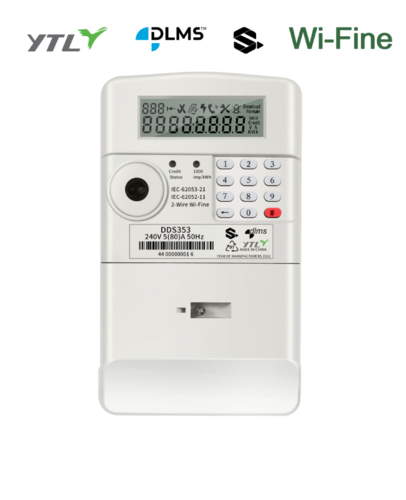
.png?imageView2/2/w/500/h/500/format/png/q/100 "YTL STS Prepaid Wi-Fine Energy Meter Single Phase Wall")
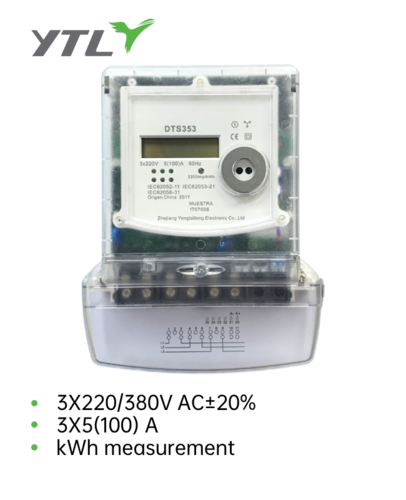
.jpg?imageView2/2/w/500/h/500/format/png/q/100 "YTL Company DTS353C DIN Rail 3P 4 Model Electricity Meter MID")
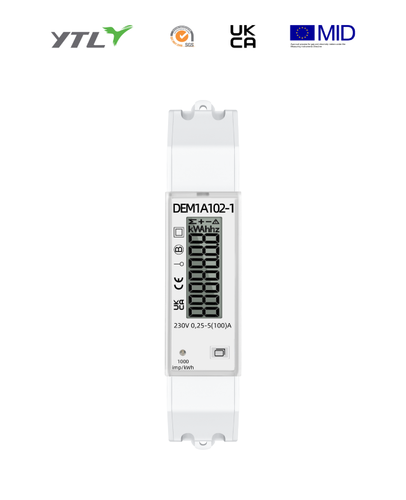
.png?imageView2/2/w/500/h/500/format/png/q/100 "YTL Two Phase Three Wire LCD Shunt sampling Energy Meter")
.png?imageView2/2/w/500/h/500/format/png/q/100 "YTL Single Phase Active Electronic Electricity Meter")