
 English
 简体中文
简体中文



Introduction: The operation and maintenance costs of smart meters are high, and edge computing is the key to breaking the situation
As global energy management shifts towards intelligence, smart meters have evolved from "measuring tools" to "energy data centers" for households and businesses. However, traditional smart meters that rely on cloud based centralized data processing are facing pain points such as high network latency, high data security risks, and rising operation and maintenance costs. According to industry research, system failures and manual intervention caused by cloud data processing account for over 30% of the total operation and maintenance costs of smart meters.
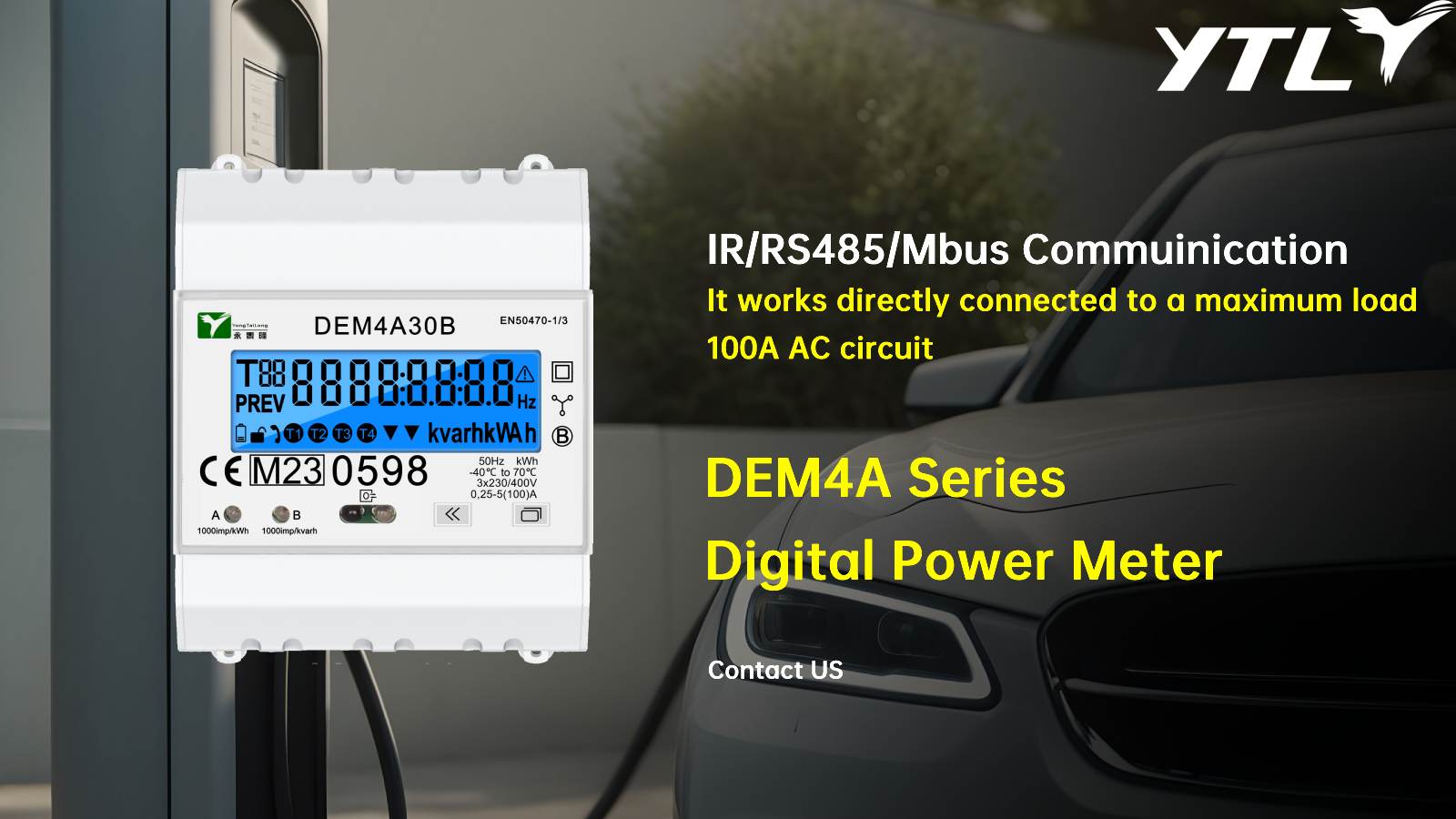
In this context, the introduction of edge computing technology has opened up a new path for smart meters. By sinking data processing capabilities to the local electricity meter, real-time analysis, autonomous decision-making, and zero latency response can be achieved, which not only improves system stability but also directly reduces operation and maintenance costs. This paper will deeply analyze how edge computing enables smart meters, and reveal the underlying logic of reducing the operation and maintenance costs by 30%.
1、 The "cloud dependence" of traditional smart meters: three major pain points restricting their development
The data processing flow of traditional smart meters is usually: data collection → uploading to the cloud → central server analysis → instruction issuance → device execution. This model has exposed three major defects in large-scale application:
Network latency leads to response lag: Cloud processing relies on stable networks, and in remote areas or peak hours, data transmission delays can reach seconds or even minutes, affecting the accuracy of real-time electricity monitoring and fault warning.
Rising data security risks: Massive electricity consumption data stored in the cloud can easily become a target for hacker attacks. Once the server is invaded, it may lead to the leakage of user privacy or the paralysis of the power grid system.
The high cost of operation and maintenance: Cloud servers need to be continuously expanded to cope with the surge in data, and a professional team needs to be equipped for 24-hour monitoring. The high frequency of manual intervention directly drives up operation and maintenance expenses.
Industry data:
According to statistics from a European energy company, among the 500000 traditional smart meters under its jurisdiction, the annual operation and maintenance costs caused by cloud data processing issues are as high as 23 million euros, accounting for 18% of the total operating expenses.
2、 Edge computing: the "localized brain" of smart meters
The core idea of edge computing is "data is processed wherever it is generated". In the smart meter scenario, the whole process of data acquisition, analysis and decision-making is localized by embedding a low power and high computing power edge computing chip into the meter.
Three advantages of edge computing enabling smart meters:
1. Real time response: a leap from "second level" to "millisecond level"
Traditional meters need to wait for cloud instructions to perform operations (such as power-off protection), while edge computing meters can directly analyze current anomalies locally and trigger the protection mechanism within 10 milliseconds, which is more than 100 times faster than cloud mode.
2. Dual protection of data privacy and security
Edge computing meters only upload necessary data (such as power consumption and fault code) to the cloud, and sensitive information (such as users' electricity habits and equipment operation status) is fully encrypted and stored locally, blocking the risk of data leakage from the source.
3. Autonomous operation and maintenance: reduce manual intervention by 90%
Edge computing meters can have built-in self diagnostic algorithms to automatically detect hardware failures, software anomalies or communication interruptions, and restore operation through local repair programs. For example, when sensor data is abnormal, the electricity meter can automatically calibrate or switch to a backup module without the need for manual on-site maintenance.
3、 Edge computing+smart meters: landing scenarios and economic benefits
Edge computing technology has proved its value in many scenarios around the world. The following are typical application cases:
Scenario 1: Energy Management in Industrial Parks
A German automobile factory deployed 2000 edge computing smart meters to monitor the power consumption data of the production line in real time. Through localized analysis, the electricity meter can automatically identify waste phenomena such as equipment idling and standby energy consumption, and push optimization suggestions. After implementation, the annual electricity consumption of the factory decreased by 18%, and the operation and maintenance costs decreased by 29%.
Scenario 2: Photovoltaic Community Microgrid
In a photovoltaic community in Spain, edge computing smart meters act as "micro grid controllers" to dynamically adjust the charging and discharging strategies of photovoltaic power generation and energy storage batteries according to the real-time light intensity and user power demand. Localization decision-making increases system response speed by 5 times and reduces manual operation frequency by 80%.
From real-time response to data security, from independent operation and maintenance to scenario adaptation, edge computing is taking "localized data processing" as the core to redefine the competitiveness of smart meters. For energy companies, this is not only a technological upgrade, but also a transformation to reduce costs, increase efficiency, and improve service quality.