
 English
 简体中文
简体中文



When the neon lights on the Bund in Shanghai achieved "millisecond level" electricity monitoring through smart meters for the first time, when household users in Berlin, Germany checked the real-time revenue of photovoltaic power generation through mobile apps, and when herders in Kenya, Africa used pre ordered electricity from smart meters to drive water pumps for irrigation - smart meters, which were once simply defined as "measuring tools", are using data as a link to reconstruct the service logic of the power industry and accelerate the transformation of traditional power companies into "energy service providers".
1、 From "one-way metering" to "two-way interaction": Smart meters reconstruct the boundary of power services
In the era of traditional mechanical electricity meters, the service model of power companies is a one-way chain of "generation transmission metering billing": users use electricity, the meters record it, and the accounts are issued at the end of the month. This "passive metering" logic has kept power companies in a single role as "energy suppliers" for a long time, separated from users by a thick "data black box".
The emergence of smart meters has completely broken this barrier.
Real time data stream: Smart meters equipped with communication modules can upload electricity consumption data in real time (traditional meters are manually read once a month).
Bidirectional communication capability: Users can provide electricity demand feedback to the grid through smart meters (such as participating in demand response), and the grid can also push personalized services to users (such as peak and valley electricity price reminders).
Multi dimensional data collection: In addition to current and voltage, smart meters can also monitor more than 20 parameters such as power factor and harmonic pollution.
This composite capability of "measurement+communication+analysis" has upgraded smart meters from "tools for recording electricity consumption" to "entry points for energy services", laying a technological foundation for the transformation of power companies.

2、 From "Electricity Bill" to "Energy Bill": Expanding the Value Dimension of Smart Meter Services
When the massive data accumulated by smart meters is combined with cloud computing and AI technology, the service boundary of power companies begins to extend towards "energy lifecycle management" - from simply "selling electricity" to providing value-added services such as "electricity optimization, energy-saving transformation, carbon management" for users.
1. Family scenario: from "electricity consumers" to "producers and consumers"
Smart meters form a "microgrid" with home photovoltaics, energy storage systems, and electric vehicles. By analyzing users' electricity usage habits (such as charging in the morning and cooking in the evening), power companies optimize the charging and discharging strategies for photovoltaic power generation and energy storage, increasing household energy self-sufficiency from 30% to 65%. Users can not only reduce their electricity bills by 60%, but also earn additional income by selling electricity to the grid, truly transforming from "energy consumers" to "producers and consumers".
2. Industrial scenario: from "on-demand electricity" to "precise consumption reduction"
At a certain steel plant, the smart meter detected that the current surge at the moment of starting the steelmaking furnace was three times the rated value, resulting in a 15% increase in transformer losses. The power company has designed a "flexible start-up scheme" based on this, which smooths current fluctuations by adjusting the power supply phase, extending the equipment's lifespan by 2 years and saving 8 million kWh of electricity per year. This service model of "electricity diagnosis+renovation plan" upgrades power companies from "electricity bill collectors" to "energy-saving partners".
3. Urban scenario: from "power supply guarantee" to "carbon management"
In a certain city, the "urban electricity carbon footprint map" generated by 2 million smart meters can accurately locate high carbon emission areas (such as commercial complexes with excessive nighttime air conditioning). The power company, in collaboration with the government, has launched a "carbon credit reward program": users can optimize their electricity consumption behavior through smart meters (such as off peak electricity consumption and turning off standby devices), which can be exchanged for subway tickets, charging vouchers, and other benefits. After the implementation of the plan, the regional carbon emission intensity decreased by 12%, and the power company also received government subsidies for providing carbon management services.
3、 From 'Regional Monopoly' to 'Ecological Competition': Smart Meters Reshape the Industry Landscape
Smart meters not only bring service upgrades, but also disrupt business models. When power data becomes the "new oil", traditional power companies are facing cross-border competition from technology companies and energy service providers - building an open platform of "smart meters+energy ecology" has become the key to the transformation of power companies.
Data openness empowerment: A certain power company has opened up the API interface for smart meters, allowing third-party developers to develop applications such as "electricity analysis APP" and "photovoltaic trading platform". At present, 120 enterprises have joined its platform, and users can compare the electricity prices of different suppliers through the APP to choose the optimal power purchase plan. The power company earns new income by charging data service fees;
User participation in co creation: A certain power company has launched a "virtual power plant plan" to encourage users to connect home energy storage and electric vehicles to the grid for peak shaving through smart meters. Participating users can receive a subsidy of $0.5 per kilowatt hour, while power companies reduce peak loads and investment in building coal-fired power plants by aggregating distributed resources. At present, the plan has aggregated resources from 100000 households, equivalent to a 500MW virtual power plant.

4、 Future vision: Energy service revolution driven by smart meters
With the integration of quantum sensing, digital twin and other technologies, smart meters will evolve into "energy IoT terminals", promoting the comprehensive transformation of power companies towards the "Energy as a Service (EaaS)" model:
Predictive services: AI based smart meters can predict user electricity demand 72 hours in advance, automatically adjust power supply strategies, and avoid power outages;
Personalized pricing: Combining user electricity habits, weather data, and market electricity prices, dynamically generating a "thousand person, thousand face" electricity pricing plan to enhance user stickiness;
Carbon trading service: The electricity consumption data recorded by smart meters can serve as carbon emission reduction certificates, participate in international carbon market trading, and create new revenue for users.
The evolution history of smart meters from "metering electricity" to "serving energy" is a microcosm of the transformation of the power industry from the "supply side" to the "service side". When 80% of global power companies have made smart meters their strategic core, this data-driven energy service revolution is redefining the value of "electricity" - it is not only the energy that illuminates cities, but also the digital link that connects users, activates ecosystems, and creates the future.
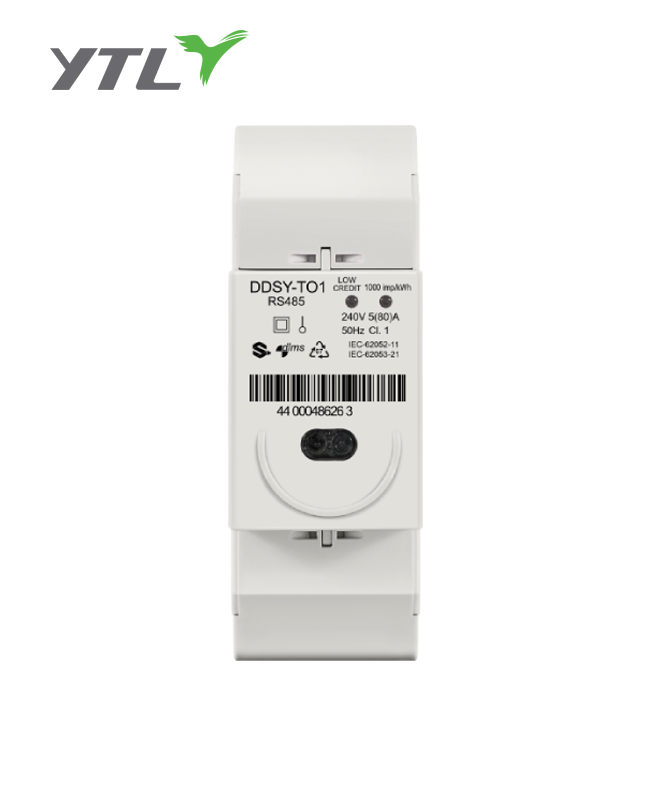
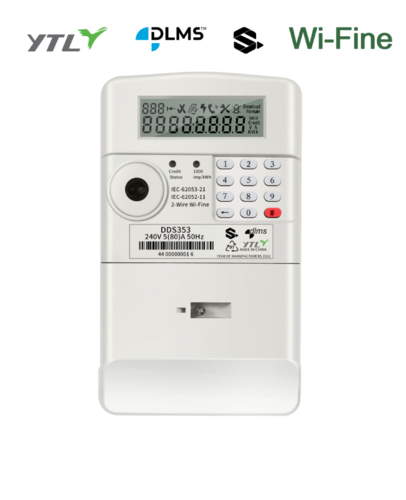
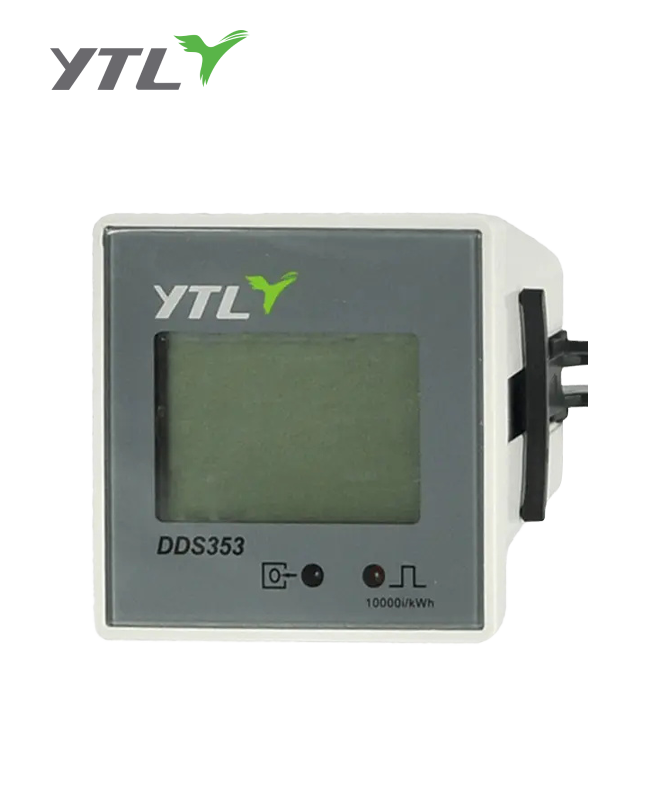
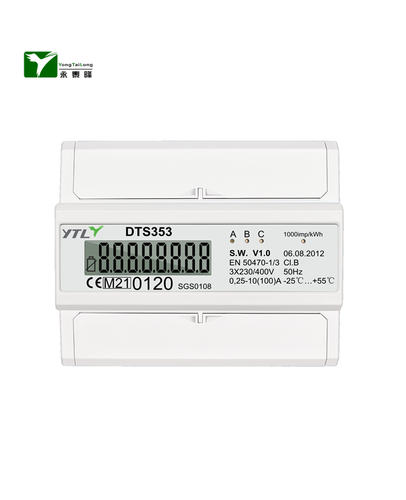
.png?imageView2/2/w/500/h/500/format/png/q/100 "YTL Two Phase Three Wire LCD Shunt sampling Energy Meter")
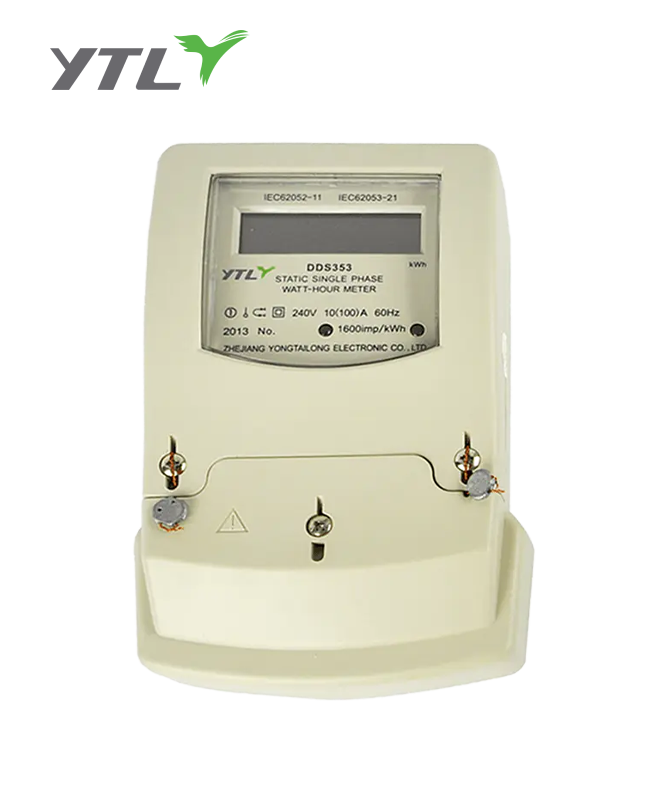
.png?imageView2/2/w/500/h/500/format/png/q/100 "YTL Two Phase Three Wire Big counter Electricity Meter")