
 English
 简体中文
简体中文



With the acceleration of the energy digitalization process and the continuous improvement of users' requirements for energy consumption services, prepaid electricity meters are undergoing profound technological transformation and functional evolution. Their development has long gone beyond the simple model of "pay first, use later" and is moving towards high integration, intelligent interaction and value creation. As a key node connecting energy suppliers and end users, the future of prepaid electricity meters will be closely integrated into the construction of a smart energy system, and their development path must balance the global common trends and the differentiated needs of regional markets.
I. Evolution of System Architecture towards Full Cloudification and Platformization
The future development of prepaid electricity meters will completely break through the limitations of traditional localized management and realize a comprehensive cloud and platform transformation. Remote prepaid systems based on the Internet of Things (IoT) technology will become the absolute mainstream. As the sensing and execution unit at the end of the system, the electricity meters themselves will achieve real-time and reliable data interaction with cloud management platforms through efficient wireless communication technologies such as NB-IoT, Cat.1 and 4G, or dual-mode communication solutions.
This architectural transformation will bring a revolutionary improvement in management efficiency: users can complete electricity purchase at any time through mobile terminals and query data in real time; operators can realize centralized monitoring, remote valve control and automated operation and maintenance of cross-regional and large-scale electricity meters through a unified SaaS platform, significantly reducing operating expenses (OPEX). More importantly, cloud platforms will aggregate to form massive and high-quality energy consumption databases, laying a solid foundation for subsequent data analysis and value mining. Prepaid systems will evolve from an independent fee management tool to a core component of integrated energy management platforms, supporting the coordinated development of diversified businesses such as electricity fee revenue, load management and energy efficiency analysis.
II. Expansion of Functional Positioning from Metering and Billing to Data Services
The functional boundary of prepaid electricity meters is constantly expanding, and their role is gradually transforming from a single metering and billing device to a comprehensive touchpoint for energy data services. Future prepaid electricity meters will integrate more advanced metering functions, and while realizing accurate billing, they will real-time monitor power quality parameters such as voltage, current and power factor, and generate detailed load curves.
After professional analysis of these rich energy consumption data through cloud platforms, significant value can be created for different stakeholders. For energy suppliers, accurate load forecasting can be realized based on data, abnormal electricity consumption behaviors can be identified to reduce line losses, and value-added services such as demand management and energy efficiency consulting can be developed. For end users, clear and intuitive energy consumption analysis and personalized suggestions help them understand their own energy consumption habits, identify energy-saving potential, and achieve refined consumption management and proactive cost optimization. This transformation from "metering" to "service" is the key for prepaid electricity meters to increase added value and enhance user stickiness.
III. Continuous Expansion and Deepening of Application Scenarios with Energy Transformation
With the transformation of the energy structure and the emergence of new business models, the application scenarios of prepaid electricity meters are expanding to more emerging fields.
- Adapting to the popularization of distributed energy: Future prepaid electricity meters will integrate bidirectional metering functions to accurately measure the power interaction between users and the power grid, providing reliable technical support for green power trading models such as net metering and self-consumption with surplus electricity fed into the grid.
- Integrating with intelligent electric vehicle charging: The deep integration of the prepaid model with electric vehicle charging management will become an important direction. The system can automatically optimize charging strategies and power according to users' prepaid amount, real-time electricity prices and grid load status, realizing the unification of user economy, convenience and grid stability.
- Empowering energy conservation in commercial and public sectors: In fields such as commercial complexes, rental apartments and public buildings, the combination of the prepaid concept with refined energy efficiency management can effectively incentivize energy-saving behaviors and create greater management benefits through independent metering and cost allocation for tenants or departments.
IV. Continuous Improvement and Upgrade of Technical Standards and Security Systems
With the increase in system complexity and networking level, technical interoperability and full-chain security will become the two cornerstones for the healthy development of prepaid electricity meters.
- Standards and interoperability: The industry is converging towards international standard protocols such as DLMS/COSEM to reduce system integration and maintenance costs. However, localized proprietary protocols will still exist for a long time. Therefore, providing flexible communication modules that support multi-protocols or remotely configurable protocols will be a key capability for products to adapt to the diversified global markets.
- Security and reliability: Future prepaid systems will build a comprehensive in-depth defense system covering "terminal-communication-platform-application". The terminal side needs to adopt hardware encryption with security chips, focusing on ensuring the immutability of transaction instructions and balance data; strong encryption algorithms and mutual authentication are applied in the communication process; the platform side establishes a sound data protection and privacy compliance solution. In particular, it is necessary to guard against specific attacks on prepaid services to ensure fund security and system credibility.
Conclusion and Prospect
The future development of prepaid electricity meters will continue to innovate closely around the direction of digitalization, servitization and integration. They will evolve from independent metering and billing devices to key intelligent nodes integrating accurate metering, remote control, trusted communication and data insights in the smart energy ecosystem.
Implications for market strategies: In markets such as Asia, Africa and Latin America where the core goals are to reduce line losses and improve cash flow, focus should be placed on cloud-based prepaid solutions with high reliability, strong anti-tampering performance and low total cost of ownership (TCO). In markets such as Europe and America with abundant distributed resources and high user service demands, capabilities such as bidirectional metering, data services and integration with smart homes/electric vehicles should be highlighted to meet the needs of new business models under energy transformation.
This evolution will not only improve the efficiency and experience of electricity management, but also provide a solid, flexible and scalable technical support for the digital transformation of the energy industry and the goal of energy conservation and emission reduction for the whole society.
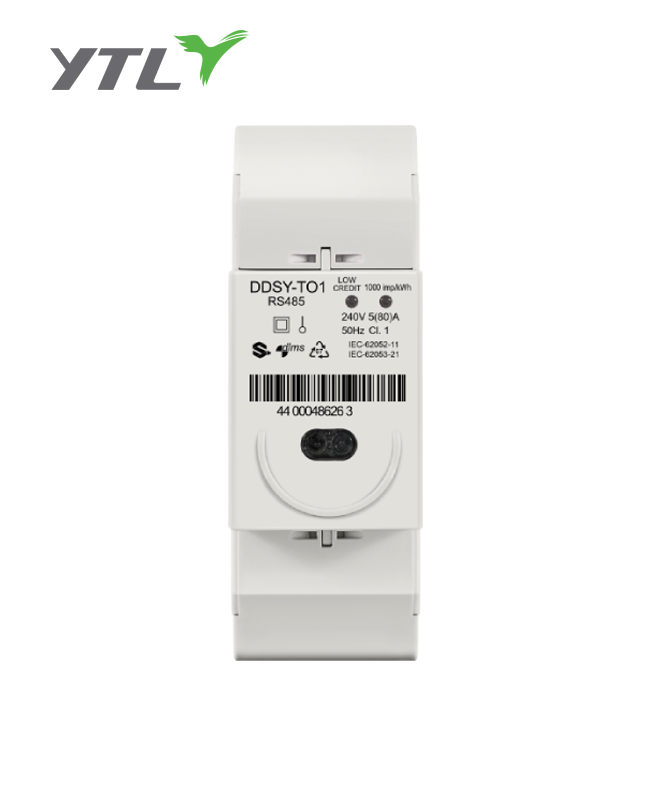
.png?imageView2/2/w/500/h/500/format/png/q/100 "YTL Two Phase Three Wire LCD Shunt sampling Energy Meter")
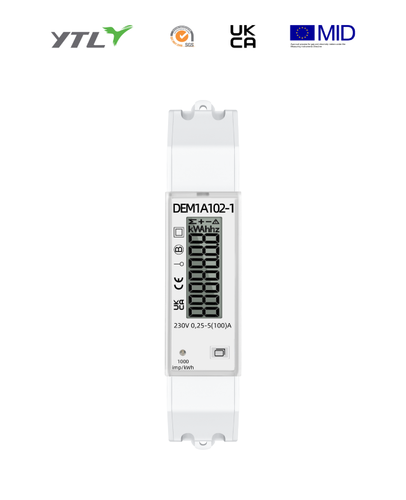
.png?imageView2/2/w/500/h/500/format/png/q/100 "YTL Two Phase Three Wire Big counter Electricity Meter")