
 English
 简体中文
简体中文



Abstract and Introduction to Modern Advanced Metering Infrastructure
The transformation of the global electrical grid relies on transition from legacy measurement systems to Advanced Metering Infrastructure, commonly known as AMI. At the center of this transition is the electric smart meter, an intelligent electronic device designed to provide continuous solid-state measurement and bidirectional data communication between utility providers and industrial, commercial, or residential installations. As global power demand scales and grid topologies become increasingly complex with the integration of renewable energy sources, specifying engineers, procurement professionals, and power utility distribution managers face critical choices regarding the configuration of their metering infrastructure.
The fundamental architectural division in grid power delivery and subsequent energy measurement lies between single phase and three phase systems. Selecting the correct phase configuration is not merely a matter of scale, but a foundational engineering decision that dictates measurement accuracy, data acquisition capabilities, systemic reliability, and load management efficiency. This comprehensive technical analysis explores the deep structural, electrical, and communicative differences between single phase electric smart meters and three phase electric smart meters, establishing an authoritative selection framework for global B2B procurement.
Core Structural and Architectural Engineering Profiles
To understand the functional divergence between single phase and three phase smart meters, one must analyze the baseline mechanical and electrical engineering design of each system type. A smart meter is fundamentally composed of current sensors, voltage sensors, an analog-to-digital converter, a central microcontroller unit, non-volatile data storage, and modular communication interfaces. However, the physical execution of these components differs dramatically based on the phase configuration they are designed to monitor.
Single Phase Smart Meter Architecture
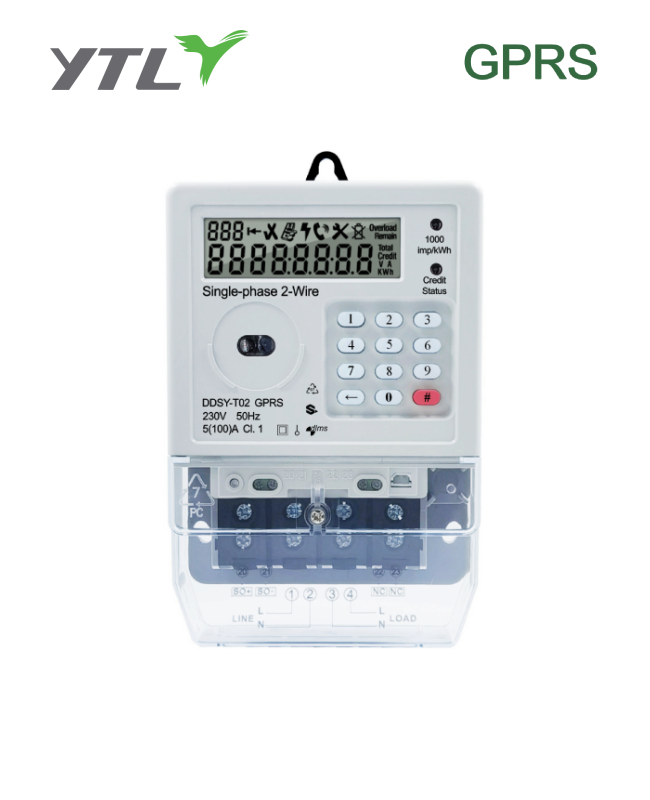
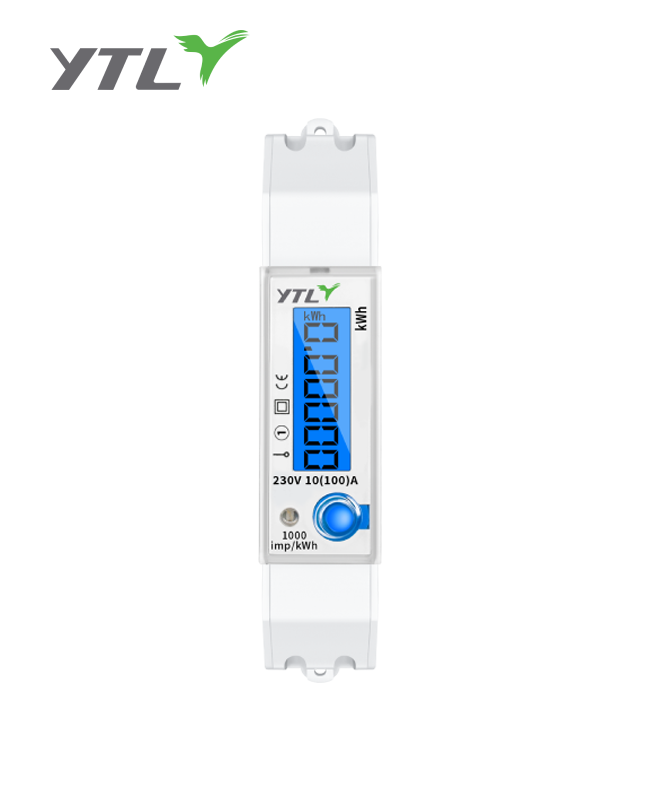
Single phase smart meters are engineered for low-voltage, lower-demand electrical topologies. A standard single phase service consists of two primary conductors: one active phase wire carrying the alternating current and one neutral return wire. The single phase smart meter contains a single channel for voltage measurement and a single channel for current measurement. Current acquisition is typically achieved using a high-precision shunt resistor or a compact current transformer, which provides excellent accuracy for lower current ranges. The physical housing is modular and highly compact, often designed for standard DIN-rail mounting or traditional round or square socket bases. Because the components are limited to a single measurement channel, the internal power supply unit is small, drawing minimal operational power from the single voltage line.
Three Phase Smart Meter Architecture
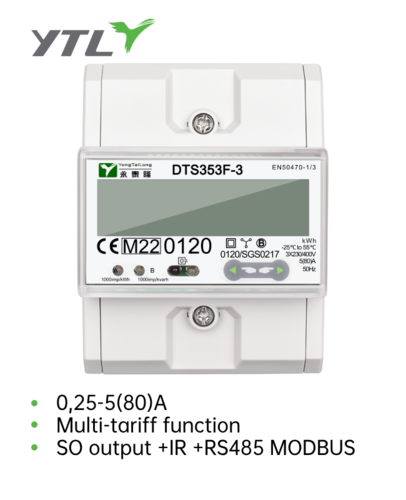
Conversely, three phase smart meters are complex electronic instruments designed for multi-conductor power systems. A three phase system features three distinct active conductors, with voltage waveforms separated by 120 electrical degrees, accompanied by an optional neutral conductor depending on whether the grid topology is a three-wire delta or a four-wire wye configuration. Consequently, a three phase smart meter must possess a minimum of three independent current measurement channels and three independent voltage measurement channels.
Current acquisition in three phase units avoids shunt resistors due to the high risks of thermal dissipation at massive current loads. Instead, these meters utilize specialized external or internal current transformers or Rogowski coils to isolate the high-power lines from the delicate microprocessor circuitry. The internal central processing unit must handle parallel data acquisition from all channels simultaneously, performing complex vector mathematical calculations in real time to resolve phase relationships. The physical chassis is significantly larger to accommodate the robust terminal blocks required for thick industrial wiring and to maintain proper dielectric insulation distances between the distinct voltage phases.
Electrical Parameters, Measurement Capabilities, and Vector Tracking
The technical capacity to capture electrical metrics forms the primary operational divide between these two classes of smart meters. Traditional billing systems tracked only the cumulative active energy consumption, measured in kilowatt-hours. Modern B2B utilities and factory operations require deep visibility into power quality and grid stability, areas where the three phase smart meter provides vast analytical data compared to its single phase counterpart.
Voltage and Current Thresholds
Single phase smart meters operate within narrow voltage tolerances, typically calibrated for nominal grid standards of 110V, 120V, 220V, or 230V alternating current at a frequency of 50Hz or 60Hz. The maximum current threshold for direct-connected single phase smart meters is usually capped between 60 Amperes and 100 Amperes. Any application exceeding these limits requires a structural transition to a multi-phase system.
Three phase smart meters are built to handle wide, versatile voltage inputs. Standard configurations support nominal line-to-neutral voltages such as 220V or 230V, which correspond to line-to-line voltages of 380V or 400V. They can also be manufactured for high-voltage transmission monitoring, operating at 3x57.7V/100V when coupled with external potential transformers. In terms of current capacity, while direct-connected models can handle up to 100 Amperes, three phase smart meters are frequently coupled with external current transformers, meaning they have virtually no upper limit on current measurement capacity. The meter can be configured with selectable current transformer ratios ranging from 5/5 Amperes up to 10000/5 Amperes, adapting seamlessly to massive heavy-industry manufacturing plants.
Data Granularity and Vector Metrics
While a single phase smart meter focusing on residential applications records active energy, reactive energy, real-time voltage, and current, a three phase smart meter acts as a comprehensive power quality analyzer. The advanced microcontroller inside a three phase unit processes individual phase data alongside total aggregate system data. It tracks:
- Active Power (kW), Reactive Power (kVAR), and Apparent Power (kVA): Measured independently for Phase A, Phase B, and Phase C, as well as the total combined three-phase values.
- Power Factor Logging: The meter measures the cosine of the phase angle between the voltage and current vectors for each phase. This allows industrial facilities to detect lagging power factors caused by massive inductive loads like electric motors, helping avoid low power factor penalties imposed by utilities.
- Total Harmonic Distortion (THD): Industrial machinery generates non-linear loads that distort the pure sine wave of the electrical grid. Three phase smart meters track individual voltage and current harmonics up to the 31st or 61st order, protecting sensitive facility equipment from overheating and premature failure.
- Phase Unbalance and Phase Inversion: A key metric unique to three phase meters is tracking unbalance across the three active lines. If one phase drops significantly in voltage or experiences an extreme current load relative to the others, the meter flags a phase unbalance alert. It also detects phase rotation inversion, which could cause industrial electric motors to spin in reverse, creating immediate mechanical hazards.
Comprehensive Data Architecture and Protocol Mapping
A smart meter is defined by its ability to transmit data. The data communication architecture must bridge the physical meter location with the centralized software systems of the utility provider or factory control room, known as Meter Data Management systems. Both single phase and three phase smart meters utilize various communications media, but the density of the data packets dictates the choices of hardware modules and protocols.
| Hardware Layer / Parameter | Single Phase Smart Meter Specification | Three Phase Smart Meter Specification |
|---|---|---|
| Data Packet Payload Volume | Low to Moderate (typically 15-to-30 minute interval profiles of active energy consumption) | High to Extremely High (comprehensive continuous logging of multi-phase electrical metrics) |
| Primary Communication Modules | Internal or plug-and-play Cellular (NB-IoT/LTE-M), Power Line Communication (PLC), or RF Mesh | Modular RF Mesh, Cellular (4G/5G), RS-485 Serial, Ethernet RJ-45, or Optical Communication Ports |
| Standard Industry Protocols | DLMS/COSEM, IEC 62056-21, or specialized wireless M-Bus | DLMS/COSEM, Modbus-RTU, Modbus-TCP, and IEC 61850 for substation automated integration |
| Memory Allocation Capacity | Standard internal non-volatile flash memory (typically 4MB to 16MB for localized profile backup) | Expanded industrial-grade non-volatile flash memory (32MB to 128MB+ for deep vector logging) |
| Event Logging Channels | Basic tamper tracking, cover open events, and simple voltage sag/swell registration | Multi-channel logs for power quality, reverse current, phase failure, and extensive magnetic tampering |
The selection of communication technology often aligns with the deployment environment. Single phase meters are widely deployed in massive quantities across broad residential grids, making low-power wide-area network technologies like NB-IoT or Power Line Communication highly economical. Three phase meters, situated at critical industrial hubs, sub-distribution centers, or commercial complexes, require the absolute reliability and low latency of direct Ethernet connections, high-speed 4G/5G cellular routers, or dedicated RS-485 serial networks using the Modbus-RTU protocol to feed real-time energy management hardware.
Physical Deployment, Mounting Configurations, and Global Environmental Compliance
The environments where single phase and three phase meters are installed demand strict physical durability standards. Industrial settings expose electronics to vibrational stress, electromagnetic interference, dust, and moisture, necessitating robust ingress protection and mechanical housing designs.
Mechanical Housing and Mounting Layouts
Single phase meters are built for simplicity of space. In many regions, particularly European and Asian markets, single phase smart meters adopt a standard modular DIN-rail format. This allows them to fit neatly alongside miniature circuit breakers inside compact household distribution panels. For markets following American standards, single phase smart meters are enclosed in durable polycarbonate glass-reinforced circular socket designs, allowing for simple plug-in installation into outdoor meter bases.
Three phase smart meters must accommodate much larger terminal connections. The physical diameter of wires carrying hundreds of Amperes requires thick brass or copper alloy alloyed terminals with heavy-duty screw clamps. Consequently, these meters are typically surface-mounted using a traditional three-point wall mounting configuration, or built into specialized wide-profile DIN-rail enclosures for industrial switchgear cabinets. The housing material consists of premium, flame-retardant polycarbonate that is highly resistant to ultraviolet radiation and thermal deformation under extreme current loads.
Environmental and Compliance Standards
International export requires strict adherence to global engineering standards. Smart meters must pass demanding certification testing before adoption by national grid operators:
- Ingress Protection (IP Rating): Both meter classes require a minimum rating of IP51 for indoor installations, preventing dust entry and vertical water droplets from disrupting operation. For outdoor deployments, meters are placed inside enclosures reaching IP54 or IP56 ratings to withstand heavy wind-driven rain.
- Accuracy Classification: Regulated by international standards such as IEC 62053-21 and IEC 62053-22. Single phase smart meters usually target an active energy accuracy of Class 1.0 or Class 2.0, representing a maximum permissible error of 1% or 2%. Three phase smart meters, managing far larger and more expensive blocks of electricity, demand much higher precision. They are engineered to achieve Class 0.5S or Class 0.2S standards, maintaining an accuracy tolerance down to 0.5% or 0.2% of total energy throughput, especially when coupled with instrument transformers.
- Anti-Tampering Mechanisms: Revenue protection is a primary reason utilities upgrade to smart meters. Both single phase and three phase units include advanced physical security features. These include electronic micro-switches that log a permanent event if the meter terminal cover or main housing cover is opened, internal sensors that detect external magnetic fields designed to distort current transformers, and reverse energy detection to prevent users from bypassing billing by flipping wire positions.
B2B Procurement and Grid Deployment Decision Matrix
For procurement managers, utility consultants, and international buyers, choosing between single phase and three phase smart meters requires balancing load requirements, infrastructure cost, and long-term diagnostic needs. The following comparative matrix outlines the operational parameters that define the appropriate use case for each smart meter category.
| Architectural Parameter | Single Phase Smart Meter Deployment | Three Phase Smart Meter Deployment |
|---|---|---|
| Grid Power Supply Type | 2-Wire AC Systems (1 Phase, 1 Neutral) | 3-Wire or 4-Wire AC Systems (3 Phases, 1 Neutral) |
| Target Load Range Capacity | Typically suitable for low power loads up to 23 Kilowatts (100A at 230V) | Mandatory for high power loads exceeding 23 Kilowatts up to multi-Megawatt industrial sites |
| Primary Installation Scope | Residential apartments, individual homes, retail shops, and small offices | Manufacturing factories, data centers, commercial high-rises, and grid substations |
| Power Flow Profile | Pulsating single-phase wave, suitable for non-motorized, basic appliance loads | Continuous, balanced power flow essential for heavy-duty electric motors and machinery |
| Transformer Compatibility | Almost exclusively direct-connected to the distribution grid | Supports both direct-connection and transformation via current/potential transformers |
| Upfront Infrastructure Cost | Low per-unit cost, simple installation, minimal maintenance requirements | Higher per-unit investment, complex installation, requires specialized engineering setup |
| Data Analytics Value | Focuses primarily on consumption volume and billing validation | High-value tracking including phase balance, harmonic distortion, and reactive power compensation |
Industrial and Commercial Application Scenarios
To visualize these parameters in action, it is helpful to examine the specific real-world environments where each smart meter type is indispensable.
Residential and Light Commercial Smart Metering
In standard residential developments, individual apartments, and small commercial stores, electrical loads consist primarily of lighting circuits, personal computers, single-room HVAC units, and standard consumer electronics. These devices run efficiently on single-phase power, making the single phase smart meter the optimal engineering choice.
It provides the necessary bidirectional communication for the utility provider to implement time-of-use pricing models—charging more during peak afternoon hours and less during off-peak night cycles—without the added cost and physical space requirements of a multi-phase infrastructure.
Heavy Industrial, Manufacturing, and Complex Grid Infrastructure
Once an environment utilizes heavy-duty electric motors, elevators, massive refrigeration compressors, or automated assembly lines, single phase infrastructure is no longer viable. Large motors require balanced three-phase power lines to start and run smoothly without experiencing severe torque pulsations that destroy mechanical components.
In these settings, a three phase smart meter is mandatory. It ensures that the massive power drawn by a factory is evenly distributed across all three electrical phases, preventing unbalanced voltage drops that could destabilize the local utility grid.
Furthermore, industrial facilities use the deep vector data from three phase smart meters to monitor power quality. By tracking reactive power and harmonics in real time, factory engineers can optimize their power factor correction capacitor banks and harmonic filters, directly reducing energy waste, avoiding utility penalties, and extending the operational life of their production machinery.
Technical Glossary of Power Infrastructure Terminology
- Advanced Metering Infrastructure (AMI): An integrated system of smart meters, communication networks, and data management systems that enables two-way communication between utilities and customers.
- Active Power: The actual power utilized to perform work in an electrical circuit, measured in Watts or Kilowatts.
- Reactive Power: The power that circulates between the source and the load without performing useful work, primarily used to sustain the magnetic fields in inductive equipment like motors and transformers, measured in Volt-Amperes Reactive or Kilovar.
- Apparent Power: The vector combination of active power and reactive power, representing the total power flowing through a circuit, measured in Volt-Amperes or Kilovolt-Amperes.
- Power Factor: The ratio of active power to apparent power, indicating the operational efficiency of electrical energy utilization within a facility.
- Total Harmonic Distortion (THD): A technical measurement of the extent to which a current or voltage waveform deviates from a pure, sinusoidal shape due to the presence of harmonic frequencies.
- Current Transformer (CT): An instrument transformer designed to produce an alternating current in its secondary winding that is proportional to the alternating current being measured in its primary high-power circuit.
- DLMS/COSEM: Device Language Message Specification / Companion Specification for Energy Metering, the global standard protocol suite for smart utility meter data exchange.
Technical Frequently Asked Questions
Can a single phase smart meter be used on a three phase electrical power supply?
A single phase smart meter cannot be used to measure a complete three phase electrical power supply. A single phase meter possesses only a single voltage and current measurement channel, meaning it can only track one active phase wire and one neutral wire. If connected to a three phase system, it would only measure the energy consumption of that specific single phase, ignoring the energy flowing through the other two phase conductors. For comprehensive three phase power measurement, a dedicated three phase smart meter with parallel measurement channels for all phases is required.
What are the operational consequences of phase unbalance, and how does a three phase smart meter mitigate this risk?
Phase unbalance occurs when the electrical current or voltage loads are distributed unevenly across the three phases of a three phase power supply system. For industrial equipment, particularly three-phase induction motors, even a minor voltage unbalance can cause significant current unbalance, leading to severe thermal stress, insulation degradation, and premature motor failure. A three phase smart meter continuously monitors the voltage and current vectors of each phase individually. When the system detects that unbalance thresholds have been exceeded, the meter logs a critical event and can automatically transmit an alert via its communication network to the facility management software, allowing engineers to redistribute single-phase loads across the system before equipment damage occurs.
Why do three phase smart meters require higher accuracy classes compared to single phase units?
Three phase smart meters are typically positioned at high-demand installation points, such as primary industrial facilities, commercial high-rise buildings, or grid sub-distribution nodes. Because these locations consume massive amounts of electrical energy, even a tiny fraction of a percent error in measurement can translate into thousands of dollars in unbilled or over-billed revenue. Consequently, while a Class 1.0 accuracy rating is fully acceptable for standard single-phase residential usage, three phase smart meters are engineered to stricter Class 0.5S or Class 0.2S standards to guarantee absolute precision across highly variable industrial load profiles.
What is the difference between a direct-connection smart meter and a transformer-operated smart meter?
A direct-connection smart meter is wired directly in series with the incoming power lines, meaning the entire electrical current consumed by the facility passes directly through the internal terminal blocks of the meter itself. This configuration is standard for single phase residential settings and light commercial installations with currents below 100 Amperes. A transformer-operated smart meter does not connect directly to high-power lines. Instead, it hooks up to external instrument transformers—Current Transformers and Potential Transformers—that scale down the high current and voltage levels to standardized low-power measurement signals. This design isolates the meter from hazardous high voltages and allows three phase smart meters to safely monitor heavy industrial systems operating at thousands of Amperes or Kilovolts.
How do modern smart meters prevent and log sophisticated energy theft attempts?
Modern single phase and three phase smart meters feature multi-layered solid-state security defenses against tampering and electricity theft. The meter chassis includes internal tamper-detection switches that log an immutable timestamped event the moment the terminal cover or main enclosure is breached, operating even during grid power outages via internal battery backup. Furthermore, the internal microprocessor monitors electrical anomalies, such as reverse current flow, missing phase voltages, or neutral line current discrepancies. Advanced three phase units also include internal magnetic field sensors that detect if high-strength external magnets are placed near the meter housing to distort traditional current transformers, instantly flagging the location for utility inspection.
Authoritative Technical References and Standards
- International Electrotechnical Commission (IEC) Standard 62053-21: Electricity metering equipment - Particular requirements - Part 21: Static meters for AC active energy (Classes 0.5, 1 and 2).
- International Electrotechnical Commission (IEC) Standard 62053-22: Electricity metering equipment - Particular requirements - Part 22: Static meters for AC active energy (Classes 0.1S, 0.2S and 0.5S).
- IEC 62056 Series Standards: Electricity metering data exchange - The DLMS/COSEM suite for advanced metering infrastructure communication protocols.
- American National Standards Institute (ANSI) C12.20: American National Standard for Electricity Meters - 0.1, 0.2, and 0.5 Accuracy Classes for grid distribution infrastructure.
- Council Directive 2014/32/EU (Measuring Instruments Directive - MID): European Union legal framework regulating conformity assessment and accuracy certifications for active electrical energy meters deployed across member states.
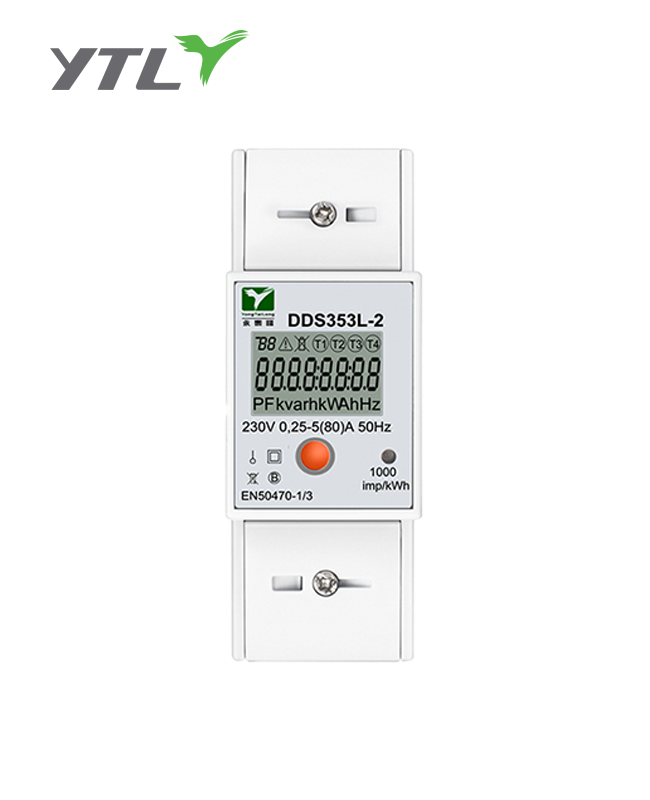
.jpg?imageView2/2/w/500/h/500/format/png/q/100 "YTL Company DTS353C DIN Rail 3P 4 Model Electricity Meter MID")