
 English
 简体中文
简体中文



In today's era of accelerating integration between smart grids and the energy internet, energy meters, as the core devices for power measurement, have a direct impact on the operational efficiency of power systems and user experience. With a plethora of suppliers in the market, how can one identify truly high-quality partners? The following five core criteria will provide the answer.
1. Technological R&D Strength: Dual Assurance of Precision and Innovation
High-quality suppliers must possess the ability to independently develop high-precision measurement algorithms and hardware designs. For instance, energy meter suppliers can combine low-power chips with highly stable sensors to control the metering error of energy meters within 0.2S grade, far exceeding industry standards. Moreover, integrating Internet of Things (IoT), cloud computing, and AI technologies to develop energy meters with remote meter reading, fault warning, and intelligent control capabilities has become an industry trend. Energy meter suppliers should be able to provide multi-protocol support (such as RS485, DL/T-645, etc.) to ensure the real-time and secure transmission of data.
II. Product Quality and Reliability: The "Hard Power" to Adapt to Extreme Environments
Electric meters need to operate in harsh outdoor conditions for long periods. Therefore, their capabilities to resist water, dust, and electromagnetic interference are of vital importance. High-quality electric meter suppliers are certified by international quality systems such as ISO 9001, and they strictly control the quality throughout the process from raw material procurement to finished product delivery. The electric meters have passed the wide-temperature test ranging from -40℃ to 85℃ and have an IP67 protection level, ensuring stable operation in environments such as deserts and polar regions. Moreover, the products must pass multiple environmental tests including high temperature, low temperature, humidity, and vibration, with a failure rate of less than 0.5% throughout their life cycle.
III. Customization Service Capability: "Flexible Production" to Meet Diverse Demands
The power consumption scenarios vary significantly across different regions and users. High-quality electric meter suppliers need to have the ability to respond quickly to customized demands. For instance, the bidirectional meter developed by electric meter suppliers for photovoltaic power stations supports time-of-use pricing and V2G (vehicle-to-grid) functions, helping users maximize their benefits from power trading and energy storage. In addition, electric meter suppliers should provide full-process services from scheme design, production and debugging to after-sales operation and maintenance, ensuring seamless integration of the products with the user's system.
IV. Supply Chain and Cost Control: The Invisible Competitiveness of Efficient Synergy
High-quality electricity meter suppliers need to establish a stable supplier system, ensuring the timeliness and cost controllability of material supply through lean production and inventory optimization. By implementing digital supply chain management, electricity meter suppliers can reduce the delivery cycle by 30%, and lower production costs by 20% through large-scale procurement and process optimization. Additionally, suppliers should have a risk early warning mechanism to dynamically respond to risks such as raw material price fluctuations and exchange rate changes, ensuring the stability of project delivery.
V. After-sales Service System: The "User Moat" of Rapid Response
The stable operation of electricity meters cannot be separated from a complete after-sales service system. High-quality electricity meter suppliers should provide 7×24-hour remote technical support, on-site response within 48 hours for maintenance services, and establish a fault early warning and proactive maintenance mechanism. By analyzing electricity meter data with AI algorithms, suppliers can predict equipment failures in advance and reduce the maintenance response time to 2 hours. Moreover, suppliers should offer product lifecycle management services, including regular inspections, software upgrades, and spare parts supply, to ensure users have no worries.
With the advancement of the dual carbon goals, electricity meters are evolving from simple measurement devices to energy management hubs. High-quality electricity meter suppliers need to proactively layout in emerging fields such as V2G, virtual power plants, and carbon trading, and develop smart electricity meters that support bidirectional measurement, power trading, and carbon footprint tracking. Electricity meter suppliers are launching electricity meters that support blockchain technology to ensure the immutability and transparency of electricity consumption data, providing a reliable data source for the carbon trading market.
Choosing a high-quality electricity meter supplier is not only about selecting a product but also about choosing a comprehensive solution that includes technical strength, quality assurance, and service capabilities. In the wave of the energy revolution, only suppliers that adhere to the five core standards can help users seize the initiative and achieve a win-win future.
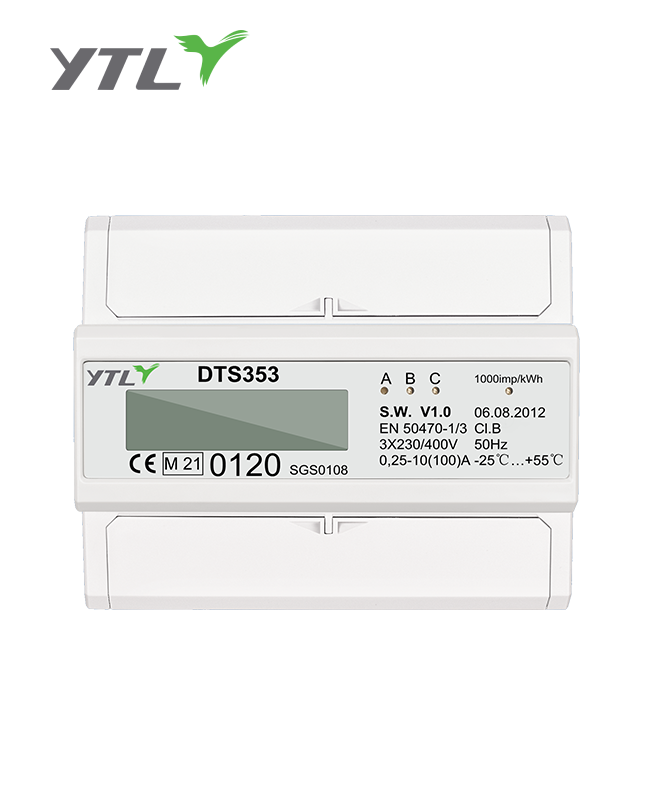
.jpg?imageView2/2/w/500/h/500/format/png/q/100 "YTL Company DTS353C DIN Rail 3P 4 Model Electricity Meter MID")
.png?imageView2/2/w/500/h/500/format/png/q/100 "YTL Two Phase Three Wire Big counter Electricity Meter")
.png?imageView2/2/w/500/h/500/format/png/q/100 "YTL Single Phase Active Electronic Electricity Meter")