
 English
 简体中文
简体中文



In our daily lives, the vast majority of household appliances rely on AC power for operation, so the most common electricity meter we see is also an AC meter. However, in a rapidly developing technological field, another type of electrical energy - direct current - is playing an increasingly crucial role. The instrument specifically used for measuring DC electrical parameters is a DC meter. As a professional measuring tool, although not as popular as AC meters, it is an indispensable core equipment in specific industrial and technological applications. Simply put, a DC meter is an instrument that can accurately measure various electrical parameters such as voltage, current, power, and cumulative energy consumption in a DC circuit. It provides crucial data support for the precise management of DC electricity.

The fundamental difference between direct current and alternating current
To understand why a DC meter needs to exist independently, it is necessary to first clarify the fundamental differences between DC and AC. Direct current is characterized by a constant direction of current flowing from a fixed positive pole to a negative pole, and its voltage is relatively stable. We can imagine it as a smoothly flowing one-way river. The commonly used dry batteries and rechargeable batteries output typical direct current. On the other hand, the direction of alternating current and the magnitude of voltage will undergo periodic changes over time, fluctuating like waves in a regular pattern. This fundamental difference leads to significant differences in the technical principles and instrument constructions used to measure them. AC meters cannot be directly used to measure DC parameters, and vice versa. Therefore, DC meters designed specifically for DC circuits have emerged.

The core working principle of a DC meter: how to "capture" DC electricity
A DC meter can accurately "capture" and quantify the energy of DC electricity, mainly relying on its core measurement technology, among which the most critical is the precise measurement of current. At present, the mainstream intelligent DC meters generally adopt two principles: shunt measurement method and Hall effect measurement method. The shunt method is a classic and high-precision method based on Ohm's law, which involves a low resistance (called shunt resistance) with a very precise known resistance value being connected in series in the circuit under test. When a direct current flows through this resistor, a small voltage drop proportional to the magnitude of the current will be generated according to Ohm's law. By detecting this precise voltage drop, the measurement circuit can convert the current value flowing through the circuit. This method has a simple structure, relatively low cost, and extremely high accuracy, making it the preferred choice for many high-precision measurement scenarios.
Another widely used technique is the Hall effect measurement method. The core of this method is the use of a semiconductor device called a "Hall element". The principle is that when a conductor or semiconductor through which current flows is placed in a magnetic field perpendicular to the direction of the current, a voltage difference proportional to the strength of the magnetic field and the magnitude of the current will be generated on both sides, and this phenomenon is called the Hall effect. In a DC meter, the magnetic field generated by the measured current is sensed by Hall elements and outputs a corresponding electrical signal. The great advantage of this method is that it achieves electrical isolation from the tested circuit, which means that measurements can be made without directly connecting to the main circuit. This makes it highly safe and has low circuit interference when measuring large currents, especially suitable for high-power or complex systems that require electrical isolation.
The main uses and application scenarios of DC meters
The application field of DC meters is very focused on scenarios where DC electricity is the main form of energy or control signal. With the vigorous development of new energy technology and power electronics technology, the status of DC meters is increasingly prominent. In photovoltaic power generation systems, solar panels generate direct current, and DC meters are used to accurately measure the direct current power and electricity generated by photovoltaic arrays. They are key equipment for evaluating system efficiency and conducting energy accounting. In the field of electric vehicles and their supporting charging stations, the charging and discharging process of power batteries is entirely a direct current process. DC meters are integrated into battery management systems and charging equipment to monitor the current, voltage, and power of charging and discharging in real time, ensuring the safety and lifespan of batteries.
In addition, in communication base stations and data centers, backup battery packs are the core to ensure uninterrupted power supply, and DC meters are used to monitor the charging and discharging status and health of batteries. In the field of rail transit, the traction and control systems of electric locomotives, subways, and other vehicles extensively use direct current, and direct current meters are an important part of ensuring their stable operation. Similarly, in industrial processes such as electrolysis and electroplating, precise control of DC current is required, and DC meters provide essential process monitoring and data feedback. In summary, the presence of DC meters can be seen in almost all aspects of DC power generation, storage, consumption, and control.

How to choose a suitable DC meter
When choosing a DC meter, it is important to focus on several core parameters to ensure that they meet the measurement requirements. Firstly, the range refers to the maximum current and voltage values that a DC meter can measure. The range of the selected instrument should be slightly higher than the maximum value that may occur in the actual circuit to leave a safety margin. Next is the accuracy level, which represents the degree of measurement accuracy. Different application scenarios have different requirements for accuracy. For example, high-precision instruments are needed for energy settlement, while conventional accuracy can be chosen for general monitoring. In addition, signal output methods need to be considered. Modern intelligent DC meters are usually equipped with digital communication interfaces, which facilitate remote transmission of measurement data to monitoring systems for centralized management and analysis. Understanding these basic concepts will help you make the most appropriate choice when facing various DC meters.
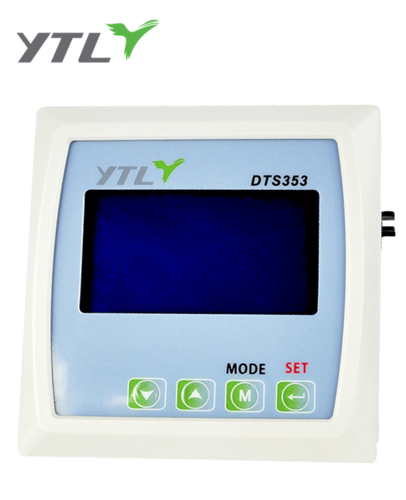

.png?imageView2/2/w/500/h/500/format/png/q/100 "YTL STS Prepaid Wi-Fine Energy Meter Single Phase Wall")
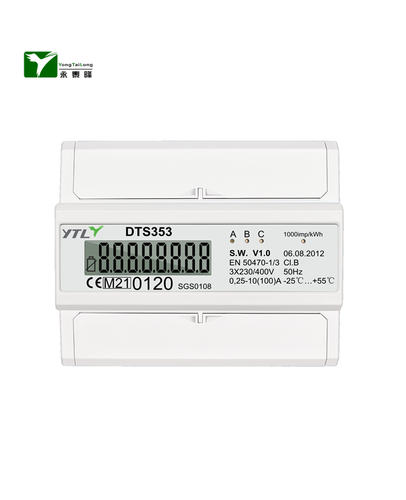
.jpg?imageView2/2/w/500/h/500/format/png/q/100 "YTL Company DTS353C DIN Rail 3P 4 Model Electricity Meter MID")
.png?imageView2/2/w/500/h/500/format/png/q/100 "YTL Two Phase Three Wire LCD Shunt sampling Energy Meter")