
 English
 简体中文
简体中文



Shenzhen, a city with a distinct brand of technological innovation, is taking in building a new-type power system and a new energy system, leveraging its unique innovation ecosystem. Dianhong IoT Operating System (referred to as "Dianhong"), as a "digital neural hub" for interconnection and open sharing in the power sector, provides an overall solution for the access and operation of large-scale IoT devices in the new-type power system, becoming a key driver for the intelligent transformation of energy. Since the completion of the baseline scenario acceptance of the three "Dianhong" full-region comprehensive demonstration zones in Qianhai (Shenzhen), Nansha (Guangzhou), and Hengqin (Zhuhai), its application effects have been concentrated in multiple scenarios in Shenzhen, outlining a clear path for the digital upgrading of the power industry.
I. From "Passive Response" to "Active Tracing": Dianhong Improves Efficiency of Power Transmission and Transformation Business
In the core link of the power system — the power transmission and transformation field, the introduction of Dianhong is completely changing the traditional operation and maintenance mode.
In September 2024, a 220kV line suddenly tripped. Relying on the fully deployed Dianhong-enabled terminals, staff quickly retrieved data from various platforms in the production and operation support system. The system automatically located the fault point, generated protection reports and online monitoring data, and completed the diagnostic report in only 12 minutes — a stark contrast to the average 120 minutes required under the traditional mode of "querying multiple systems, dispatching multiple personnel to the site, and conducting multi-professional research and judgment".
In September 2024, a 220kV line suddenly tripped. Relying on the fully deployed Dianhong-enabled terminals, staff quickly retrieved data from various platforms in the production and operation support system. The system automatically located the fault point, generated protection reports and online monitoring data, and completed the diagnostic report in only 12 minutes — a stark contrast to the average 120 minutes required under the traditional mode of "querying multiple systems, dispatching multiple personnel to the site, and conducting multi-professional research and judgment".
The core of this breakthrough lies in the unified data base built by Dianhong. It breaks down data "barriers" between different systems, integrates information from multiple platforms such as dispatching OCS, protection information, and operation support systems, and supports advanced applications such as accurate tracing of fault diagnosis, one-click sequential control of operations, and integrated safety management of multiple work permits. For example, relying on the cloud-edge collaboration feature of Dianhong cameras, a new technical solution for double confirmation of knife switch positions has been developed, reducing fault handling time to 30 minutes; functions such as "data collection instead of manual recording" for instruments directly address issues of concern to frontline teams, such as "low efficiency in maintaining massive terminals and incomplete safety management".
As Xue Zhicheng, Deputy General Manager of the Second Substation Management Institute of Shenzhen Power Supply Bureau, put it: "Dianhong has transformed fault diagnosis from 'result-based deduction' to 'accurate tracing'. We look forward to its full-scale promotion to truly reduce the burden on frontline staff and improve operational efficiency."
II. From "Customer Reporting" to "Proactive Service": Dianhong Reshapes Low-Voltage Power Supply Service Experience
In the low-voltage power supply field, which is closely related to users, the application of Dianhong has made "efficiency" and "transparency" the new hallmarks of services.
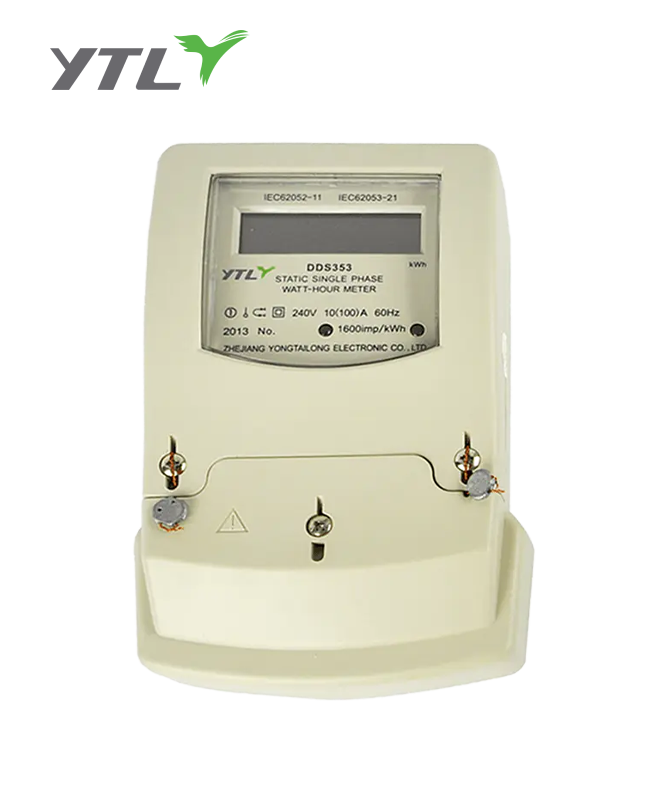
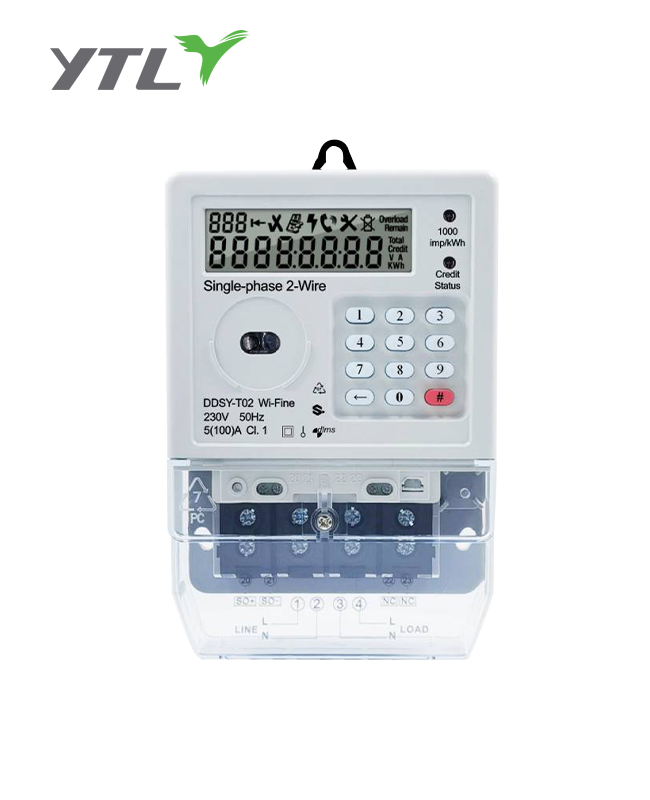
In August 2024, Vanke Zhenshanhai Community in Nanshan, Shenzhen, completed Dianhong-enabled transformation, becoming the Dianhong-enabled community. Here, the steps for installing or replacing electric meters have been reduced from 11 to 3 — after the meter is connected to the power supply, it automatically accesses the system, and the IoT platform and metering master station simultaneously complete identification, meter reading, and topology mapping. Staff can read meter files and operating data by simply "scanning" or "tapping" with their mobile phones. This "plug-and-play" convenience is a direct result of Dianhong's unified data protocols.
In August 2024, Vanke Zhenshanhai Community in Nanshan, Shenzhen, completed Dianhong-enabled transformation, becoming the Dianhong-enabled community. Here, the steps for installing or replacing electric meters have been reduced from 11 to 3 — after the meter is connected to the power supply, it automatically accesses the system, and the IoT platform and metering master station simultaneously complete identification, meter reading, and topology mapping. Staff can read meter files and operating data by simply "scanning" or "tapping" with their mobile phones. This "plug-and-play" convenience is a direct result of Dianhong's unified data protocols.
A more significant change has occurred in fault handling. In the traditional mode, low-voltage faults relied on customer reports, and due to the isolation of data in various systems, staff had to go to the site for research, judgment, and positioning, which was time-consuming. However, Dianhong realizes data aggregation through "end-to-end interconnection", enabling the system to proactively sense power outage events and comprehensively determine the cause of faults. Compared with traditional methods, the time for fault detection has been reduced by 90%.
Building on this, Shenzhen Power Supply Bureau has further upgraded the service experience: drawing on the intuitive presentation of flight information in aviation-related apps, it displays the full-process progress of power outages, repairs, and power restoration in real time on the "Nanwang Online" app, making information transparent and perceivable. From "passively waiting for reports" to "proactively sensing, quickly handling, and transparently notifying", Dianhong has driven customer service from "meeting needs" to "creating experiences".
III. From "Single Power Supply" to "Collaborative Interaction": Dianhong Activates the Ecology of the New-Type Power System
The value of Dianhong goes beyond "improving quality and efficiency"; it also provides underlying support for the "source-grid-load-storage" collaboration in the new-type power system. Currently, Shenzhen is building a new-type power system with "six high" characteristics, such as "a high proportion of clean power supply and highly flexible interaction between sources, grids, and loads", and Dianhong is the key link to achieve this goal.
This role is particularly prominent in the field of virtual power plants. Relying on Dianhong's "plug-and-play" feature, virtual power plant operators can safely and quickly connect adjustable resources such as energy storage stations, charging stations, and photovoltaic stations to the platform, achieving minute-level response to instructions. In September 2024, Qianhai Power Supply Company participated in the precise response of Shenzhen Virtual Power Plant Management Center for the time, successfully completing the full-process scheduling of 47.9 MW load; as of November 2024, its aggregation service platform has connected 7 adjustable resources, with a cumulative response of over 580.17 MWh and a total profit of over one million yuan. This "flexible load control" capability not only ensures the stable operation of the power grid but also brings tangible benefits to operators.
At the same time, Dianhong's open source and open ecosystem is attracting more participants: nearly 100 upstream and downstream manufacturers have joined the power digital ecosystem because of Dianhong, forming an industrial chain of "technological collaboration and win-win benefits" from equipment manufacturing to platform operation.
From efficient operation and maintenance of power transmission and transformation to upgraded low-voltage services, and then to collaborative interaction in virtual power plants, Dianhong is writing multiple footnotes in Shenzhen's "megacity digital power grid". It is not only a "IoT operating system" at the technical level but also an "ecological connector" that activates new productive forces in the power industry — with data as the link, it enables device interconnection, business collaboration, and ecological symbiosis, injecting a steady stream of digital momentum into the construction of the new-type power system.
.png?imageView2/2/w/500/h/500/format/png/q/100 "YTL Two Phase Three Wire LCD Shunt sampling Energy Meter")
.png?imageView2/2/w/500/h/500/format/png/q/100 "YTL China Single Phase IC card Prepayment Electricity Meter")