
 English
 简体中文
简体中文



1. Introduction to Electric Meters
1.1 What is an Electric Meter?
An electric meter, also known as a kilowatt-hour (kWh) meter or electricity meter, is a measuring device that records the amount of electrical energy consumed by a residence, business, or electrically powered device. Essentially, it serves as the crucial link between the power grid and the consumer, accurately quantifying the energy used to ensure accurate billing.
The unit of measurement used by the vast majority of electric meters is the kilowatt-hour (kWh), which represents the consumption of 1,000 watts of power over the course of one hour.
1.2 Why are Electric Meters Important?
Electric meters are fundamentally important for several critical reasons, affecting both consumers and utility providers:
- Accurate Billing: This is the primary function. Meters ensure that consumers are billed fairly and accurately for the precise amount of electricity they consume, preventing over- or under-charging.
- Grid Management: Utility companies rely on meter data to monitor consumption patterns, manage load distribution, and make informed decisions about infrastructure upgrades and power generation capacity.
- Energy Conservation: By providing a clear record of energy usage, meters empower consumers to understand their consumption habits and take steps to reduce waste, leading to lower utility bills and a smaller carbon footprint.
- Safety and Regulation: Meters are built to strict industry standards (e.g., ANSI, IEC) to ensure safety, reliability, and measurement accuracy.
1.3 Brief History of Electric Meters
The development of the electric meter closely followed the commercialization of electricity in the late 19th century. Early methods of billing were rudimentary and often based on the number of lamps or devices. The need for accurate measurement quickly became apparent.
| Era | Key Development/Meter Type | Notable Inventor | Significance |
|---|---|---|---|
| 1872 | Electrolytic Meter | Samuel Gardiner | One of the earliest devices, measured current by the rate of metal deposition. Complex and not highly practical. |
| 1888 | Electromechanical Induction Meter | Oliver B. Shallenberger | The first reliable, widely-adopted, and commercially successful meter. It used rotating discs and magnets. |
| 1897 | Watt-Hour Meter (Improved Induction) | Jonas W. Ayres | Refined the electromechanical design, establishing the standard for decades. |
| Late 1980s | Electronic (Digital) Meters | Various | Replaced mechanical components with digital processors, offering greater accuracy and data storage capabilities. |
| Early 2000s | Smart Meters (AMI) | Various | Introduced two-way communication, enabling remote reading, time-of-use tracking, and integration into the smart grid. |
2. Types of Electric Meters
The market today is dominated by three main categories of electric meters: the legacy electromechanical meters, the modern electronic (digital) meters, and the advanced smart meters. Understanding the differences is key to optimizing energy management.
2.1 Electromechanical Induction Meters
These are the traditional meters that have been in use for over a century. They are easily recognizable by their spinning disk and mechanical register dials.
2.1.1 How They Work
The operation of an induction meter is based on the principle of electromagnetic induction.
- Current and Voltage Coils: The meter contains two main coils: a voltage coil (connected in parallel to the load) and a current coil (connected in series to the load).
- Magnetic Fields: When electricity flows through the circuit, alternating current (AC) creates two alternating magnetic fluxes proportional to the current and voltage, respectively.
- Torque Generation: These two magnetic fields interact with a conductive aluminum disk (rotor) to induce eddy currents. The interaction between the eddy currents and the magnetic fields generates a driving torque proportional to the instantaneous power (watts).
- Energy Measurement: This torque causes the disk to rotate. The speed of rotation is directly proportional to the power being consumed. The disk’s rotation is geared to a set of mechanical dials, which record the total number of rotations, thus registering the total energy consumed in kWh.
- Braking: A permanent magnet creates a damping torque (or braking torque) that is proportional to the disk’s speed, ensuring the rotation rate accurately reflects the power consumption.
2.1.2 Advantages and Disadvantages
| Feature | Advantages | Disadvantages |
|---|---|---|
| Durability | Highly durable, often lasting for decades with minimal maintenance. | Susceptible to wear and tear over time, which can affect accuracy. |
| Simplicity | Simple operation; the spinning disc provides a clear, visual indicator of energy flow. | Requires manual reading by utility personnel, leading to high operational costs. |
| Reliability | Reliable in various environmental conditions and generally unaffected by minor power fluctuations. | Limited functionality; cannot record demand, Time-of-Use (TOU) data, or power quality. |
| Cost | Low initial cost for the meter itself. | Lower accuracy than digital meters, typically 2% accuracy class. |
2.2 Electronic Meters (Digital Meters)
Electronic meters, often referred to simply as digital meters, began replacing induction meters in the late 20th century.
2.2.1 How They Work
Digital meters fundamentally change how energy is measured, relying on advanced electronics rather than mechanical motion.
-
Transducers: Current and voltage transducers (e.g., current transformers (CTs) and potential transformers (PTs)) convert the electrical signals from the power line into low-level analog signals.
-
Analog-to-Digital Converter (ADC): The analog signals are continuously sampled and converted into digital data by an ADC.
-
Digital Signal Processor (DSP) / Microcontroller: A specialized microcontroller or DSP takes the digital samples of voltage and current, multiplies them, and integrates the result over time to calculate the instantaneous power (watts) and, subsequently, the total energy (kWh).
-
Display: The calculated energy consumption is stored in non-volatile memory and displayed on a liquid-crystal display (LCD) or light-emitting diode (LED) screen, making readings clear and precise.
2.2.2 Advantages and Disadvantages
| Feature | Advantages | Disadvantages |
|---|---|---|
| Accuracy | High accuracy (typically ±1.0% or better) and less prone to mechanical error. | More complex internal circuitry makes them potentially more susceptible to damage from lightning or severe transients. |
| Data Richness | Can store historical consumption data, measure power factor, and display demand (peak usage). | Still requires a utility employee to visit and physically read the meter if it lacks communication features. |
| Readability | Clear, backlit digital display for easy reading. | The display may fail after years, rendering the meter unreadable, though consumption data is usually retained internally. |
| Form Factor | Compact, lightweight, and easier to install than older induction models. | Initial unit cost is higher than a simple induction meter. |
2.3 Smart Meters (Advanced Metering Infrastructure - AMI)
Smart meters represent the latest evolution in utility metering. They are essentially advanced electronic meters that include a vital communication module.
2.3.1 How They Work
Smart meters perform the same core function as electronic meters—measuring and calculating energy consumption digitally. However, the key difference is their ability to communicate data back to the utility in near real-time and to receive commands.
- Measurement and Calculation: Same process as the electronic meter (transducers, ADC, DSP).
- Data Storage and Time-Stamping: The meter records consumption in short intervals (e.g., every 15 minutes or hour) and time-stamps the data. This granular data enables Time-of-Use (TOU) tariffs.
- Communication Module (WAN): The meter transmits the collected usage data wirelessly to the utility company’s Head-End System (HES) over a dedicated wide-area network (WAN), often using cellular, radio frequency (RF) mesh, or power line carrier (PLC) technology.
- In-Home Communication (HAN): Many smart meters also have a secondary communication port (often Zigbee) to talk to an In-Home Display (IHD) or other consumer-side devices over a home area network (HAN).
- Two-Way Communication: Utilities can remotely send commands to the meter for tasks like firmware updates, rate changes, or even remote service connection/disconnection.
2.3.2 Advantages and Disadvantages
| Feature | Advantages | Disadvantages |
|---|---|---|
| Operational Efficiency | Eliminates manual meter reading costs and labor. | Higher initial installation cost per unit than standard digital meters. |
| Demand Response | Enables utility to manage power loads dynamically and implement demand response programs to avoid blackouts. | Potential concerns over data privacy and the security of the communication network. |
| Consumer Insight | Provides granular consumption data, helping consumers adjust behavior and save money. | Public perception concerns regarding radio frequency (RF) emissions, though regulatory bodies deem them safe. |
| Fault Detection | Instant notification of power outages, helping utilities restore service faster. | Requires robust communication network infrastructure (AMI) to function effectively. |
2.3.3 Smart Meter Components
A typical smart meter consists of several key functional blocks:
- Metrology Engine: The core unit for measuring voltage, current, and calculating energy (kWh).
- Microcontroller/Processor: Manages all operations, data logging, and communication protocols.
- Non-Volatile Memory (NVM): Stores consumption data, billing parameters, and historical logs securely.
- Communication Module: Transceiver hardware (e.g., RF, GPRS, PLC) for connecting to the utility network.
- Real-Time Clock (RTC): Essential for time-stamping data for Time-of-Use tariffs.
- Switching Relay: An internal switch that allows the utility to remotely connect or disconnect service.
2.3.4 Data Privacy and Security
Data security is a paramount concern for AMI deployment. Utilities must adhere to strict protocols to protect customer consumption data.
- Encryption: Data transmitted between the meter and the utility is secured using industry-standard encryption algorithms to prevent interception and manipulation.
- Authentication: The meter and the utility system must verify each other’s identity before data exchange to prevent unauthorized access.
- Tamper Detection: Smart meters include features to detect and report any physical interference or attempts to bypass the meter to ensure billing integrity.
2.4 Prepayment Meters
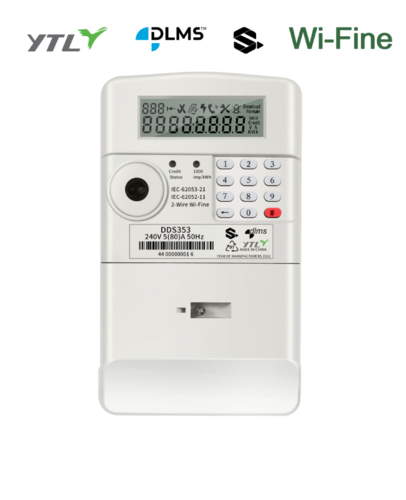
Prepayment meters, or token meters, allow consumers to pay for electricity before they use it, much like a prepaid mobile phone.
2.4.1 How They Work
- Purchase: The consumer purchases a credit (token, card, or code) from the utility or an authorized vendor.
- Credit Loading: The credit is loaded into the meter, either physically (inserting a card) or electronically (entering a code).
- Consumption: The meter deducts the cost of consumed electricity from the loaded credit balance in real-time.
- Disconnection: If the balance reaches zero, the meter’s internal relay automatically disconnects the power supply until new credit is loaded.
2.4.2 Advantages and Disadvantages
| Feature | Advantages | Disadvantages |
|---|---|---|
| Budget Control | Helps consumers manage their energy spending and avoid large, unexpected bills. | Requires consumers to actively manage their credit and ensure they have funds available. |
| Debt Management | Eliminates bad debt risk for the utility. Can be used to pay off existing debt incrementally. | Risk of disconnection during critical times if credit runs out (though many offer emergency credit). |
| Installation | Simple to install; can be integrated into smart meter systems (Smart Prepayment). | Meter reading and credit vending infrastructure must be reliable. |
2.5 TOU (Time of Use) Meters
TOU meters are meters that record and store consumption data based on the time of day the energy was used. They are almost always electronic or smart meters.
2.5.1 How They Work
The meter utilizes an internal Real-Time Clock (RTC) and is programmed with the utility’s specific tariff schedule, which typically divides the day into three periods:
- Peak Period: High demand, highest rate.
- Off-Peak Period: Low demand (e.g., late night), lowest rate.
- Mid-Peak/Shoulder Period: Intermediate rate.
The meter records usage and calculates the cost according to the rate that applies at the exact time of consumption.
2.5.2 Advantages and Disadvantages
| Feature | Advantages | Disadvantages |
|---|---|---|
| Demand Reduction | Encourages consumers to shift high-consumption activities (like laundry) to off-peak hours, reducing stress on the grid. | Requires consumers to actively monitor and change their consumption habits to realize savings. |
| Cost Savings | Consumers who successfully manage their usage can significantly lower their overall energy costs. | Can lead to very expensive bills for consumers who use large amounts of energy during peak hours. |
| Grid Optimization | Provides utilities with tools to manage peak loads without needing to build as much expensive peak generation capacity. | Requires more sophisticated billing software and customer education from the utility. |
3. Key Features and Specifications
Beyond simply classifying a meter by its technology (induction, digital, or smart), several technical features and specifications define its suitability, performance, and compliance with national and international standards.
3.1 Voltage and Current Ratings
These ratings determine the electrical environment in which the meter can operate reliably. They are foundational specifications for any meter.
- Voltage Rating: Specifies the nominal voltage of the circuit the meter is designed to measure (e.g., 120 V, 240 V, or 480 V). Meters are typically rated for a range, but this indicates the system voltage.
- Current Rating: Meters have two primary current specifications:
- I_base or Nominal Current: The current at which the meter is designed to operate most accurately (its test current).
- I_max or Maximum Current: The highest continuous current the meter can safely and accurately handle without being damaged or losing its certification accuracy.
| Meter Type | Typical Residential Rating (Single Phase) |
|---|---|
| Direct Connect | 120/240 V |
| Nominal Current | 10 A (often used for accuracy testing) |
| Maximum Current | 100 A to 200 A (must exceed the main circuit breaker rating) |
3.2 Accuracy Class
The accuracy class specifies the maximum permissible error of the meter over its operational range. It is crucial for ensuring fair billing and meeting regulatory requirements (e.g., IEC 62052-11 or ANSI C12.20).
- Definition: Accuracy Class is expressed as a percentage, indicating the maximum allowable percentage of error in measurement under reference conditions.
- Standard Classes:
- Class 2.0: Maximum error of ±2.0% (typical for older electromechanical meters).
- Class 1.0: Maximum error of ±1.0% (common for standard electronic meters).
- Class 0.5S/0.2S: Maximum error of ±1.0% (used for highly accurate commercial/industrial meters or standard smart meters).
A higher (smaller number) accuracy class indicates a more precise meter. For instance, a Class 0.5S meter is more accurate than a Class 1.0 meter.
3.3 Display Type and Readability
The display is the consumer’s primary interface with the meter, reporting usage data.
- Electromechanical: Uses mechanical dials (register) that require careful reading to avoid misinterpretation.
- LCD (Liquid Crystal Display): The standard for modern electronic and smart meters. Offers clear, high-contrast digital readouts, often cycling through multiple readings (e.g., total kWh, Time-of-Use register, instantaneous demand).
- LED (Light Emitting Diode): Less common now but offers excellent brightness and longevity, though it consumes more power than LCD.
- Readability Features: Look for displays that are backlit, resistant to fading in UV light, and large enough to be easily read from a distance.
3.4 Communication Interfaces (e.g., Zigbee, Wi-Fi)
For smart meters, the communication interface is arguably the most defining feature, enabling data exchange and remote operation.
| Interface Type | Purpose | Typical Technology Used |
|---|---|---|
| WAN (Wide Area Network) | Utility Communication: Connects the meter to the utility’s data center (Head-End System). | Cellular (GPRS, LTE-M), Radio Frequency (RF) Mesh, Power Line Carrier (PLC). |
| HAN (Home Area Network) | Consumer Communication: Connects the meter to an In-Home Display (IHD), smart thermostats, or home energy management systems (HEMS). | Zigbee, Wi-Fi, or Bluetooth. |
| Local Interface | Technician/Installer Access: Used for meter commissioning, configuration, and diagnostics. | Optical Port (IrDA), RS-485, or dedicated buttons/keypads. |
3.5 Tamper Resistance
Meter tampering—the attempt to illegally reduce the recorded energy consumption—is a major concern for utilities. Modern meters incorporate sophisticated features to deter and report this activity.
- Event Logging: Smart meters log and time-stamp various events, such as cover removal, opening the terminal block, or exposure to strong external magnetic fields.
- Magnetic Field Detection: Internal sensors detect and report attempts to slow or stop the meter using external magnets.
- Reverse Power Flow: The ability to accurately measure and log energy flowing in both directions (import and export) helps prevent fraud and is essential for homes with solar panels.
- Physical Seals: Secure seals and unique serial numbers on the casing and terminal block prevent unauthorized physical access.
4. Factors to Consider When Choosing an Electric Meter
Selecting the appropriate electric meter involves evaluating several technical, economic, and operational factors to ensure long-term efficiency and compatibility with the energy ecosystem.
4.1 Energy Consumption Patterns
The way a consumer or facility uses electricity heavily influences the required meter functionality.
- Residential vs. Commercial/Industrial: Residential meters typically handle lower current and voltage loads (e.g., 100 A to 200 A single-phase). Commercial and industrial facilities require meters with much higher current ratings, often utilizing Current Transformers (CTs) and Potential Transformers (PTs), and necessitating higher accuracy classes (e.g., Class 0.5S).
- Peak Demand: If a customer has highly fluctuating energy use (high “spikes” of consumption), the meter must be capable of accurately measuring and recording Maximum Demand (often measured in kilowatts, kW. This is crucial for commercial billing.
- Renewable Generation (Net Metering): For customers with solar panels or wind turbines, the meter must be bi-directional. It needs to measure both the energy imported from the grid and the excess energy exported back to the grid. Smart meters are ideal for this, as they can manage complex net metering tariffs.
4.2 Budget
While initial cost is a factor, the total cost of ownership over the meter’s lifetime should be considered.
- Initial Unit Cost: Electromechanical meters are the least expensive upfront. Standard electronic meters are moderately priced. Smart meters, with their communication modules and advanced processors, have the highest unit cost.
- Operational Cost (OPEX): Smart meters, despite the higher initial cost, offer significant long-term savings for utilities by eliminating manual meter reading costs and reducing fault identification time. For the consumer, a smart meter can enable savings through optimized consumption habits.
- Cost of Features: Integrating advanced features like remote connect/disconnect relays, sophisticated tamper resistance, and higher communication bandwidth will increase the overall price.
4.3 Utility Requirements and Compatibility
In almost all jurisdictions, the electric meter must be approved and compatible with the serving utility’s system.
- Standard Compliance: Meters must meet mandated national and international standards (e.g., ANSI C12, IEC 62052/62053, MID in Europe).
- AMI System Compatibility: If a utility operates a smart grid (AMI), the chosen smart meter must communicate seamlessly using the utility’s chosen protocol (e.g., specific RF mesh frequency, proprietary PLC standard). A meter that cannot communicate effectively is merely a costly digital meter.
- Form Factor: The meter must physically fit the existing meter base or socket (e.g., standard ANSI socket forms, DIN rail mounting).
4.4 Future Needs (e.g., Solar Panel Integration)
Choosing a meter that is “future-proof” prevents costly replacements as technology evolves and consumer needs change.
- Electric Vehicle (EV) Charging: EVs represent a massive potential load. A smart meter with TOU capabilities is essential for offering consumers lower charging rates during off-peak hours to manage this load efficiently.
- Decentralized Generation: As more homes install solar or battery storage, the meter must support complex prosumer models (producer + consumer), accurately measuring two-way flow and complex settlement tariffs.
- Firmware Upgrades: Modern smart meters should be capable of receiving Over-The-Air (OTA) firmware updates. This allows the utility to add new features, update security protocols, or change tariff structures without physically visiting and replacing the meter.
5. Installation and Maintenance
Proper installation and routine maintenance are crucial for ensuring the safety, accuracy, and longevity of any electric meter. Due to the high voltages involved, handling electric meters requires professional expertise and strict adherence to safety protocols.
5.1 Professional Installation vs. DIY
In nearly all regulatory environments, electric meter installation and replacement must be performed by authorized utility personnel or licensed electricians.
- Professional Installation:
- Mandatory: Installation involves connecting to the high-voltage mains coming from the utility grid. This requires specialized tools, knowledge, and authorization.
- Safety and Compliance: Professionals ensure the meter is installed according to utility specifications, local electrical codes, and safety standards, preventing fire hazards or electrocution.
- Commissioning: Smart meters require complex setup, including communication module activation, network registration, and verification of bidirectional flow, which only trained personnel can perform correctly.
- DIY (Do-It-Yourself):
- Strictly Prohibited: Attempting to install or tamper with the primary utility meter is extremely dangerous, illegal, and can result in severe personal injury, fire, or substantial fines.
- Sub-Meters are Different: Consumers can install sub-meters (meters installed downstream of the main utility meter to track consumption for specific circuits or tenants). However, even sub-meter installation should be done by a licensed electrician to ensure proper wiring and safety.
5.2 Safety Precautions
Working with or near electric meters demands unwavering attention to safety.
| Precaution | Description | Applies To |
|---|---|---|
| Lockout/Tagout (LOTO) | Before any work begins, the main power disconnect must be switched off and secured (locked and tagged) to prevent accidental energization. | Utility/Electrician |
| Personal Protective Equipment (PPE) | Always use appropriate arc-rated gloves, safety glasses, non-conductive tools, and flame-resistant clothing. | Utility/Electrician |
| Inspect Meter Base | Prior to installing the new meter, visually inspect the meter socket for signs of overheating, corrosion, or damaged wiring. | Utility/Electrician |
| Clearance | Ensure the area around the meter remains clear of obstructions, vegetation, and stored materials to allow for safe access and ventilation. | Homeowner/Business |
5.3 Regular Inspection and Testing
Meters must maintain their certified accuracy throughout their service life. Utilities employ mandatory inspection and testing schedules.
- Routine Visual Inspection: Technicians regularly check the meter for physical damage, corrosion, broken seals, and signs of tampering (e.g., unusual wiring, holes).
- Sampling Testing: Meters are often tested in batches. If a sample from a batch fails to meet the accuracy class (e.g., Class 1.0), the entire batch may be recalled or tested individually.
- In-Situ Testing (Smart Meters): Modern smart meters often have built-in self-diagnostic functions and can be remotely checked for calibration drift, reducing the need for frequent physical removal and laboratory testing.
5.4 Troubleshooting Common Issues
While meters are generally reliable, certain issues can occur.
| Issue | Symptom | Possible Cause | Action Required |
|---|---|---|---|
| Meter Not Registering | Display is blank, or the disc is stationary when load is applied. | Power supply issue, internal component failure, or a tripped breaker. | Contact the utility immediately. Do not attempt to fix. |
| Reading Discrepancy | Bill is unusually high or low compared to historical use. | Meter fault, human error in reading (for old dials), or significant change in consumption habits. | Request the utility to test the meter’s accuracy. |
| Flashing Error Codes (Digital/Smart) | The LCD screen displays a code like “E-37” or “COMM FAIL.” | Internal system error or failure of the communication module. | Report the code to the utility; the meter may need a remote reboot or replacement. |
| Hot Meter Base | The meter socket or surrounding wires feel hot to the touch or smell of burning plastic. | Loose electrical connections, overloading, or severe corrosion causing high resistance. | Immediate safety hazard! Call the utility or emergency services immediately. |
6. The Future of Electric Meters
The electric meter is rapidly evolving from a simple billing device into a sophisticated sensor and communication node, positioned at the edge of the modernized Smart Grid. This evolution is driving new efficiencies and creating opportunities for consumers.
6.1 Advancements in Smart Meter Technology
The next generation of smart meters will move beyond basic kWh measurement to become highly intelligent grid sensors.
- Edge Computing and Analytics: Future meters will incorporate more powerful processors capable of performing analytics at the meter itself (known as “edge computing”). This allows for real-time fault identification, power quality monitoring (e.g., measuring harmonics and voltage sags), and advanced fraud detection without needing to send all raw data back to the utility center.
- Enhanced Cybersecurity: As meters become more interconnected, security protocols will become more robust. This includes implementing advanced encryption standards, stronger authentication mechanisms, and hardware-based security elements to protect against cyber threats and ensure data integrity.
- Integration with IoT and 5G: Meters will increasingly leverage new communication technologies like 5G and various Internet of Things (IoT) protocols. This high-speed, low-latency communication is vital for supporting real-time grid control and facilitating rapid response to system events.
- Microgrid and DER Support: New meters are being designed specifically to manage complex energy flows within Microgrids and systems with a high penetration of Distributed Energy Resources (DERs), such as solar, battery storage, and small-scale wind.
6.2 Integration with Smart Grids
The smart meter is the foundational element that connects the customer to the Smart Grid—a digitized, two-way communication network.
- Real-Time Outage Management: Future smart meters will provide instant, automated reports on power outages and low-voltage conditions. This allows the utility to pinpoint the exact location of a fault immediately, dramatically reducing service restoration times compared to relying on customer calls.
- Distributed Grid Control: Meters will act as critical communication points for Volt/VAR Optimization (VVO) programs. By providing highly granular voltage data, meters allow the grid to dynamically adjust voltage levels, which reduces line losses and improves power quality across the entire distribution network.
- Forecasting and Planning: The high volume of granular, time-stamped data from smart meters provides utilities with unprecedented visibility into consumption patterns. This data is leveraged by advanced analytics to create more accurate load forecasts, optimizing the dispatch of power generation and improving infrastructure investment planning.
6.3 Potential for Enhanced Energy Management
For the consumer, future meters will unlock powerful new ways to control and save energy.
- Precision Load Control: Advanced meters, especially when paired with a Home Energy Management System (HEMS), will allow consumers to manage specific large loads (like EV chargers or water heaters) based on real-time grid conditions and pricing. For instance, the system might automatically pause EV charging when grid prices surge.
- Dynamic Pricing Models: Moving beyond fixed TOU rates, future meters will enable real-time pricing or critical peak pricing. These dynamic tariffs incentivize consumers to reduce consumption during short periods of grid stress, allowing them to save money while improving grid reliability.
- Personalized Energy Audits: With increasingly accurate and detailed usage data, utility platforms can provide customers with personalized, actionable insights—not just how much energy they used, but how and where they used it, offering targeted recommendations for savings.
7. FAQ (Frequently Asked Questions)
7.1 What is the difference between a smart meter and a digital meter?
The key difference lies in communication.
| Feature | Digital Meter (Electronic Meter) | Smart Meter (AMI Meter) |
|---|---|---|
| Measurement | Digital, highly accurate. | Digital, highly accurate, and time-stamped. |
| Communication | One-way (stores data locally, requires manual reading). | Two-way (transmits data to the utility and receives commands remotely). |
| Data Granularity | Usually measures total monthly/bi-monthly consumption. | Measures usage in granular intervals (e.g., 15 minutes or hourly). |
| Functionality | Primarily used for billing. | Used for billing, remote connect/disconnect, outage detection, and dynamic pricing. |
In short: A smart meter is an advanced electronic meter equipped with a two-way communication module. All smart meters are digital, but not all digital meters are smart.
7.2 How can I read my electric meter?
The method depends on the type of meter you have:
- Electromechanical (Induction) Meter: Read the dials from left to right. Note the number the pointer has passed. If the pointer is between two numbers, always record the lower number. Be aware that the dials often rotate in alternating directions.
- Electronic/Digital Meter: The consumption is displayed clearly on the LCD screen, usually with the letters “kWh” nearby. This is the total accumulated energy. Digital meters often cycle through several readings (e.g., total kWh, current demand, time), so ensure you note the total consumption reading.
- Smart Meter: While the total usage is visible on the display (like a digital meter), the most effective way to read a smart meter is through the In-Home Display (IHD) or the utility’s dedicated online portal or mobile app. This provides real-time, granular usage data that is more helpful for energy management.
7.3 What should I do if I suspect my electric meter is faulty?
If you believe your meter is inaccurate, either over-recording or under-recording usage, you should take the following steps:
- Monitor Consumption: Log your daily meter reading for a week and compare it to your appliance usage. For digital/smart meters, look for unusual spikes or drops in the usage data provided by your utility.
- Contact Your Utility: Never attempt to inspect or repair the meter yourself. Contact your electricity provider’s customer service department and request a meter accuracy test (sometimes called a “witness test”).
- Utility Testing: The utility is typically required to remove the meter and test it in a certified lab against industry standards. If the meter is found to be outside the acceptable accuracy tolerance (e.g., $\pm 1.0%$), they will replace the meter and adjust your past bills.
7.4 Are smart meters safe?
Yes, smart meters are considered safe and comply with rigorous national and international standards regarding health and safety.
- RF Emissions: Smart meters emit radio frequency (RF) signals to communicate data. However, the exposure levels are extremely low—typically far less than that of a standard cell phone or Wi-Fi router. The energy transmitted is intermittent and brief. Regulatory bodies (such as the FCC in the U.S. and ICNIRP globally) have certified that smart meter RF levels pose no known health risk.
- Electrical Safety: Smart meters are designed and tested to the same electrical safety and fire protection standards as previous meter types (e.g., UL, IEC). Installation by a certified professional ensures the electrical integrity of the system.
7.5 How can I reduce my energy consumption?
Understanding your meter is the first step; taking action based on the data is the second.
- Leverage Granular Data (Smart Meters): Use your smart meter’s data (via an IHD or app) to see when your home consumes the most power and identify “phantom loads” (devices using power when seemingly off).
- Shift Usage: If you are on a TOU tariff, shift high-consumption activities (like running the dishwasher, doing laundry, or charging an EV) to off-peak hours when electricity rates are lower.
- Improve Efficiency: Upgrade major appliances to ENERGY STAR® certified models, switch to LED lighting, and ensure your home is properly insulated to reduce heating and cooling loads.
- Manage Peak Demand: For commercial users, use the meter’s demand (kW) data to implement strategies that avoid simultaneous operation of large machines, thereby reducing peak demand charges.
8. Conclusion
8.1 Recap of Electric Meter Types
The landscape of electricity metering has transformed dramatically, offering consumers and utilities powerful tools for managing the flow and consumption of power. We have transitioned from mechanical simplicity to digital intelligence:
- Electromechanical Induction Meters: The legacy technology, reliable but limited to simple total consumption readings.
- Electronic (Digital) Meters: Introduced high accuracy, digital display, and the ability to store historical data.
- Smart Meters (AMI): The modern standard, defined by two-way communication, granular time-of-use data, remote functionality, and integration into the developing Smart Grid.
- Specialized Meters (Prepayment & TOU): Offer specific financial and operational benefits, primarily by controlling consumption or enabling differential pricing.
8.2 Importance of Choosing the Right Meter
For utilities, manufacturers, and consumers alike, the choice of meter is a strategic decision that impacts operational efficiency, cost management, and future readiness.
- For the Utility/Manufacturer: Choosing advanced smart meters ensures the deployment of a future-proof Advanced Metering Infrastructure (AMI) capable of supporting net metering, dynamic tariffs, instant outage detection, and superior grid stability.
- For the Consumer: Selecting or utilizing a modern meter type empowers the customer with the data needed to make informed decisions, shift consumption to lower-cost periods, integrate renewable energy sources (like solar), and ultimately take control of their energy bill.
By understanding the technical specifications, communication capabilities, and potential benefits of each meter type, stakeholders can ensure that the device at the point of consumption serves not only as a billing mechanism but as a vital component in a smarter, more efficient energy future.
.png?imageView2/2/w/500/h/500/format/png/q/100 "YTL China Single Phase IC card Prepayment Electricity Meter")