
 English
 简体中文
简体中文



In the vast system of industrial production, electricity is as vital as blood. As a key instrument measuring the flow and quality of this "industrial blood", three-phase energy meters have gone far beyond the simple role of "electricity bill calculators". They serve as the nerve center for enterprises to achieve refined cost control, energy efficiency management, safe operation and equipment maintenance. Starting from its core functions, this paper deeply analyzes how to scientifically select a suitable three-phase energy meter under harsh industrial environments.

I. Four Core Functions of Three-Phase Energy Meters in Industrial Production
The industrial production environment is characterized by heavy loads, numerous devices, high operational continuity and strict power quality requirements, which determine the irreplaceable role of three-phase energy meters.
1. Precision Accountant for Production Costs
Industrial electricity costs are usually one of the largest operating expenses for enterprises, with a complex structure including basic electricity charges (based on transformer capacity or maximum demand), energy charges (time-of-use tariffs), power factor adjustment fees, etc. A full-featured three-phase smart energy meter can:
- Accurately measure total power consumption: Provide a legal basis for electricity bill settlement.
- Record maximum demand: Avoid basic electricity penalties caused by short-term overloads and assist enterprises in demand control.
- Implement time-of-use metering: Clearly record power consumption during peak, flat and valley periods, guiding enterprises to optimize production scheduling by shifting energy-intensive processes to low-tariff valley periods to directly reduce electricity costs.
2. All-Weather Sentinel for Power Quality
Modern industrial production extensively uses non-linear loads such as frequency converters and rectifiers, which easily generate harmonics, voltage fluctuations and flicker. Poor power quality can cause malfunctions of precision equipment, motor overheating, increased line losses, and even product scrappage.Three-phase energy meters can monitor key power quality parameters, including harmonic content of each phase voltage/current, voltage deviation, frequency deviation, three-phase unbalance, etc.These data are critical evidence for diagnosing production anomalies, preventing equipment damage, and claiming rights against power suppliers regarding power quality. For example, when the defect rate of precision processing equipment suddenly rises, power quality data can help quickly identify whether it is caused by grid harmonic interference.
3. Intelligent Analyst for Load and Energy Efficiency
Through communication interfaces, three-phase energy meters can transmit real-time data to the factory's Energy Management System (EMS).
- Load curve analysis: Show the power consumption patterns of the whole plant or key equipment, identifying unnecessary no-load and standby energy waste.
- Itemized and zonal metering: Install secondary three-phase meters for different workshops, production lines or even large single devices to achieve accurate energy consumption benchmarking and assessment, locating energy efficiency bottlenecks.
- Power factor monitoring: Display reactive power in real time, providing a basis for switching reactive power compensation devices to avoid power factor adjustment fines caused by low power factor.
4. Early Warning Outpost for Safety and Equipment Management
Smart three-phase energy meters are equipped with comprehensive alarm and event recording functions:
- Real-time monitoring: Track three-phase current, voltage and load rate, and warn of faults such as overload, phase loss and voltage loss.
- Event recording: Detail the time, type and parameters of faults, providing data support for rapid troubleshooting and liability determination.
- Anti-electricity-theft function: Monitor events like cover opening, magnetic field interference and abnormal current circuits to protect enterprise assets.
II. Five Key Points for Scientific Selection of Industrial Three-Phase Energy Meters
Faced with a wide range of products on the market, industrial users should focus on the following five dimensions based on actual needs:
1. Accuracy Class and Measuring Range: Match Management Refinement
- Accuracy class: Higher is not always better; it should balance cost and management requirements. Class 0.5S is the mainstream high-precision choice for internal energy assessment and key process loops, maintaining high accuracy over a wide current range. Class 1.0 may be sufficient for general branch circuit monitoring.
- Current specification: Must match the actual load. Common specifications include 1.5(6)A, 20(100)A, etc. The value before the bracket is the rated current (Ib), and the value inside is the maximum current (Imax). Ensure Imax covers possible short-term peak loads, while normal loads preferably operate within 30%–70% of Ib for optimal measuring accuracy.
2. Communication and Data Interfaces: Ensure System Integration
This is critical to realizing data value. Ensure the meter's communication protocol is compatible with the factory's existing Energy Management System, DCS or SCADA system.Common communication methods:
- RS-485 bus + Modbus RTU: The most classic and stable local communication solution in industry.
- Industrial Ethernet: Such as Modbus TCP, Profinet, EtherNet/IP, suitable for high real-time and large-data-volume scenarios.
- Wireless communication: Such as 4G, NB-IoT, suitable for renovation projects with difficult wiring or distributed monitoring points.Clarify the protocol type and physical interface during selection to ensure seamless access.
3. Core Functions: Select on Demand, Avoid Waste or Insufficiency
Choose instruments with corresponding functions based on management objectives:
- Basic essentials: Active/reactive energy metering, time-of-use billing, maximum demand, real-time electrical parameters (U, I, P, Q, PF, etc.).
- Advanced energy efficiency management: Harmonic analysis (up to 31st order or higher), power quality index monitoring, load curve recording (e.g., one point every 15 minutes, stored for months).
- Safety and maintenance: Abundant DI/DO (digital input/output) interfaces for receiving external fault signals or controlling circuit breakers; SOE (Sequence of Events) recording.
4. Environmental Adaptability and Reliability: Built for Harsh Industrial Environments
Industrial sites have harsh environments, so meters must have a "rugged" design.
- Protection grade: The shell should reach at least IP54 (dustproof, splash-proof). For outdoor, dusty or humid environments, IP65 or higher is recommended.
- Operating temperature range: Wide-temperature design (e.g., -25℃ ~ +70℃) is essential to cope with extreme temperatures in non-air-conditioned power distribution rooms or outdoor cabinets.
- Electromagnetic compatibility: Must pass strict EMC tests (electrostatic discharge, surge, fast transient burst, radio frequency interference, etc.) to ensure stable operation near strong interference sources such as frequency converters and welding machines, without data drift or crashes.
5. Certification and Long-Term Service: Safeguard Investment Value
- Compulsory certification: Meters used for trade settlement in the Chinese market must obtain a CPA (Pattern Approval Certificate for Measuring Instruments).
- Quality system: Prioritize manufacturers with ISO 9001 quality management system certification.
- Long-term service capacity: Evaluate the manufacturer's technical support, spare parts supply and software upgrade services to ensure reliable support throughout the instrument's life cycle (usually more than 10 years).
Conclusion: Select a Metering Partner Matching Industrial Strategy
Choosing three-phase energy meters for industrial production is essentially selecting a long-term "energy data partner". It should not be regarded as a one-time low-cost purchase, but a strategic investment supporting enterprises' refined operation, cost reduction, efficiency improvement and digital transformation.A wise decision-making process is: first clearly define metering and management objectives (only for billing, or for energy efficiency analysis?), then find the optimal balance among reliability, functionality, economy and scalability based on the five key points above. Ultimately, a properly selected and high-performance three-phase energy meter will become a powerful tool for industrial enterprises to gain insight into energy consumption, enhance competitiveness and achieve sustainable development.
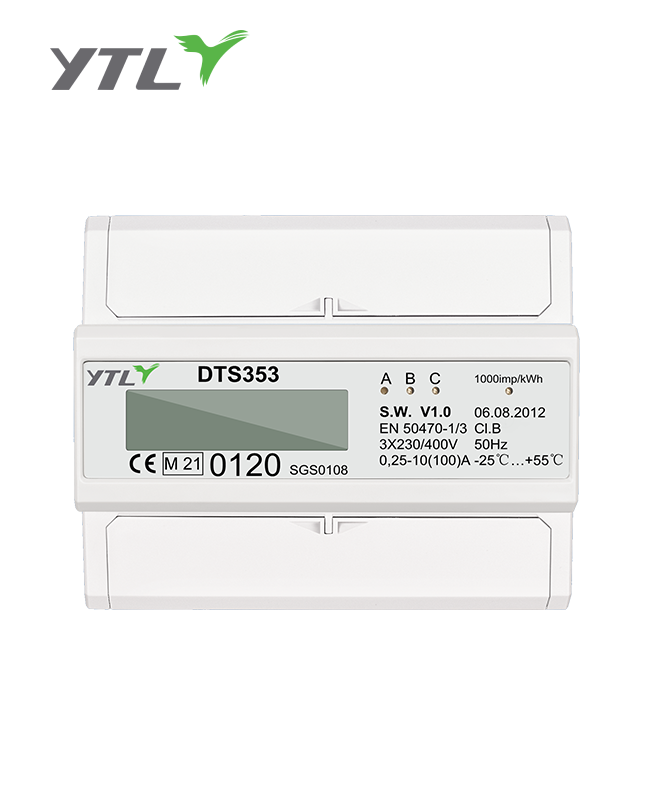
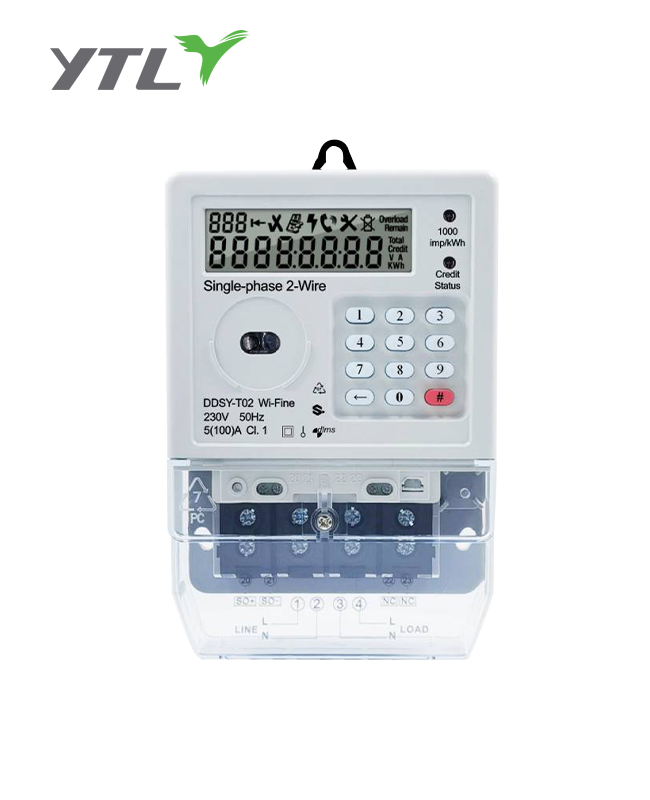
.png?imageView2/2/w/500/h/500/format/png/q/100 "YTL STS Prepaid Wi-Fine Energy Meter Single Phase Wall")
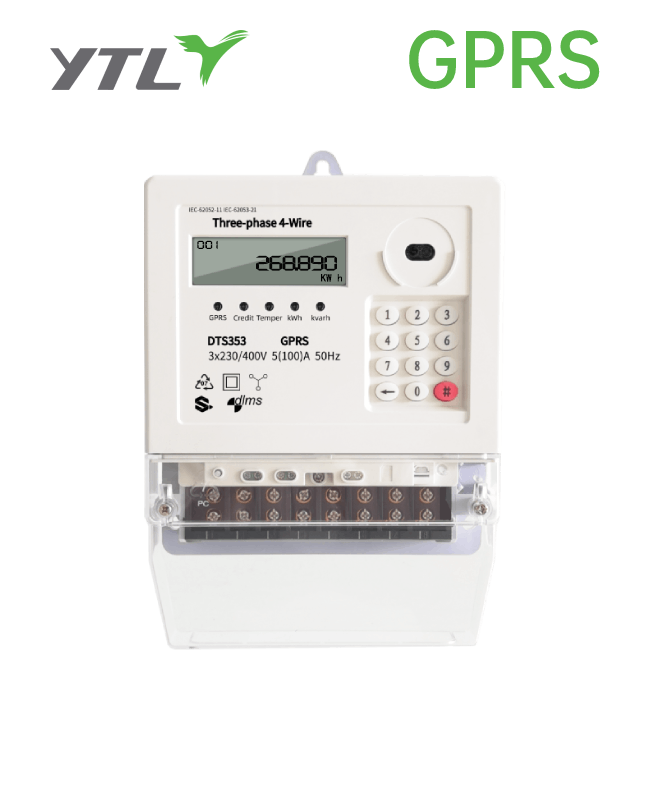
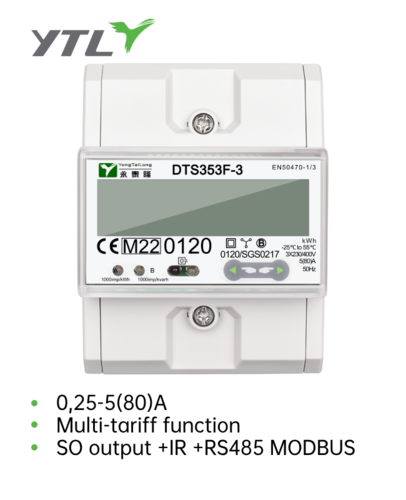
.jpg?imageView2/2/w/500/h/500/format/png/q/100 "YTL Company DTS353C DIN Rail 3P 4 Model Electricity Meter MID")
.png?imageView2/2/w/500/h/500/format/png/q/100 "YTL Two Phase Three Wire LCD Shunt sampling Energy Meter")
.png?imageView2/2/w/500/h/500/format/png/q/100 "YTL Two Phase Three Wire Big counter Electricity Meter")