
 English
 简体中文
简体中文



Introduction to Modern Smart Metering Standards
The global transition toward decentralized energy grids and automated utility management has positioned the smart meter as the critical node of modern infrastructure. For industrial procurement managers and utility providers, selecting the right smart meter involves more than evaluating basic measurement accuracy. It requires a deep understanding of communication protocols, data security standards, and interoperability frameworks. This technical analysis explores the core architectural differences between the leading international standards and connectivity technologies that define the current smart metering landscape.
Core Protocol Architecture: DLMS/COSEM vs STS
In the realm of smart electricity meters, two dominant frameworks govern how data is structured and how credit is transferred: DLMS/COSEM and the STS standard. While they are often used together in high-end prepaid smart meters, their functional purposes are distinct.
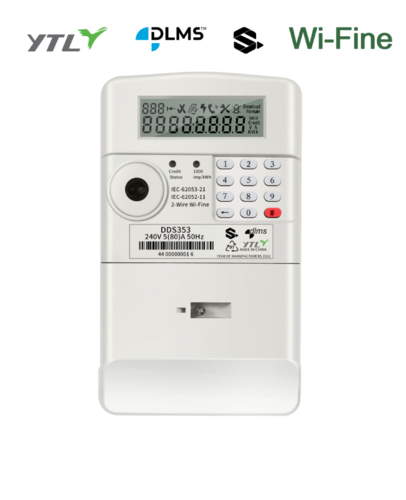
DLMS/COSEM (Device Language Message Specification) is an international standard (IEC 62055) that provides a generalized environment for data exchange. It is an object-oriented protocol that describes every data point in the meter—such as voltage, current, active power, and historical load profiles—as a specific Object Identification System (OBIS) code. The primary advantage of DLMS is interoperability. It allows a utility company to use a single Head-End System (HES) to communicate with meters from different manufacturers, provided they all adhere to the DLMS companion profile.
STS (Standard Transfer Specification), on the other hand, is the only globally recognized standard for prepaid metering. It focuses specifically on the secure transfer of credit tokens between a vending system and the meter. An STS-compliant meter uses a specialized decryption algorithm to process a 20-digit token. This ensures that a token generated for one specific meter cannot be used in another, preventing fraud and ensuring revenue protection for the utility provider.
Technical Specification Comparison Table
| Feature | DLMS/COSEM Standard | STS Standard |
|---|---|---|
| Primary Function | Data Modeling and Interoperability | Secure Credit Transfer and Prepayment |
| Object Model | Uses OBIS codes for all parameters | Uses TIDs (Token Identifiers) for security |
| Application Layer | COSEM (Companion Specification for Energy Metering) | Standard Transfer Specification |
| Security Mechanism | High-level authentication and AES encryption | Cryptographic decryption of 20-digit tokens |
| Hardware Requirement | Requires higher MCU processing power | Standard MCU with secure memory storage |
| Common Use Case | Post-paid industrial and AMI systems | Prepaid residential and commercial billing |
Connectivity Deep Dive: NB-IoT vs LoRaWAN
Connectivity is the backbone of Advanced Metering Infrastructure (AMI). The choice between Licensed (NB-IoT) and Unlicensed (LoRaWAN) spectrum technologies significantly impacts the Total Cost of Ownership (TCO) and network reliability.
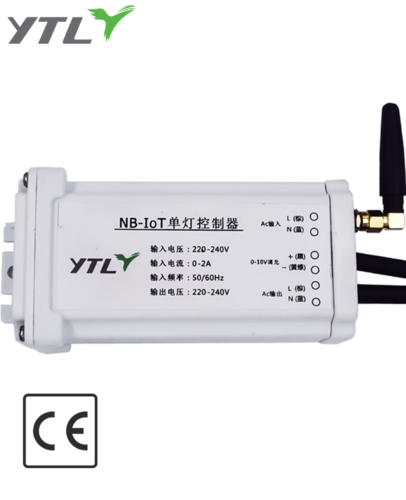
NB-IoT (Narrowband Internet of Things) is a cellular-based LPWAN technology developed by 3GPP. It operates within the licensed spectrum, typically managed by mobile network operators. For smart meters, NB-IoT offers superior penetration through walls and underground environments, making it ideal for meters installed in basement utility rooms. Because it leverages existing cellular towers, it does not require the installation of local gateways, which simplifies the initial deployment phase for utilities in urban areas.
LoRaWAN (Long Range Wide Area Network) operates on the unlicensed ISM bands (such as 868 MHz in Europe or 915 MHz in North America). Unlike NB-IoT, LoRaWAN allows the utility provider to own and manage their private network by installing their own gateways. This is particularly advantageous in rural regions where cellular coverage is weak or non-existent. LoRaWAN is known for its ultra-low power consumption, which is critical for smart water or gas meters that must operate on battery power for over 10 years.
Comparative Data for Wireless Transmission
| Parameter | NB-IoT (Cellular) | LoRaWAN (Private) |
|---|---|---|
| Spectrum | Licensed (LTE Bands) | Unlicensed (ISM Bands) |
| Bandwidth | 180 kHz | 125 kHz to 500 kHz |
| Data Rate | Up to 250 kbps | 0.3 kbps to 50 kbps |
| Latency | Low (1s to 10s) | High (Depends on Class) |
| Network Ownership | Operator Managed | Private or Public Managed |
| Deployment Cost | Low (No gateway needed) | High (Requires private gateways) |
| Operating Cost | Subscription per SIM card | No monthly subscription fees |
Advanced Metering Infrastructure (AMI) vs AMR
The evolution from Automated Meter Reading (AMR) to Advanced Metering Infrastructure (AMI) represents a shift from one-way data collection to two-way intelligent management.
AMR (Automated Meter Reading) systems utilize older technologies like Power Line Carrier (PLC) or short-range RF to transmit consumption data from the meter to a handheld device or a data concentrator. AMR is primarily a billing tool; it reduces the need for manual meter readers but offers limited real-time visibility into grid health.
AMI (Advanced Metering Infrastructure) is a comprehensive integrated system of smart meters, communication networks, and data management systems. It enables two-way communication, allowing utilities to remotely update firmware, disconnect/reconnect power, and implement Time of Use (TOU) tariff structures. For the industrial sector, AMI is essential for Demand Side Management (DSM), where factories can reduce energy consumption during peak pricing periods based on real-time data provided by the smart meter.
Accuracy Classes and International Certification
In industrial applications, measurement precision is paramount. Smart meters are classified by their accuracy class according to IEC 62053 standards.
- Class 1.0: Standard for residential applications, allowing for a 1 percent margin of error.
- Class 0.5S and 0.2S: Critical for industrial high-voltage metering where small percentage errors can result in significant financial discrepancies.
Manufacturers must ensure that their smart meters pass rigorous testing for Electromagnetic Compatibility (EMC), voltage surges, and extreme temperature resilience to maintain these accuracy classes over a 15-year lifecycle. International certifications like MID (Measuring Instruments Directive) for the European market and CPA for China are non-negotiable requirements for global trade.
Data Security and Anti-Tampering Mechanisms
As smart meters become IoT devices, they are vulnerable to both physical tampering and cyber-attacks. High-quality smart meters incorporate multi-layer security features:
- Physical Security: Magnetic interference detection, terminal cover open detection, and ultrasonic welding of the meter case.
- Cyber Security: Hardware Security Modules (HSM) for key storage, AES-128/256 encryption for data transmission, and secure boot processes to prevent unauthorized firmware updates.
- Revenue Protection: Smart meters can detect “Neutral Disturbance” or current bypass attempts, immediately alerting the utility provider via the AMI network to prevent energy theft.
Power Quality Monitoring in Industrial Smart Meters
Beyond simple kWh billing, industrial-grade smart meters monitor Power Quality (PQ). This includes tracking Harmonics, Voltage Sags, Swells, and Power Factor. Poor power quality can damage sensitive factory machinery and increase energy losses in transformers. By utilizing smart meters with PQ monitoring capabilities, factory managers can identify the source of electrical noise and implement corrective measures like capacitor banks or active harmonic filters, ultimately extending the life of their industrial assets.
Conclusion: Future-Proofing Metering Investments
Choosing a smart meter series requires a balanced consideration of current infrastructure and future grid requirements. For urban projects with high density, NB-IoT combined with DLMS/COSEM provides a robust, scalable solution. For remote areas or private microgrids, LoRaWAN offers the independence and cost-efficiency needed for long-term operation. As the industry moves toward 2026 and beyond, the integration of STS prepayment within DLMS-managed networks will become the standard for modern, secure, and efficient energy distribution.
FAQ
1. Can a smart meter support both DLMS and STS standards simultaneously?
Yes. Many high-end smart meters are designed as STS-DLMS hybrid units. They use the STS standard for secure credit token entry and use the DLMS/COSEM protocol for remote data reading and management via the AMI network.
2. What is the typical communication range of a LoRaWAN smart meter?
In open rural environments, LoRaWAN can transmit data up to 15 kilometers. In dense urban environments with significant signal obstruction, the range typically falls between 2 and 5 kilometers, which is still superior to traditional Zigbee or Bluetooth solutions.
3. Why is Accuracy Class 0.5S preferred over Class 1.0 for factories?
Industrial facilities consume massive amounts of electricity. A 0.5 percent difference in accuracy can result in thousands of dollars in billing differences annually. The “S” in 0.5S signifies that the accuracy is maintained even at very low load currents, which is vital for precise industrial monitoring.
4. How does NB-IoT handle deep indoor penetration?
NB-IoT uses a Power Iteration technique and a higher Power Spectral Density (PSD) than standard LTE. This allows the signal to penetrate several layers of concrete and reach meters located in deep basements or metal enclosures.
5. What happens to the smart meter data during a network outage?
Professional smart meters are equipped with non-volatile memory and internal Real-Time Clocks (RTC). They continue to record and timestamp energy usage data locally. Once the network connectivity (NB-IoT or LoRaWAN) is restored, the meter automatically uploads the historical data packets to the Head-End System.
References
- IEC 62056-21: Electricity metering data exchange - The DLMS/COSEM suite.
- IEC 62055-41: Standard Transfer Specification (STS) - Physical layer protocol for one-way token carrier systems.
- 3GPP Technical Specification TS 36.300: Overall description of E-UTRA and E-UTRAN (NB-IoT Framework).
- LoRa Alliance Regional Parameters v1.1: Specific frequency and data rate regulations for LPWAN.
- ISO 50001:2018: Energy management systems - Requirements with guidance for use.
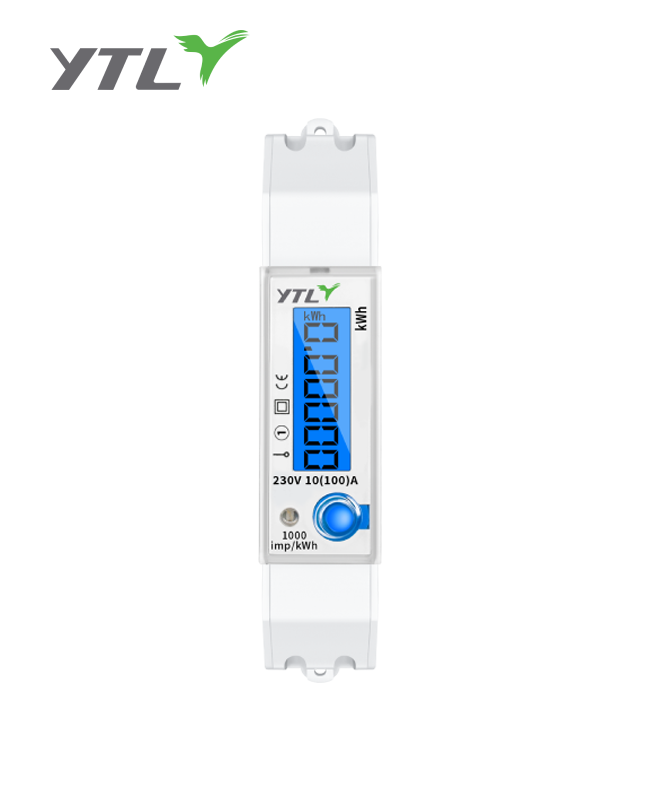
.png?imageView2/2/w/500/h/500/format/png/q/100 "YTL China Single Phase IC card Prepayment Electricity Meter")