
 English
 简体中文
简体中文



In an era of increasingly refined and intelligent energy management, choosing a high-performance smart meter is crucial for both residential users and industrial and commercial enterprises. Faced with numerous products and parameters on the market, users often feel confused. However, in-depth analysis reveals that the core value and long-term reliability of smart meters are mainly determined by three most critical performance indicators: metering accuracy and long-term stability, communication interface and reliability, and electrical safety and functional scalability.
I. Metering Accuracy and Long-Term Stability: The Cornerstone of Fair Metering
Metering accuracy is the lifeline of electricity meters, directly related to the fairness of trade settlement and the accuracy of energy efficiency management. Users should focus on the following two aspects when selecting:
1. Accuracy Class and Wide Load Range Ratio
Accuracy class is marked by numbers, such as Class 0.5S and Class 1.0; the smaller the number, the higher the accuracy. High-performance three-phase smart meters for industrial and commercial use can reach Class 0.2S, meaning their error can be controlled within ±0.2% within the specified current range, which is usually achieved by high-quality imported or domestic metering chips. The mainstream residential single-phase smart meters are Class 1.0, which can meet daily metering and basic energy efficiency management needs.
More importantly is the wide load range ratio, which refers to the ratio of the minimum current to the maximum current that the meter can accurately measure while ensuring accuracy. For example, a meter with a rated current of 5(60)A has a load range ratio of 1:12, meaning it can maintain high-precision metering from 0.25A to 60A. This ratio meets the wide-load metering requirements of S-class meters and is a key selection factor for scenarios with fluctuating loads such as industry and charging piles. It is critical for scenarios with large load fluctuations (e.g., small factories, charging piles) and effectively avoids inaccurate metering at low currents.
2. Long-Term Stability and Environmental Impact
Smart meters are typically required to operate for more than 10 years after installation. Therefore, long-term stability is more important than short-term accuracy. This means the metering characteristics of the meter should not drift significantly after long-term operation, temperature cycling, and natural aging of internal components.
This mainly depends on the quality of metering chips, circuit design, and the selection of key components. Meanwhile, the meter must maintain accuracy under the harsh environmental conditions specified by national standards. Residential indoor meters can operate normally in a wide temperature range of -25℃ to +55℃, while industrial/outdoor meters are recommended to adopt a wide-temperature design of -25℃~+70℃ to adapt to harsher environments. Therefore, priority should be given to branded products with robust materials for key chips and magnetic components (e.g., current transformers) and a complete aging test process.
II. Communication Interface and Reliability: The Lifeline of Data Interconnection
The "intelligence" of smart meters is reflected in their powerful data interaction capability. Stable, flexible, and future-oriented communication configuration is their core value.
1. Completeness and Reliability of Communication Methods
Modern smart meters are usually equipped with two types of interfaces: local communication and remote communication.
Local Communication: Mainly used to connect the indoor network. The most mainstream, mature, and reliable method is the RS-485 bus, which features stable transmission and high speed, serving as an industrial standard for connecting collectors or other smart devices. In addition, HPLC (High-Speed Power Line Carrier) is an effective supplement that requires no extra wiring. Users should select meters supporting corresponding interfaces according to their wiring conditions and management needs.
Remote Communication: Used for direct uploading of meter data to the management master station. The current mainstream trend is cellular IoT communication modules, especially NB-IoT and 4G Cat.1 technologies. NB-IoT has the advantages of low power consumption, wide coverage, and massive connections, making it ideal for meters at fixed locations with small data volume transmission. 4G Cat.1, on the other hand, offers stronger mobility and faster rates. Whether the meter is pre-installed with these modules directly determines whether it can be easily connected to existing remote meter reading and energy management systems.
2. Communication Protocols and Compatibility
The communication protocols supported by the meter (e.g., DL/T645-2007, Modbus) determine whether it can "communicate" with your existing back-end systems. When selecting, it is essential to confirm whether the protocol version supported by the meter is compatible with your data collection platform or energy management system. A meter with complete interfaces but mismatched protocols will fail to realize its data value.
III. Electrical Safety and Functional Scalability: Safeguarding Security and Adapting to the Future
As electrical equipment connected to the power grid for a long time, the safety of smart meters and their ability to adapt to future needs are equally important.
1. Electrical Safety and Protection Grade
- Insulation and Withstand Voltage Performance: Meters must comply with national mandatory standards, withstand certain overvoltage impacts and electromagnetic interference, ensuring their own safety and unaffected metering during abnormal power grid fluctuations.
- Fire Protection: Internal circuit design, component selection, and flame-retardant shells are key to preventing electrical fires. High-quality PCBs should use flame-retardant materials with firm internal connections.
- Protection Grade: The protection grade (IP code) of the meter case is crucial. For example, IP54 means dustproof and splash-proof against water from all directions, which is a basic requirement for meters installed outdoors or in dusty and humid environments.
2. Functional Expansion and Value-Added Potential
Functions beyond basic metering determine whether the meter can become a node for future energy management.
- Advanced Metering Functions: Support for time-of-use metering of forward/reverse active/reactive energy, demand recording, historical data storage, etc. This is essential for users participating in distributed photovoltaic grid-connected settlement, implementing two-part electricity prices, or conducting energy efficiency analysis.
- Event Recording and Alarms: Ability to record and report events such as voltage loss, current loss, cover opening, and magnetic interference. This is not only an important technical means for anti-electricity theft but also a basis for diagnosing line faults.
- Remote Control and Expansion Interfaces: Built-in or external load control switches for remote power on/off. Reserved pulse output or programmable IO interfaces to enable future connection to other sensors or devices (e.g., temperature sensors).
- Power Quality Monitoring: Some high-end meters can monitor voltage/current harmonics, voltage sags, etc., which is highly valuable for users sensitive to power quality (e.g., data centers, precision manufacturing).

Conclusion: Comprehensive Evaluation with a Long-Term Perspective
Selecting a smart meter is by no means a simple comparison of price or appearance. Users should adopt a systematic evaluation mindset: first, regard metering accuracy and stability as an uncompromisable bottom line, which is the fundamental value of the meter. Second, examine communication interface and reliability according to their own networking and management needs to ensure unobstructed data links. Finally, take electrical safety and functional scalability as a future-oriented investment, reserving space for potential energy management upgrades.
A wise choice is to find the optimal balance between total life cycle cost, performance indicators, and future adaptability. By thoroughly understanding and focusing on these three core performance indicators, users can cut through the confusion and select a truly reliable, intelligent, and long-lasting partner for energy management.
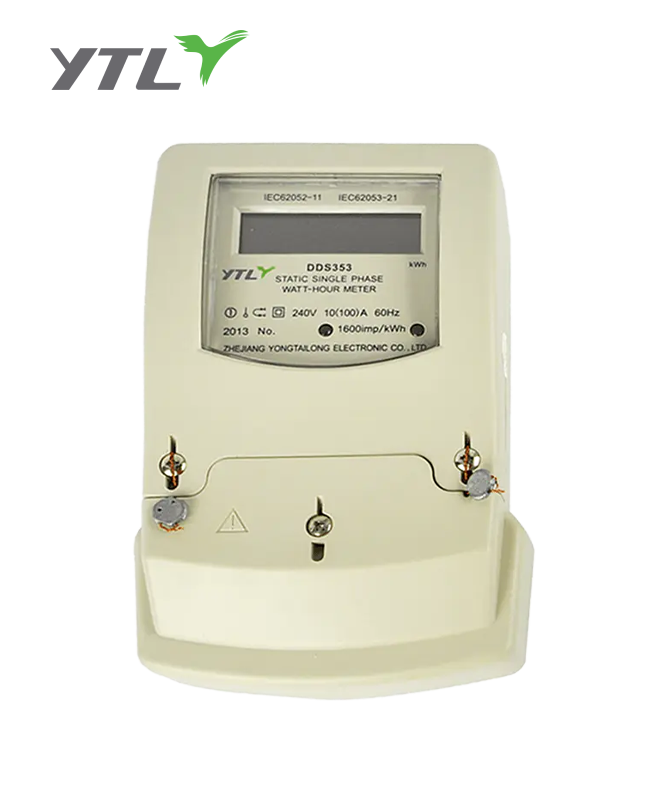
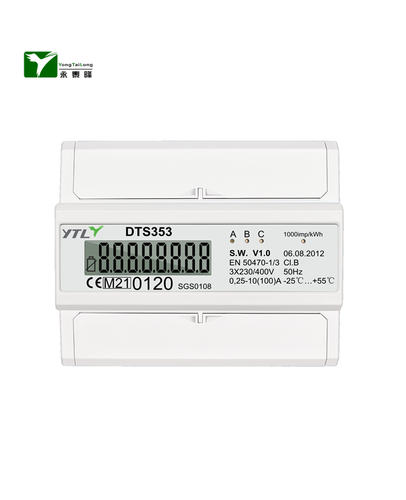
.jpg?imageView2/2/w/500/h/500/format/png/q/100 "YTL Company DTS353C DIN Rail 3P 4 Model Electricity Meter MID")
.png?imageView2/2/w/500/h/500/format/png/q/100 "YTL Two Phase Three Wire Big counter Electricity Meter")
.png?imageView2/2/w/500/h/500/format/png/q/100 "YTL China Single Phase IC card Prepayment Electricity Meter")