
 English
 简体中文
简体中文



In the fields of energy management, industrial control and scientific research, the credibility of measurement data serves as the cornerstone of all decision-making and value creation. As the sensory organs connecting the physical world and the digital world, the accuracy, reliability and standard certification of electronic instruments—especially electric energy metering instruments—jointly form the three pillars of their "credibility". For an electricity meter manufacturer committed to delivering value, an in-depth understanding and excellent practice of these three pillars not only reflect technical strength, but also represent a solemn commitment to customers and society.
I. Accuracy: The "Sight" of the Measuring World
Accuracy is the primary indicator measuring the consistency between an instrument’s measurement results and the true value of the measured quantity. It is far from a simple "error percentage", but a systematic project running through the entire process of design, manufacturing and application.
1. Accuracy Levels and Their True Meaning
In the electricity meter industry, accuracy is usually expressed by classes, such as Class 0.5, Class 0.2S or Class 0.1S. This figure represents the maximum permissible error limit of the instrument across its entire measuring range under specified reference conditions. For example, a Class 0.5 electricity meter has an error not exceeding ±0.5% of the measured value.The key to understanding accuracy lies in recognizing:
- Range ratio is critical: The real challenge of accuracy often lies not in full-scale measurement, but in the light-load region. An excellent instrument must maintain high precision over a wide current range (e.g., 1% Ib~Imax), which directly tests the linearity and sensitivity of its metering chips and sensors.
- Environmental impact is an "invisible killer": Accuracy under standard laboratory conditions must be maintained amid real-world temperature fluctuations, electromagnetic interference and long-term operation. Advanced temperature compensation algorithms and electromagnetic compatibility (EMC) design are core technologies to ensure on-site accuracy.
2. Core Technical Approaches to Achieve High Accuracy
Our company ensures accuracy advantages through multi-dimensional technical inputs:
- High-performance metering chips and sensors: Selection or customization of dedicated metering chips with ultra-high-resolution Σ-Δ ADC and low-drift characteristics to ensure the original accuracy of signal sampling.
- Advanced signal processing and algorithms: Filtering, calibration and error correction of sampled data through software algorithms in the digital domain to eliminate inherent hardware nonlinearity and temperature drift effects.
- Fully automatic precision calibration system: At the end of the production line, each instrument undergoes multi-point, fully automatic calibration under a standard source. Calibration data is independently stored in the instrument’s secure memory to ensure that every ex-factory product meets the nominal accuracy.
II. Reliability: The "Endurance" Against Time and Environment
If accuracy determines whether a measurement is "good", reliability determines whether it can "last". For electricity meters that require 365-day uninterrupted operation and a design life of more than 10 years, reliability is the lifeline to win market trust.
1. Reliability Comes from "Design Prevention"
Reliability is first and foremost designed. We follow the philosophy of reliability engineering:
- Strict selection and derating of components: Establish screening and testing specifications far exceeding industry standards for key components (e.g., capacitors, crystal oscillators, power modules), and adopt the "derating design" principle to ensure they operate under stress far below rated parameters, greatly extending service life.
- Thermal design and environmental adaptability design: Optimize internal heat dissipation paths through simulation and physical testing to ensure components remain in a safe operating area under extreme high and low temperatures. The enclosure adopts a high-protection design (e.g., IP54) to resist dust and moisture erosion.
2. Reliability Verified by "Extreme Challenges"
Design must pass rigorous verification. Before launch, our products undergo a complete reliability verification and testing system, which is far more than simple functional testing—it simulates or even accelerates harsh real-world environments:
- Climatic environmental stress testing: Including long-term operation under high temperature and humidity, rapid temperature cycling, thermal shock, etc., to expose potential material and welding defects; synchronized electromagnetic compatibility (EMC) testing (compliant with GB/T 17626/IEC 61000 standards) to ensure anti-interference capability.
- Mechanical and lifetime testing: Vibration, shock and drop testing, as well as million-cycle operational lifetime testing of key components (e.g., relays, displays).
- Accelerated aging and long-term stability testing: Accelerated aging under elevated voltage, temperature and other stresses to evaluate long-term drift in metering characteristics, ensuring accuracy remains stable after ten years.
III. Standard Certification: The "Passport" and Credential to Global Markets
Standards and certifications are the "official language" through which accuracy and reliability gain widespread recognition. They are both mandatory requirements for market access and the best endorsement of an enterprise’s technical and management capabilities.
1. Compliance Is the Bottom Line, Exceeding Is the Pursuit
We strictly abide by and actively lead compliance with the highest domestic and international standards.
- Mandatory certification: In the Chinese market, electric energy meters must pass unified recruitment testing by State Grid or China Southern Power Grid, obtain a CPA Pattern Approval Certificate for Measuring Instruments, and pass national metrological verification regulations such as JJG 596-2012, which legally qualifies the products for trade settlement.
- Alignment with international standards: Products fully comply with IEC 62052/62053 series (International Electrotechnical Commission), ANSI C12 series (North American electric energy metering standards), and regional regulatory requirements such as MID (Measuring Instruments Directive) certification, paving the way for global market entry.
2. Authoritative Certifications Demonstrate Comprehensive Strength
Proactively obtaining third-party authoritative certifications is an effective way to demonstrate comprehensive management capabilities to customers.
- Quality management system certification: Such as ISO 9001, proving the company’s ability to stably provide qualified products and services.
- Industry-specific certifications: For example, professional certifications in the communications industry may apply to communication and security modules of smart electricity meters.
- Harsh environment certifications: For special application scenarios (e.g., marine, field), certifications from classification societies such as DNV-GL or specific environment-related certifications serve as strong proof of superior reliability.

Conclusion: Three-in-One, Building Unshakable Trust
Accuracy, reliability and standard certification are interlocked, jointly forging the credible life of electronic instruments.
- Accuracy is the goal, defining the value of measurement.
- Reliability is the guarantee, ensuring the persistence of value across time and environments.
- Standard certification is the bridge, translating an enterprise’s technical commitment into a public language that customers can understand and trust.
As a responsible electricity meter manufacturer, we deeply understand that every instrument leaving the production line bears the important mission of fair energy transactions, efficient system operation and data-driven decision-making. Therefore, we are not just manufacturing products—we are carrying out a project of "trust". Through unremitting technological innovation, extreme process control and devout adherence to global standards, we ensure every measurement is precise and every instrument endures time. This is our fundamental commitment to winning the market and serving society.
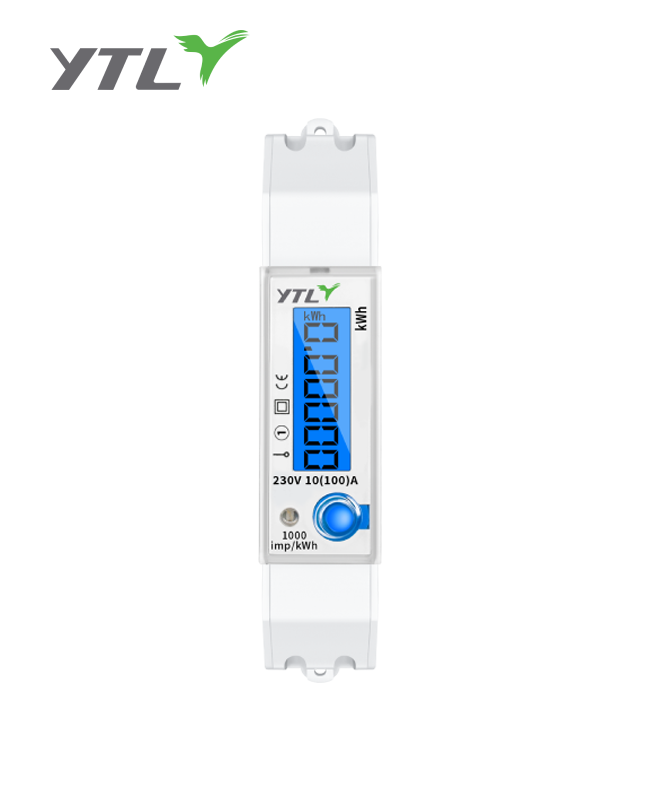
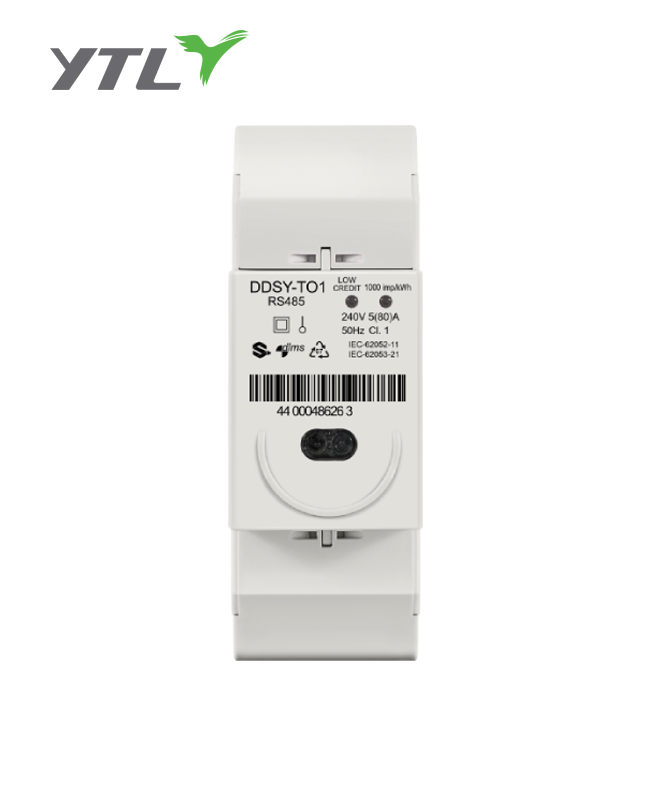
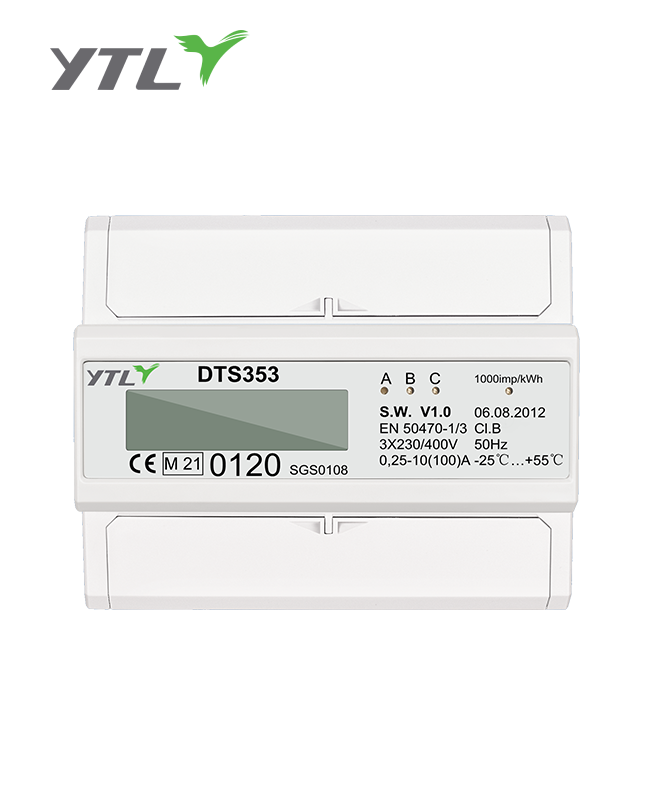
.png?imageView2/2/w/500/h/500/format/png/q/100 "YTL Two Phase Three Wire LCD Shunt sampling Energy Meter")