

 English
 简体中文
简体中文


1. Accuracy level and standard certification
The accuracy of DC energy meters is affected by design standards, sensor technology and environmental adaptability. Taking the DCM1 series as an example, its current measurement accuracy is ±0.5% within the rated current range (such as I_tr to I_max), and ±1% in the low current segment (I_min to I_tr); the voltage measurement accuracy is ±0.5%, covering a wide range of Un min -20% to Un max +15%. The power calculation accuracy is divided into ±1% and ±1.5% according to the current segment. Energy measurement complies with EN IEC 62053-41 Class 1 and EN 50470-4 Class B (MID) standards to ensure high reliability under international authoritative certification.
2. Adaptability of solar energy application scenarios
The core functions of DC energy meters in photovoltaic systems include:
Real-time monitoring: Accurately capture the current, voltage and power output of solar panels to provide basic data for system performance evaluation.
Energy efficiency optimization: Through long-term data tracking, identify inefficient links and optimize the layout and inclination of solar panels.
Billing and compliance: Meters that support MID certification (such as MPRO DC MODBUS MID) can be directly used for third-party billing to avoid line loss interference and ensure that "you pay for what you use".
3. Technical advantages and innovative design
Cable loss compensation: Advanced algorithms automatically calculate the energy loss caused by cable resistance to improve the overall measurement authenticity.
Wide environmental adaptability: The operating temperature range covers **-40°C to 40°C**, and the humidity tolerance is up to 90%, which is suitable for photovoltaic power stations in climates.
Intelligent expansion: Support Modbus communication and cloud data management to achieve remote monitoring and fault diagnosis.
4. Objective factors of accuracy difference
It should be noted that the accuracy level is related to product positioning:
High-end models (such as DCM1) have an accuracy of ±0.5%, which is suitable for large power stations and billing scenarios.
Economic models may use ±1%-2% accuracy, which is suitable for small household systems.
Calibration and maintenance: Regular calibration (such as comparison with standard light sources or reference batteries) is the key to maintaining long-term accuracy.
As a manufacturer of DC energy meters, we deeply understand the core demand for metering accuracy in solar energy systems. The accuracy of DC energy meters is directly related to power generation efficiency evaluation, energy management optimization, and commercial billing fairness. Our DC energy meters are centered on internationally certified accuracy and extended by intelligent management, providing full-chain support from data collection to commercial operations for solar power stations, charging piles, and microgrids. Whether it is a large-scale photovoltaic farm or a home energy storage system, we use technological innovation to help customers improve energy efficiency by 10%-15%, reduce operation and maintenance costs, and promote the realization of carbon neutrality goals.
Blog
How accurate are DC energy meters for solar power applications

YTL is a professional supplier of energy meter and AMI solution. the Top 100-enterprise with most investment value in Zhejiang. And“Yongtailong”is the famous brand of Zhejiang. With nearly 20 years' experience in energy metering, we devote ourselves to providing competitive projects and creating value for customers.
● Online + Offline. Provide cost-effectiv solutions
● Strict quality control mechanism.High quality assurance
● Five R&D centers,combine with hardware&software design, experiment and testing
● Global service capability, provide customers timely and effective solution
● Good customer feedback. Reliable after-sales service
● Online + Offline. Provide cost-effectiv solutions
● Strict quality control mechanism.High quality assurance
● Five R&D centers,combine with hardware&software design, experiment and testing
● Global service capability, provide customers timely and effective solution
● Good customer feedback. Reliable after-sales service
.png?imageView2/2/w/500/h/500/format/png/q/100 "YTL STS Prepaid Wi-Fine Energy Meter Single Phase Wall")
.jpg?imageView2/2/w/500/h/500/format/png/q/100 "YTL Company DTS353C DIN Rail 3P 4 Model Electricity Meter MID")
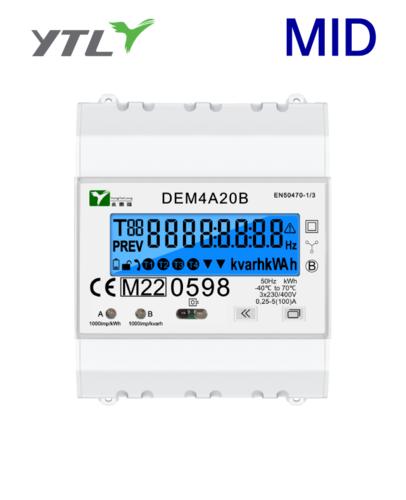
- Smart Meter Company Solution | Integrated Prepaid Energy Meter System
- Smart Meter Solution for Industrial Parks
- Energy Management of Prepaid Meters
- Professional Selection and Technical Comparison of Modern Smart Meters
- Working Principle of Prepaid Meters & Comparative Analysis of DC Meters and Smart Meters
- Full Life Cycle Management of Electronic Instruments
- Application Management of Electronic Instruments in Building Energy
- Smart Meters: The Data Cornerstone for a New Smart Electricity Experience
- How Do Prepaid Electricity Meters Work?
- Smart Meters: From Precision Metering to Empowering In-depth Services
- Comprehensive Technical Comparison: Single-Phase vs. Three-Phase Energy Meters and the Transition from Analog to Smart Metering Systems
- Electricity Meter: The Invisible Scale That Illuminates Life
-
Mobile
-

Wechat
-

Whatsapp
-
- ABOUT YTL
- About YTL
- Factory
- Honor
- Development
- Privacy
-
- YTL culture
- Culture
- Values
- Advantage
- Three Phase kWh Meter
-
- products
- Single Phase Din Rail Meter
- Three Phase Smart APS Electric Energy Meters
- Three Phase Multi Function Electronic Energy Meter
- Digital Electric Meters
- Electronic Energy Meter
- Electronic Energy Meters
- Three Phase Keypad split type Energy Meter
- Single Phase IC Card Prepayment Energy Meters
- Three Phase Anti-tamper Suspension Energy Meters
-
- Information Activity
- Exhibition News
- Blog
- Knowledge
- Staff Activity
- Industry news
- Single Phase Smart Watt Hour Meter
COPYRIGHT © 2020 Zhejiang Yongtailong Electronic Co., Ltd. ALL RIGHTS RESERVED .  China Electronic Energy Meters Manufacturers