
 English
 简体中文
简体中文



As a dedicated smart electric meter customization and manufacturing company, we understand that a household electric meter is far more than a simple counting device. It is a sophisticated instrument at the intersection of power engineering, microelectronics, and advanced communications, acting as the primary link between the utility grid and the consumer.
Our expertise lies in producing meters that are accurate, reliable, and intelligent. Here is an in-depth look, from a manufacturer’s standpoint, at how these essential devices operate and why our smart meters represent the future of energy management.
I. The Fundamental Principle: Measuring Energy Consumption
The core function of any electric meter is to accurately measure the electrical energy (Watt-hours or Kilowatt-hours, kWh) consumed over a period of time. This measurement is derived from two fundamental electrical quantities: Voltage (the electrical "pressure") and Current (the electrical "flow").
1. The Power-Time Relationship
Electrical energy consumption is simply the accumulation of electrical power used over time.
-
Traditional (Induction) Meters: These older models use a purely electromechanical process. They contain two sets of coils (voltage and current) that generate magnetic fields. The interaction of these fields causes a non-magnetic aluminum disc to rotate. The speed of rotation is directly proportional to the amount of power being consumed at that instant. A mechanical gear train then translates the total number of disc rotations into the cumulative energy reading displayed on the dials. This method is reliable but lacks the precision and functionality of modern electronics.
-
Modern (Smart) Meters: We rely on electronic sensing and digital signal processing. Instead of a spinning disc, we use specialized chips to continuously sample the instantaneous voltage and current signals many thousands of times per second. This digital process allows for exceptionally precise calculations of the true energy consumed.
II. The Core Technology of Smart Meter Manufacturing
Our focus is on the electronic smart meter, which incorporates advanced components to meet the stringent demands of modern power grids.
1. High-Precision Metrology Circuitry
The Metrology Board is the heart of the smart meter. It is where the physical electricity flowing into the home is measured and converted into data.
- Sensing: We utilize high-stability components like Shunts (precision current-sensing resistors) or Current Transformers (CTs) to safely measure the flow of current into the home.
- Conversion: The measured analog voltage and current signals are fed into a high-resolution Analog-to-Digital Converter (ADC). This step is critical, as it converts the physical electricity into a digital stream of data that the meter’s processor can understand.
- Calculation: A dedicated Metering ASIC (Application-Specific Integrated Circuit) processes this digital data stream, accurately calculating the Active Energy (kWh)—the energy that performs useful work—and other parameters like Reactive Energy and Power Factor.
2. The Microcontroller Unit (MCU) and Data Management
The Microcontroller is the "brain" that governs the meter’s operations beyond simple counting.
- Time-of-Use (TOU) Billing: The MCU uses a highly accurate internal clock to sort and record energy consumption into different time bins, such as Peak, Off-Peak, and Shoulder hours. This allows utilities to implement variable tariffs to encourage responsible energy usage.
- Data Logging and Storage: All consumption data and critical event logs (like tamper attempts, power outages, or high-current events) are safely stored in non-volatile memory, ensuring data integrity even if the power is cut off.
3. Two-Way Communication System
The ability to communicate is what makes a smart meter truly "smart," eliminating the need for manual meter reading.
- Data Uplink: The meter automatically transmits consumption data to the utility’s central system via various communication technologies, such as Power Line Communication (PLC), Radio Frequency (RF), or Cellular (4G/5G) modules, depending on the customer’s infrastructure requirements.
- Remote Control: Critically, the meter can receive commands from the utility. This allows for remote service connection and disconnection (using an internal relay switch) and remote firmware updates, significantly reducing operational costs and improving service speed.
III. Manufacturing and Quality Assurance Excellence
Our role as a manufacturer is to ensure not only functionality but also durability and security.
1. Rigorous Calibration and Testing
Every single meter leaving our facility undergoes a stringent calibration process on automated, high-precision test benches.
- Accuracy Verification: Meters are tested under various load conditions—from very light loads (like a single lamp) to heavy loads (like an air conditioner)—to confirm that the measurement error falls within certified standards (e.g., IEC or ANSI).
- Environmental Resilience: Products are subjected to extreme temperature and humidity cycling to guarantee reliable performance in diverse climates, from scorching deserts to freezing northern regions.
2. Anti-Tamper and Security Features
Preventing energy theft is a primary design consideration for all our meters.
- Physical Security: The meter casing is designed to be tamper-evident and built from high-strength, fire-retardant polymers.
- Intelligent Sensors: Meters are equipped with sensors to detect physical interference, such as opening of the terminal cover or the application of strong external magnets. Upon detection, the meter logs the event, and can even be programmed to automatically disconnect the power supply.
In essence, the modern household electric meter we manufacture is a highly integrated embedded system. It transforms electricity usage into secure, actionable data, providing the foundation for reliable billing, smart grid management, and a more efficient energy future.
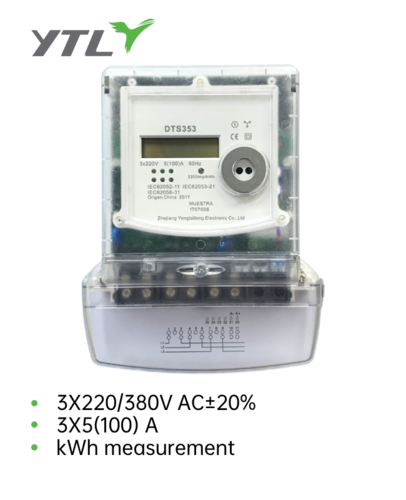
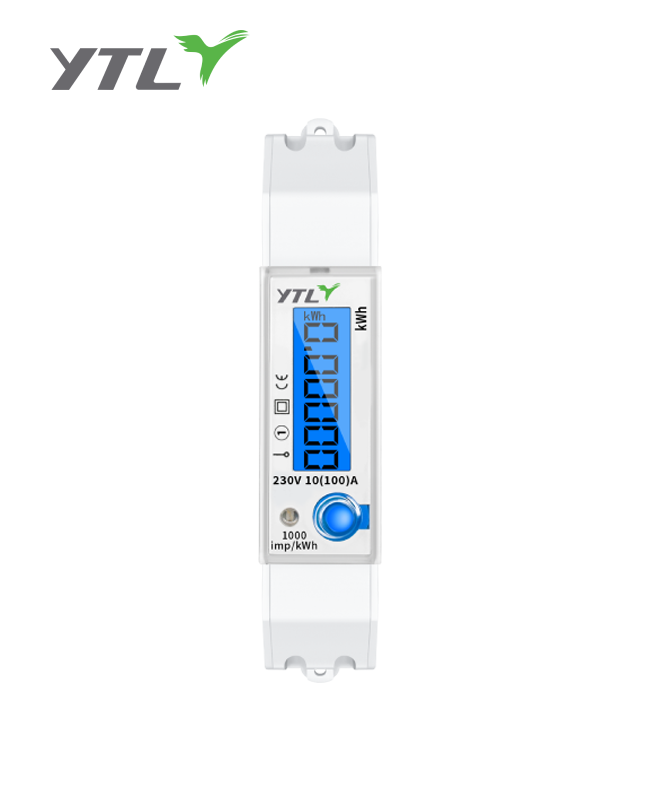
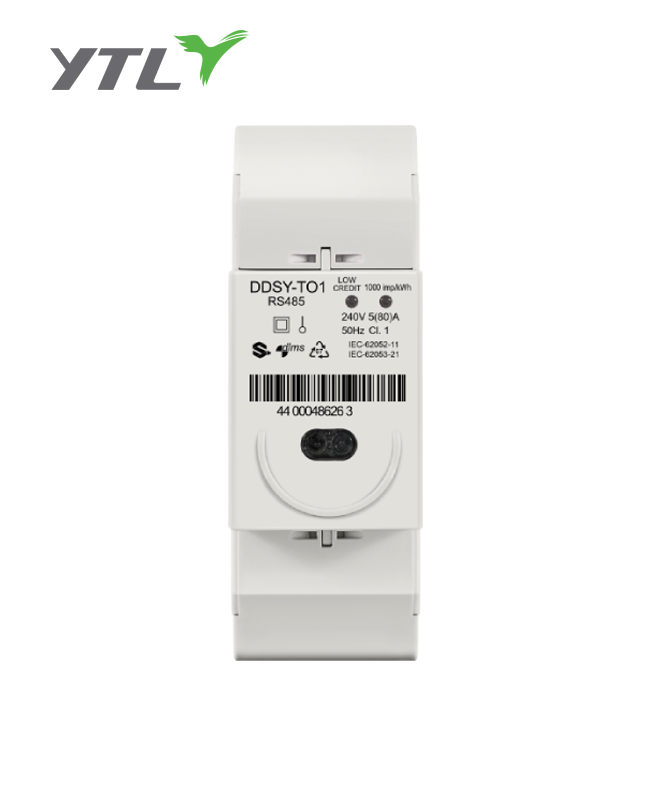
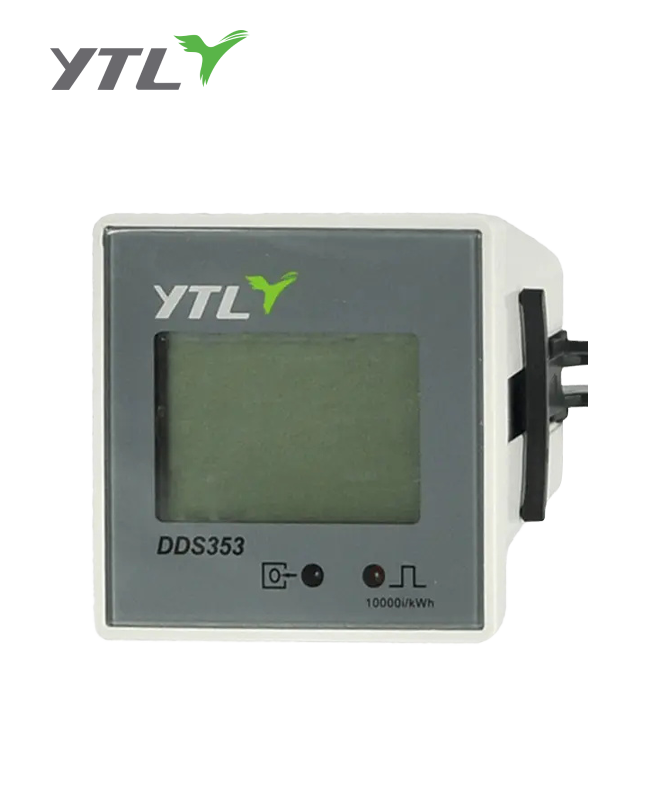
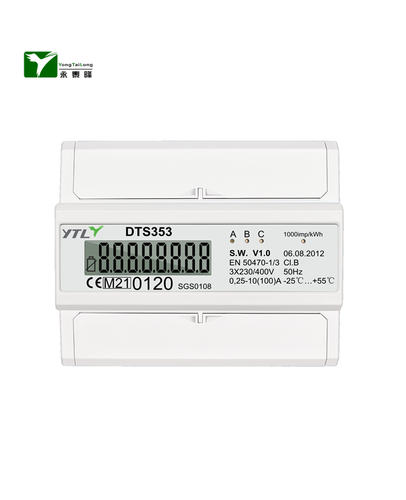
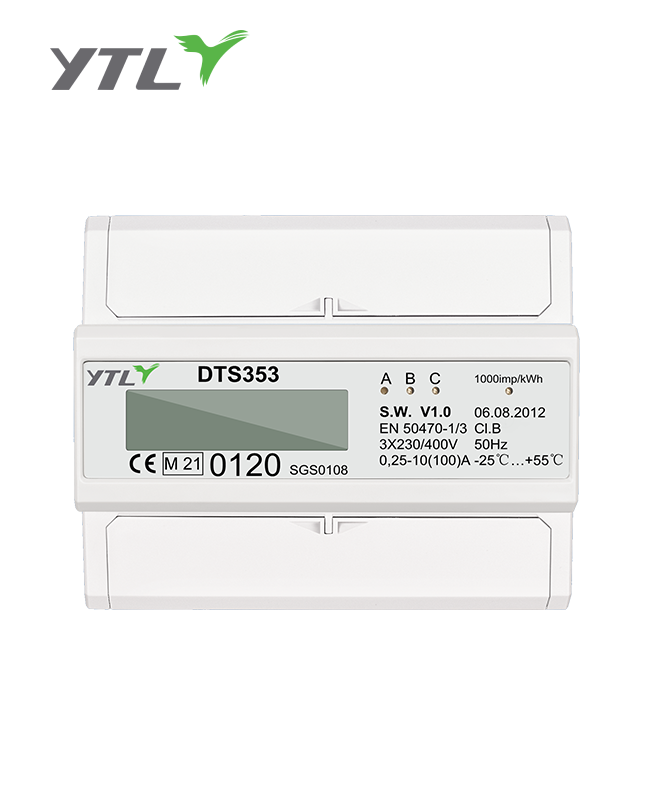
.jpg?imageView2/2/w/500/h/500/format/png/q/100 "YTL Company DTS353C DIN Rail 3P 4 Model Electricity Meter MID")