
 English
 简体中文
简体中文



In the current era of increasingly scarce space resources, the intelligent upgrading of commercial buildings and the efficient integration requirements of industrial control cabinets have put forward higher requirements for the volume, installation flexibility, and functional adaptability of electricity meters. The miniaturized rail type electric meter, with its compact design and convenient installation characteristics, has become an ideal choice to meet the needs of these two scenarios.
1、 Differences in Electricity Management Requirements between Commercial Buildings and Industrial Control Cabinets
The electricity management of commercial buildings such as office buildings, shopping malls, and hotels focuses on energy consumption monitoring, sub item measurement, and data visualization. In such scenarios, the electricity meter needs to support multi loop monitoring, independently collect electricity data from different areas or devices such as air conditioning, lighting, elevators, etc., and upload the data to the Building Automation System (BAS) through communication protocols to help managers optimize energy allocation and reduce operating costs. At the same time, the commercial environment has high requirements for the appearance design, silent operation, and installation convenience of equipment to avoid affecting the spatial aesthetics and user experience.
Industrial control cabinets place greater emphasis on reliability, anti-interference capability, and functional integration. In scenarios such as factory automation and power equipment control, the space inside the control cabinet is compact and often faces complex working conditions such as electromagnetic interference, high temperature, and vibration. Industrial electric meters need to have high-precision measurement, wide voltage/current measurement range, and meet IP protection level and EMC electromagnetic compatibility standards to ensure stable operation in harsh environments. In addition, industrial scenarios also require seamless integration between electricity meters and systems such as PLC and SCADA to achieve real-time monitoring and automation control of the production process.
2、 Design characteristics and adaptation advantages of miniaturized rail type electric meters
1. Compact structure achieves efficient utilization of space
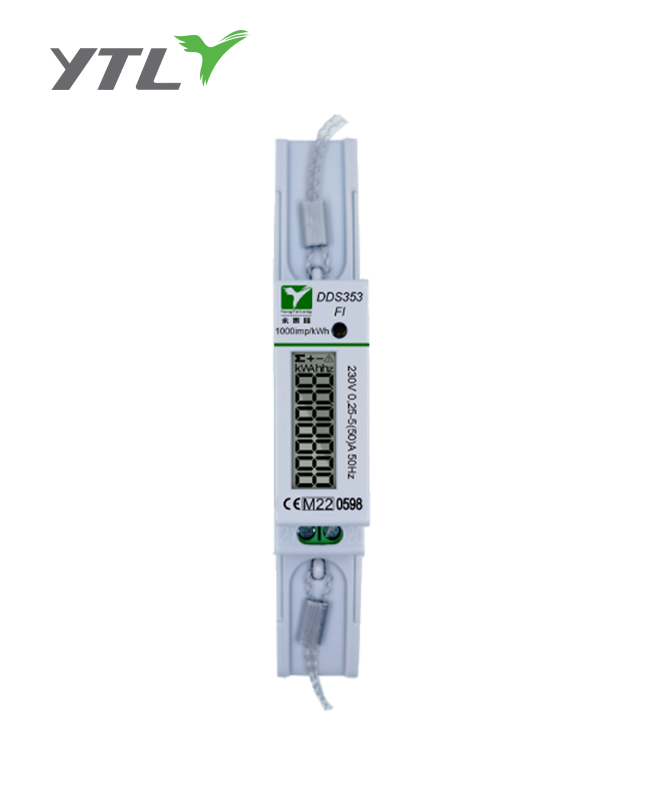
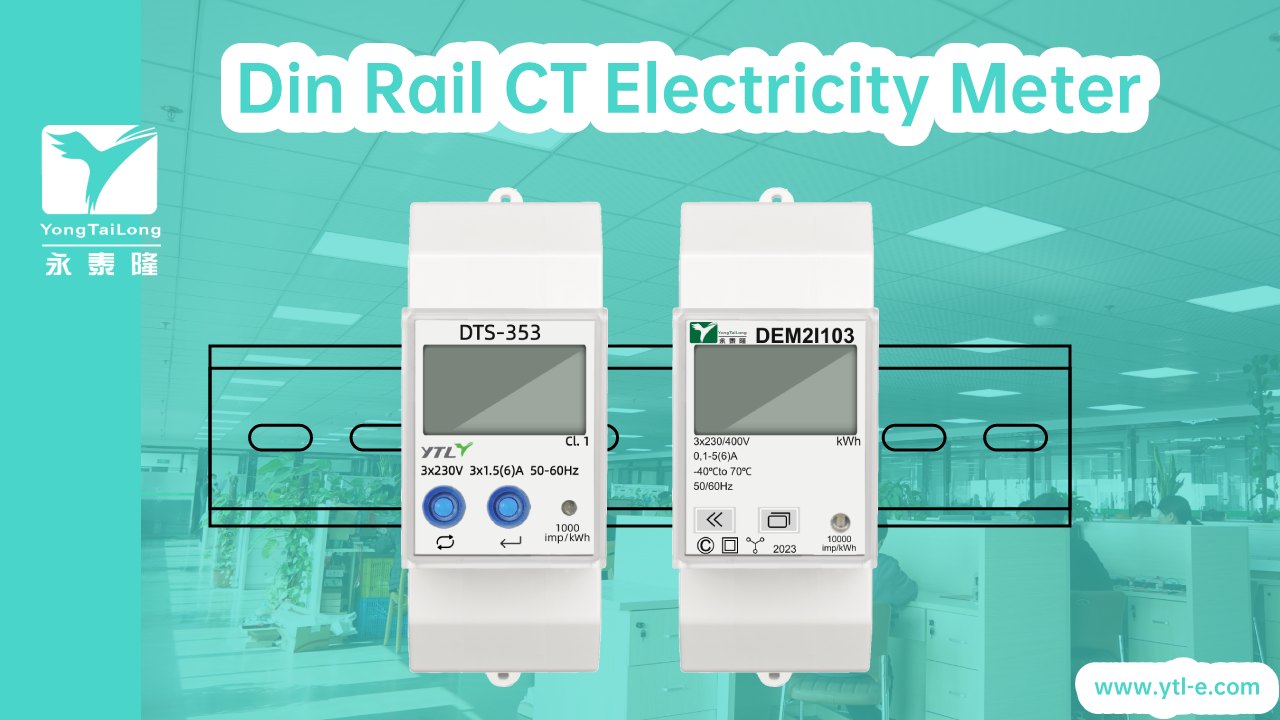
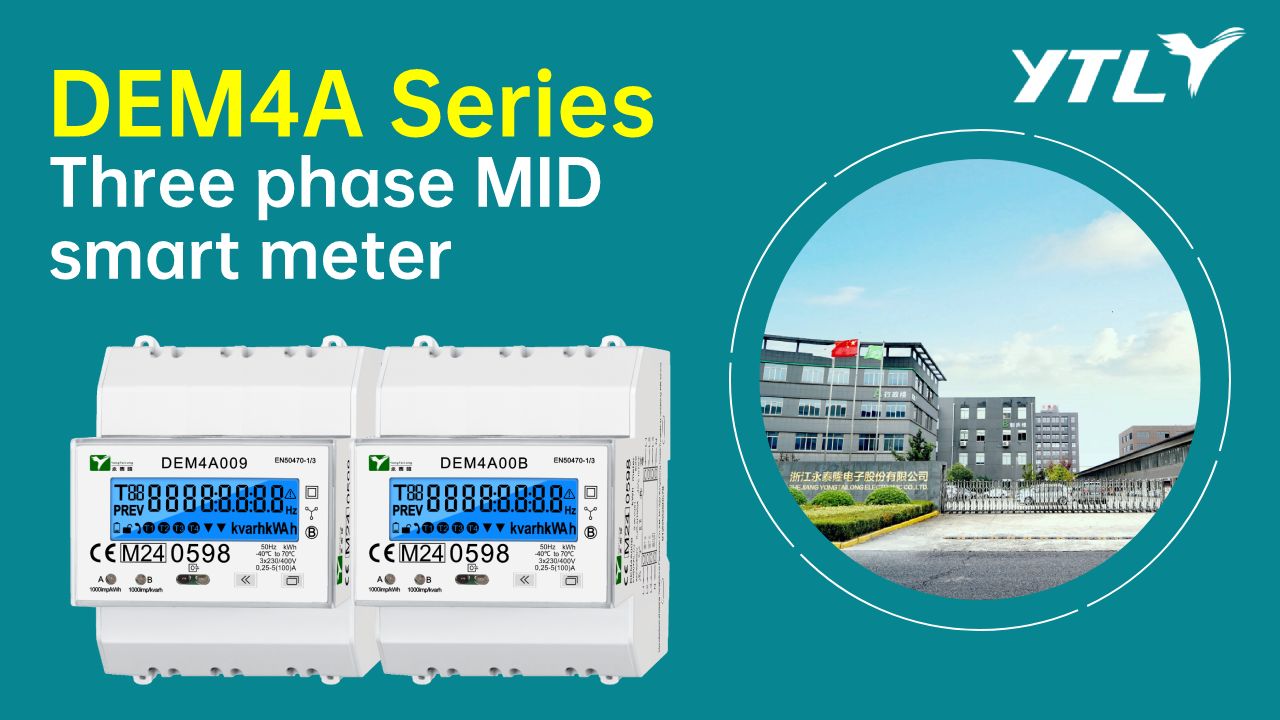
The miniaturized rail mounted electric meter adopts a 35mm standard DIN rail installation design, without the need for additional openings or complex wiring, and can be directly mounted inside the control cabinet or on the rail of the distribution box. Its thickness is usually less than 50mm, and its width is only an integer multiple of 18mm (such as 18mm, 36mm, 72mm), which greatly saves installation space compared to traditional electric meters. In commercial buildings, this design facilitates the integration of multiple electricity meters within a limited distribution box, enabling multi circuit monitoring; In industrial control cabinets, compact electric meters can be closely arranged with other electrical components to improve the utilization of cabinet space.
2. Flexible installation and convenient maintenance
The rail mounted installation method enables the disassembly and replacement of the electricity meter without the need for power outages or complex tools, allowing maintenance personnel to quickly complete maintenance, calibration, or upgrade operations. For the operation and maintenance team of commercial buildings, this convenience can reduce power outage time and minimize the impact on merchants; In industrial production scenarios, rapid maintenance capability helps to shorten equipment downtime and ensure the continuity of the production line. In addition, some rail mounted electricity meters support plug-in terminal design, further simplifying the wiring process and improving installation efficiency.
3. Functional modularization meets diverse needs
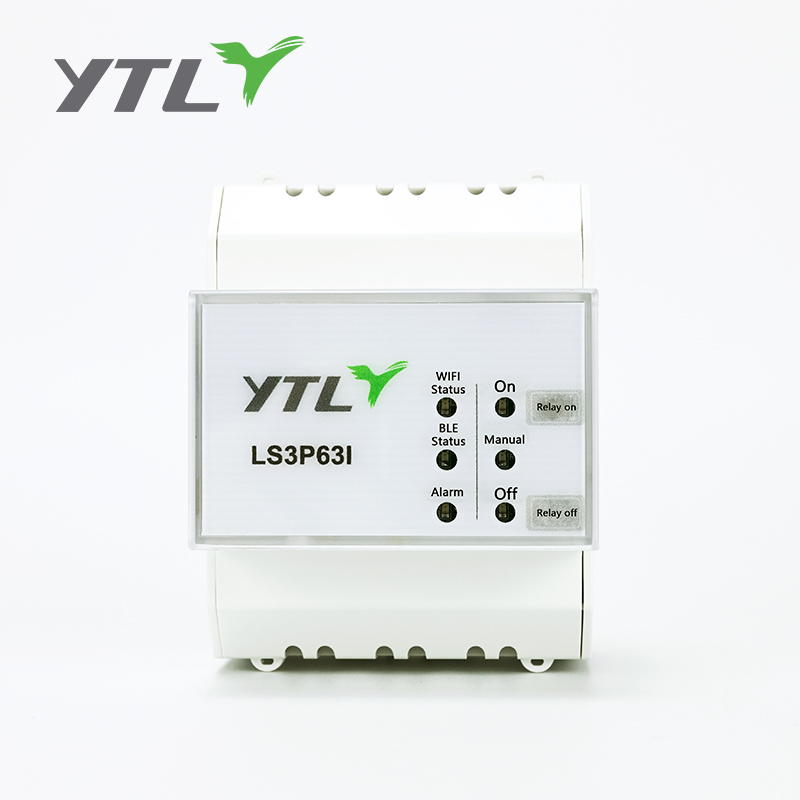
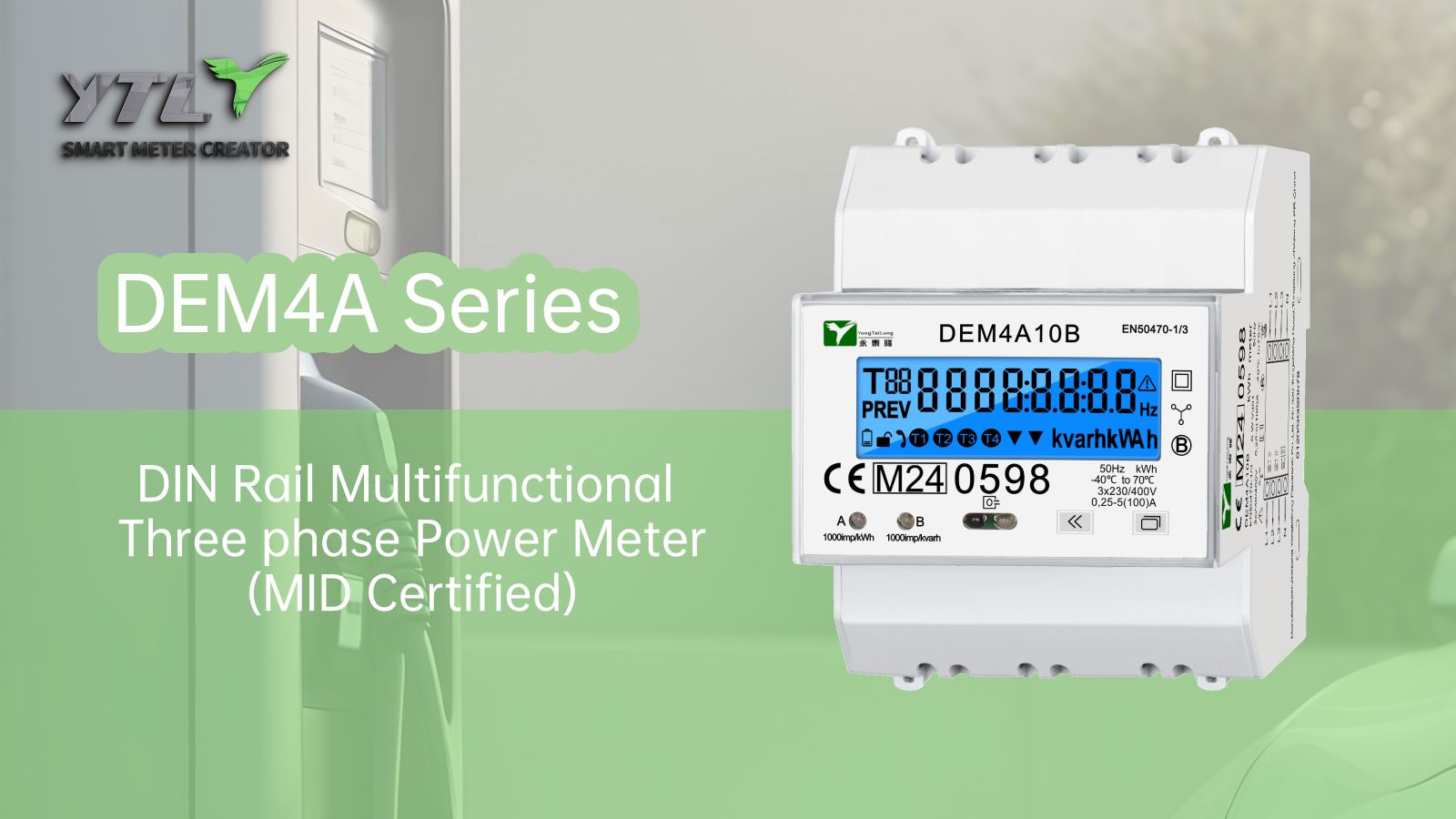
Miniature rail type electric meters usually have modular design, which can flexibly configure functional modules according to actual needs. For example, in commercial buildings, electricity meters with multi rate metering, RS485 communication, or wireless transmission functions can be selected to meet the needs of time of use billing and remote meter reading; In the industrial control cabinet, harmonic analysis, event recording, or digital input/output functions can be integrated to achieve more comprehensive power parameter monitoring and equipment control. This feature is scalable, allowing the electricity meter to adapt to the complex needs of different scenarios.
4. Integration of communication compatibility assurance system
To meet the intelligent management needs of commercial and industrial scenarios, rail mounted meters support multiple communication protocols, such as Modbus RTU, DL/T 645, Bluetooth, NB IoT, etc. In commercial buildings, electricity meters can be connected to the BAS system through RS485 bus or wireless communication to achieve centralized management of energy consumption data; In industrial environments, the communication interface between electricity meters and PLC, SCADA systems can upload real-time parameters such as voltage, current, and power, providing data support for production scheduling and fault diagnosis.
3、 Adaptation and optimization solutions for different scenarios
1. Optimization of commercial building scenarios
In commercial buildings, to further enhance user experience and management efficiency, rail mounted meters can optimize the following features:
Appearance design: Adopting ultra-thin and low-noise structure, the surface is treated with frosted or matte finish, which is coordinated with the overall style of the distribution box;
Display function: equipped with an intuitive LCD display screen, supporting one click query of real-time data and historical records;
Data visualization: Generate energy consumption reports, trend curves, and comparison charts through supporting software to help managers quickly grasp electricity usage.
2. Industrial control cabinet scene enhancement
In response to the stringent requirements of industrial environments, rail mounted electric meters need to be targeted for performance improvement:
Protection level: reaching IP54 and above protection standards, dustproof and waterproof, suitable for complex environments such as workshops and outdoors;
Electromagnetic compatibility: Through EMC certification, it has strong anti-interference ability, avoiding signal distortion or equipment misoperation;
Wide temperature operation: Supports a wide temperature range of -25 ℃ to 70 ℃ to ensure stable operation under working conditions.
4、 Future Development Trends and Technological Upgrading Directions
With the development of Internet of Things, edge computing and other technologies, the miniaturized guideway meters will evolve towards intelligence and integration. Future products may integrate AI algorithms to achieve intelligent analysis and abnormal warning of electricity consumption data; Using wireless communication technologies such as 5G and LoRa to replace traditional wired connections and simplify system deployment; At the same time, through chip technology optimization, the size and power consumption are further reduced, providing more efficient and intelligent power management solutions for commercial buildings and industrial control cabinets.
For customers, choosing a suitable miniaturized rail mounted electricity meter is not only an optimization of space and cost, but also a key step towards intelligent energy management. With flexible design, powerful functionality, and reliable performance, these types of electric meters are becoming the core equipment for improving electricity efficiency and ensuring stable system operation in commercial and industrial fields.
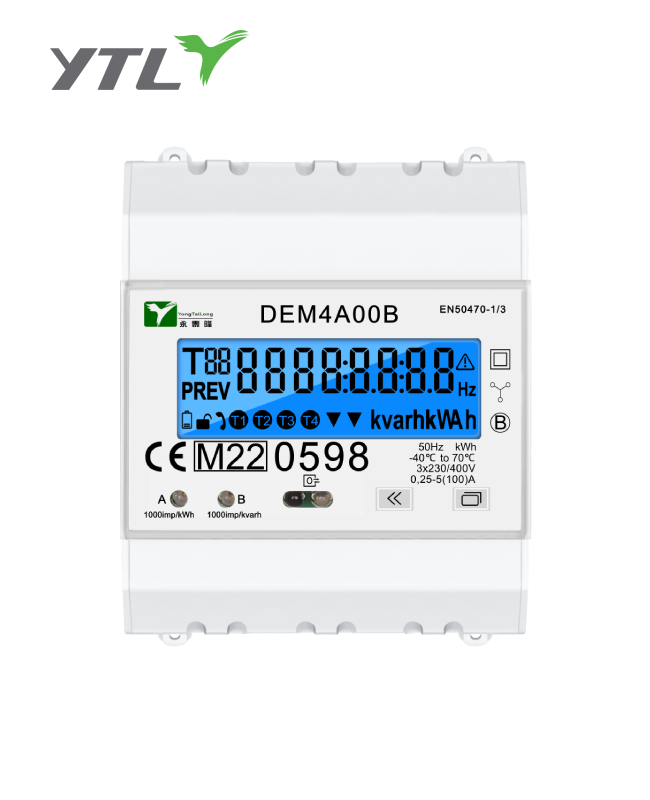
.jpg?imageView2/2/w/500/h/500/format/png/q/100 "YTL Company DTS353C DIN Rail 3P 4 Model Electricity Meter MID")
.png?imageView2/2/w/500/h/500/format/png/q/100 "YTL China Single Phase IC card Prepayment Electricity Meter")