
 English
 简体中文
简体中文



The European energy storage market is expanding rapidly, fueled by the growing integration of renewable energy, industrial microgrids, and EV charging infrastructure. As these projects scale, the need for precise, reliable, and real-time current measurement has never been more critical. Inaccurate or inconsistent measurements can compromise battery management, reduce system efficiency, and create operational risks for utilities, EPC contractors, and system integrators.
Challenges in Energy Storage Measurement
Energy storage systems rely on accurate current sensing for several critical operations:
- Battery health management:Precise measurement is essential for determining state-of-charge (SOC) and preventing overcharging or deep discharge that can reduce battery lifespan.
- Dynamic load monitoring:Fluctuating loads from renewable generation or EV charging can introduce measurement errors if sensors are not responsive enough.
- System integration:Multi-channel storage systems often rely on RS485 or Modbus protocols to communicate with battery management systems (BMS), energy management systems (EMS), or supervisory platforms. Incompatible or unstable data can cause delays and inefficiencies.
- Operational consistency:Batch-to-batch variability in traditional current transformers (CTs) or meters can disrupt large-scale deployment and increase maintenance costs.
- Data reliability:Inadequate technical documentation or insufficient calibration can hinder project approval and on-site commissioning.
These challenges are particularly pronounced in commercial, industrial, and distributed energy storage projects, where precise current monitoring is a cornerstone of operational efficiency.
The Importance of Accurate Current Measurement
Accurate current measurement directly impacts:
- Energy Optimization:Operators rely on precise data to schedule battery charge/discharge cycles, manage peak loads, and optimize energy dispatch.
- Grid Stability:Fluctuating renewable generation requires real-time monitoring to maintain voltage and frequency stability across microgrids or industrial networks.
- Project Approval and Compliance:Many European BESS installations must meet stringent standards for metering accuracy and reporting. Inconsistent readings can delay approvals or lead to non-compliance penalties.
- Maintenance and Predictive Analytics:Reliable current data enables early detection of anomalies, reducing downtime and prolonging system component life.
Rogowski Coils: A Modern Solution
Rogowski coils are inductive current sensors that provide a non-intrusive, high-precision alternative to traditional CTs. They are increasingly applied in energy storage, EV charging, and industrial energy management projects due to several unique characteristics:
- Wide frequency range:Capable of capturing transient events and high-speed current fluctuations.
- High linearity:Ensures consistent accuracy across a broad current range, even under dynamic loads.
- No magnetic saturation:Unlike conventional CTs, Rogowski coils maintain precision in high-current or fluctuating conditions.
- Non-intrusive design:Rogowski coils can be installed around busbars or cables without disconnecting circuits.
- Safe and lightweight:Reduces installation complexity and risk, especially in multi-channel deployments.
By converting measured current into a voltage signal, Rogowski coils feed accurate data into BMS, EMS, or supervisory systems, enabling reliable monitoring, control, and analysis of energy storage operations.
The Broader Value: Platform-Level Integration
While Rogowski coils deliver precise measurement, their true value emerges when integrated into a complete current sensing and energy management platform. Such a platform:
- Aggregates multi-channel measurements from multiple energy assets.
- Provides visualization dashboards and real-time analytics for operational insight.
- Ensures communication stability through RS485 or Modbus protocols.
- Supports scalable deployment across BESS, EV charging networks, and industrial applications.
This approach transforms current sensing from a standalone measurement task into an actionable intelligence layer, helping operators optimize energy flows, predict maintenance needs, and maximize the return on energy storage investments.
Conclusion
Energy storage projects depend on precise, reliable, and consistent current measurement to succeed. Rogowski coils, when embedded in a well-designed sensing platform, provide high accuracy, rapid response, and integration-ready performance that addresses the core pain points of European storage operators and EV charging infrastructure developers.
Understanding the limitations of traditional sensors and leveraging modern sensing technology is crucial for anyone deploying commercial or industrial-scale storage systems. By applying Rogowski coils in a platform-based approach, operators gain confidence in their energy management, enhance grid stability, and secure the long-term performance of their assets.
Explore how Rogowski coil-based sensing can optimize your energy storage or EV charging project—contact us for more insights and technical guidance.
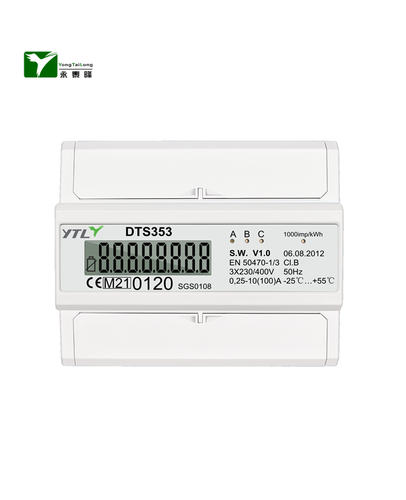
.png?imageView2/2/w/500/h/500/format/png/q/100 "YTL STS Prepaid Wi-Fine Energy Meter Single Phase Wall")
.png?imageView2/2/w/500/h/500/format/png/q/100 "YTL Two Phase Three Wire LCD Shunt sampling Energy Meter")