
 English
 简体中文
简体中文



1. Introduction to Three-Phase Power and Metering
Brief explanation of three-phase power systems
Three-phase power is the most common method of alternating-current (AC) electric power generation, transmission, and distribution. It is a system in which three AC voltages are generated, with the voltages being equal in magnitude but phase-shifted by 120 degrees from each other. This simultaneous and balanced delivery of power is significantly more efficient than single-phase power, especially for large industrial and commercial applications.
Key characteristics of three-phase power include:
- Constant Power Transfer: Unlike single-phase power, which has fluctuating power, three-phase systems provide a steady, continuous flow of power.
- Efficiency: It requires less conductor material than an equivalent single-phase system to transmit the same amount of power, leading to cost savings.
- Motor Operation: Three-phase power is ideal for operating large motors, as it provides a self-starting torque, making three-phase motors highly reliable and efficient for heavy-duty applications.
The two main configurations for three-phase systems are:
| Configuration | Description | Key Advantage |
|---|---|---|
| Delta | Three wires, often without a neutral. Ideal for transmission. | Excellent for long-distance power transmission with fewer conductors. |
| Wye (Y) or Star | Four wires (three phases and one neutral). Common for distribution. | Allows for both phase-to-phase and phase-to-neutral voltage loads. |
Importance of accurate power measurement
Accurate power measurement is fundamental to effective energy management, financial accountability, and system health in any electrical installation, particularly in complex three-phase environments. Inaccurate metering can lead to significant financial losses for utility providers and incorrect billing for consumers.
For industrial and commercial users, accurate measurement provides the necessary data to:
- Manage Costs: Precisely track consumption to manage peak demand and optimize tariff structures.
- Ensure Power Quality: Monitor parameters like voltage, current, power factor, and harmonics to prevent equipment damage and ensure stable operation.
- Improve Efficiency: Identify where and when energy is being wasted to implement targeted conservation strategies.
Overview of three-phase meters and their role
A three-phase meter, often a smart meter in modern applications, is a specialized device designed to accurately measure the electrical energy consumption (usually in kilowatt-hours, or kWh) in a three-phase power system. It measures the energy flowing through each of the three phases and aggregates the total consumption.
Their primary role is to serve as the financial point of reference between the energy supplier and the consumer. However, modern three-phase smart meters extend far beyond simple billing by offering advanced functionalities:
| Feature | Role in Three-Phase System |
|---|---|
| Multi-rate Metering | Measures consumption during different time-of-use (TOU) periods for flexible billing. |
| Power Quality Monitoring | Tracks voltage dips, swells, and harmonic distortion across all three phases. |
| Demand Management | Records peak demand (the highest average power drawn over a set period) to help users avoid high demand charges. |
| Data Logging/Remote Communication | Provides real-time and historical data for remote monitoring, balancing, and system analysis. |
| Bi-directional Metering | Essential for renewable energy systems (e.g., solar) to measure energy consumed from the grid and energy exported to the grid. |
In essence, the three-phase meter is the central intelligence unit for monitoring, managing, and billing energy usage in high-power applications.
2. Key Benefits of Using Three-Phase Meters
Enhanced Power Distribution
Three-phase meters are crucial tools for maintaining the health and efficiency of a three-phase electrical network. They provide the granular data necessary for proactive management of the power distribution system.
Balanced load management across three phases
In a three-phase system, loads (such as machinery, lighting, and HVAC) should ideally be distributed evenly across the three phases (L1, L2, L3). A three-phase meter measures the current and power factor for each individual phase, allowing facility managers to identify and correct load imbalances.
- Benefit: Balanced loads ensure that all parts of the system, from the transformer to the wiring, operate at their designed capacity and temperature, extending equipment life.
Minimizing voltage imbalances
Voltage imbalance occurs when the phase-to-phase or phase-to-neutral voltages are not equal. This condition is highly detrimental to three-phase motors and can significantly increase their operating temperature, leading to efficiency loss and premature failure.
- Role of the Meter: Advanced three-phase meters continuously monitor and log the voltage of each phase.
- Benefit: By quickly identifying a voltage imbalance, maintenance teams can pinpoint the cause (e.g., uneven load distribution or a utility supply issue) and take corrective action, safeguarding valuable equipment.
Reducing neutral current
In a perfectly balanced Wye (Star) system with linear loads, the currents in the three phases ideally cancel each other out, resulting in near-zero current in the neutral wire. However, load imbalances or the presence of non-linear loads (like computers and LED lighting) can cause significant neutral current.
- Role of the Meter: Three-phase meters can measure the neutral current directly.
- Benefit: Monitoring neutral current helps prevent the neutral conductor from overheating, which is a major fire hazard. It also guides the installation of appropriately sized neutral wires and harmonic filters when necessary.
Improved Energy Efficiency
The core purpose of a high-quality three-phase meter is to provide the data required to achieve superior energy efficiency, transforming raw consumption into actionable insights.
Accurate measurement of energy consumption
Three-phase meters are designed for high accuracy, often compliant with strict regulatory standards (e.g., Class 0.5S or better). This ensures that every watt-hour consumed is correctly measured, which is essential for large consumers.
- Benefit: Highly accurate metering provides a dependable baseline for performance tracking and calculating the Return on Investment (ROI) for energy-saving projects.
Identifying energy wastage and inefficiencies
Modern meters measure multiple parameters beyond simple kilowatt-hours (kWh), including reactive power (kVAR) and the Power Factor (PF). A poor power factor indicates inefficient use of electrical energy (high kVAR), often leading to utility penalties.
| Parameter Monitored | Indication of Inefficiency | Efficiency Improvement |
|---|---|---|
| Power Factor (PF) | Low PF (e.g., below 0.95) indicates excessive reactive power. | Installation of power factor correction capacitors. |
| Demand Profile | Spikes or consistently high peak demand. | Load shedding or rescheduling high-power operations. |
| Harmonic Distortion | High total harmonic distortion (THD). | Installation of harmonic filters to reduce system losses. |
Facilitating energy management strategies
The data provided by the meter, often recorded as interval data (e.g., 15-minute readings), is the foundation for advanced Energy Management Systems (EMS). This data enables strategies such as:
- Time-of-Use (TOU) Optimization: Shifting operations to off-peak hours based on metered data.
- Benchmarking: Comparing energy performance across different buildings, production lines, or time periods.
Cost Savings
The investment in a high-quality three-phase meter quickly pays for itself through direct and indirect cost reductions.
Lower electricity bills due to accurate metering
While accuracy ensures correct billing, the key cost saving comes from using the data to reduce the bill components, primarily demand charges. The meter provides precise peak demand data, allowing consumers to implement strategies to lower that peak.
- Mechanism: Reducing peak demand directly cuts the highest cost component on commercial and industrial bills.
Reduced equipment wear and tear
By minimizing voltage and load imbalances, and by correcting a poor power factor, the meter indirectly ensures that motors, transformers, and cables operate under optimal electrical conditions.
- Result: Equipment runs cooler and more efficiently, leading to fewer breakdowns, lower maintenance costs, and a longer operational lifespan.
Optimized power usage and demand management
The ability to monitor real-time consumption and demand trends allows businesses to avoid costly penalties for exceeding pre-set utility thresholds or for poor power quality.
| Area of Optimization | Direct Cost Saving |
|---|---|
| Peak Demand Control | Avoidance of utility demand penalties. |
| Power Factor Correction | Elimination of reactive power surcharge fees. |
| Preventative Maintenance | Reduced cost of emergency repairs and downtime. |
Reliability and Durability
Three-phase metering equipment is built to withstand the harsh electrical and environmental conditions typical of industrial and commercial settings.
Robust design for industrial environments
Industrial-grade meters feature sturdy casings and components designed to resist dust, moisture, and temperature fluctuations, ensuring consistent operation where standard equipment might fail.
Resistance to voltage fluctuations and surges
These meters often incorporate surge protection mechanisms and are designed with a wide operating voltage range to handle the inevitable minor voltage disturbances that occur in large power systems without suffering damage or loss of data.
Long-term performance and stability
Due to stringent testing and calibration standards, three-phase meters provide a highly stable and reliable measurement platform over many years, minimizing the need for frequent replacements or re-calibration, which is critical for legal metrology and billing integrity.
Advanced Features and Functionality
Modern three-phase smart meters are integral components of the modern smart grid and digital enterprise.
Remote monitoring and data logging
The meters continuously log comprehensive data (voltage, current, power, demand, etc.) and use built-in communication protocols (e.g., Modbus, Ethernet, Cellular) to transmit this data to remote servers or cloud platforms.
- Advantage: Allows for continuous, centralized monitoring of multiple sites without manual meter readings.
Integration with smart grid systems
Three-phase meters act as the grid-edge devices that communicate with utility systems, supporting advanced smart grid functions such as:
- Automated Meter Reading (AMR) and Advanced Metering Infrastructure (AMI).
- Remote service connection/disconnection.
- Real-time outage detection and response.
Power quality analysis and diagnostics
High-end meters function as dedicated power quality analyzers, recording key events and data points that are critical for troubleshooting system disturbances.
| Diagnostic Function | Critical Information Provided |
|---|---|
| Sag/Swell Recording | Detects rapid drops or rises in voltage magnitude. |
| Harmonic Analysis | Quantifies distortion caused by non-linear loads. |
| Transient Detection | Captures very short, high-energy voltage spikes. |
3. Applications of Three-Phase Meters
Three-phase meters are indispensable across any sector that requires a significant, reliable, and measurable power supply. Their application spans heavy industry to commercial enterprises and the rapidly growing renewable energy sector.
Industrial Facilities
Industrial operations are the archetypal users of three-phase power due to the nature of the machinery and the high energy demands.
Manufacturing plants and factories
In manufacturing, three-phase meters are essential for both main utility billing and sub-metering. They measure the total energy consumed by the facility and can be installed on specific production lines or cost centers.
- Purpose: To accurately allocate energy costs to specific products or processes and monitor departmental energy performance, which is a key component of operational efficiency and ISO 50001 energy management compliance.
Heavy machinery and equipment
Large industrial loads, such as powerful lathes, rolling mills, industrial pumps, and compressors, almost universally use three-phase motors. These motors are sensitive to power quality issues.
- Role of the Meter: The meter monitors the power quality parameters (voltage balance, harmonics, and power factor) specific to the machinery, helping to prevent motor damage and ensure the reliable operation of the production backbone.
Process control systems
Three-phase meters are often integrated directly into Supervisory Control and Data Acquisition (SCADA) systems or other process control networks.
- Function: They provide real-time electrical data necessary for automated load shedding, peak demand control, and interlocking safety mechanisms, ensuring that electrical consumption aligns with production schedules and constraints.
| Industrial Application Area | Metering Focus | Expected Benefit |
|---|---|---|
| Main Incoming Power | Total Consumption (Billing), Demand, Power Factor | Minimize Utility Charges |
| Production Line Sub-Metering | Energy per Unit of Output, Runtime Analysis | Cost Allocation and Efficiency Improvement |
| Critical Process Equipment | Voltage Quality, Harmonic Distortion | Prevent Downtime and Equipment Failure |
Commercial Buildings
While lighting and small appliances in commercial settings often use single-phase power, the major energy consumers—HVAC and large mechanical systems—rely on three-phase power.
Shopping malls and office complexes
In multi-tenant commercial properties, sub-metering is critical for fair and accurate billing of tenants. Three-phase meters are installed on the feeds to larger retail units or floors that utilize three-phase loads.
- Key Benefit (Landlord): Accurate cost recovery and transparency in utility billing for tenants.
- Key Benefit (Tenant): Insight into their actual consumption to drive energy-saving behavior.
Data centers and server rooms
Data centers have extremely high, continuous, and mission-critical power demands. Their power infrastructure is almost entirely three-phase, from the uninterruptible power supplies (UPS) to the main distribution units.
- Role of the Meter: Provides continuous, high-resolution monitoring for capacity planning, ensuring that the system is not overloaded. It also helps calculate the facility's Power Usage Effectiveness (PUE) metric, a key measure of data center efficiency.
HVAC systems and lighting
Heating, Ventilation, and Air Conditioning (HVAC) and large-scale lighting systems (especially those using three-phase distribution) are typically the single largest energy consumers in a commercial building.
- Application: Three-phase meters monitor these specific loads, allowing facility managers to correlate energy use with occupancy, weather, and operational schedules to find optimization opportunities.
Renewable Energy Systems
The transition to renewable energy has introduced new complexity to metering, making advanced three-phase meters essential for managing two-way power flow.
Solar power plants
Utility-scale and large commercial rooftop solar arrays generate three-phase power that is exported to the grid.
- Function: A specialized three-phase meter, often called a bi-directional meter or net meter, is required to accurately measure both the energy drawn from the grid when solar generation is low and the surplus energy injected to the grid.
Wind turbine farms
Similar to solar, large wind farms generate substantial three-phase power.
- Role: The meter measures the total power output for revenue accounting (selling the power back to the grid operator) and monitors the reactive power contribution of the farm to ensure grid stability.
Grid-tied energy storage
Large battery energy storage systems (BESS) are installed on the grid to store excess energy and discharge it during peak demand.
- Application: The three-phase meter accurately tracks the charge and discharge cycles, which is necessary for calculating the operational efficiency of the storage system and for participating in grid ancillary service markets.
| Renewable Energy Application | Metering Focus | Key Requirement |
|---|---|---|
| Solar/Wind Generation | Bi-directional Flow, Power Factor, Output Total | Revenue Accounting and Compliance |
| Grid-Tied Storage (BESS) | Charge/Discharge Efficiency, Real-time Power Flow | System Optimization and Grid Service Billing |
| General Site Integration | Power Quality at the Point of Common Coupling (PCC) | Ensuring Grid Stability and Safety |
4. Three-Phase Meter Selection Criteria
Selecting the appropriate three-phase meter is a critical decision that impacts accuracy, reliability, and cost management for years. The choice must align with the specific application requirements, whether for utility billing, industrial sub-metering, or power quality analysis.
Accuracy Class
The Accuracy Class specifies the maximum permissible error of the meter under normal operating conditions. This is arguably the most important criterion, especially for meters used for financial transactions (billing). The classes are defined by international standards (e.g., IEC or ANSI).
- Financial Impact: A higher accuracy class (lower percentage error) means more precise billing and revenue assurance.
- Common Classes:
- Class 1.0: Maximum error of ±1.0%. Suitable for general commercial sub-metering.
- Class 0.5S: Maximum error of ±0.5%. Common for utility main metering and high-value industrial loads.
- Class 0.2S: Maximum error of ±0.2%. Used for high-voltage transmission, generation, and critical measurement points.
| Accuracy Class | Typical Application | Financial Importance |
|---|---|---|
| 0.2S | Utility Generation/Transmission, Critical Industrial Feeds | Very High (Revenue Metering) |
| 0.5S | Main Industrial/Commercial Billing Points, Large Consumers | High (Cost Control and Billing) |
| 1.0 | Non-Critical Sub-Metering, General Building Loads | Medium (Cost Allocation) |
Current and Voltage Ratings
The meter must be correctly sized to the electrical service it is monitoring. This involves selecting appropriate current and voltage ratings to ensure the meter operates safely and accurately.
- Voltage Rating: The meter's nominal voltage rating must match the system voltage.
- Current Rating: The current rating determines how the meter connects to the system:
- Direct Connect: The entire load current passes through the meter. Typically limited to lower currents (e.g., up to 120A).
- Transformer Connect (CT/VT): Used for high-current or high-voltage applications. The meter connects via Current Transformers (CTs) and/or Voltage Transformers (VTs), which step down the line current and voltage to safe, measurable levels (e.g., 5A secondary for CTs).
Communication Protocols
Modern three-phase meters are smart devices that require communication capabilities to enable remote monitoring, data logging, and integration with building management systems (BMS) or utility networks. Selecting the right protocol is vital for system integration.
| Protocol | Description | Typical Application |
|---|---|---|
| Modbus (RTU/TCP) | Simple, widely-used industrial protocol. | Integration with SCADA, PLCs, and BMS within a facility. |
| DLMS/COSEM | Standardized protocol for utility metering. | Main utility metering and Advanced Metering Infrastructure (AMI). |
| M-Bus (Wired/Wireless) | Often used for heat/water meters, but sometimes integrated with electric sub-meters. | Local sub-metering networks within a building. |
| Cellular (e.g., LTE-M) | Wireless communication using public mobile networks. | Remote or geographically dispersed sites lacking fixed network infrastructure. |
Display and Interface
The local interface is important for field technicians during installation, commissioning, and troubleshooting. A good meter interface improves usability and reduces the potential for errors.
- Display Type: Clear, backlit LCD or LED display that can cycle through key parameters (kWh, kW, V, A, PF) without requiring external tools.
- User Interface: Intuitive navigation buttons and a secure, password-protected service port (e.g., optical port) for local configuration and data extraction.
- Indicators: Essential LED indicators for pulse output (flashing to indicate energy usage) and communication status (to confirm network connectivity).
Summary of Key Selection Factors:
When choosing a three-phase meter, it is essential to balance the required functionality with the investment cost, focusing on these main areas:
- Application: Is it for billing, sub-metering, or power quality analysis?
- Accuracy: What level of measurement precision (e.g., 0.5S) is legally or functionally required?
- Connectivity: Does the meter's communication protocol integrate seamlessly with the existing network (e.g., Modbus to BMS or DLMS/COSEM to AMI)?
5. Installation and Maintenance Tips
Proper installation and rigorous maintenance are essential to ensure a three-phase meter operates accurately and reliably throughout its lifespan, safeguarding both safety and billing integrity.
Safety precautions
Working with three-phase power involves high voltages and currents, posing significant safety risks. Adhering to strict safety protocols is non-negotiable during installation and maintenance.
- De-energization: The primary rule is to lock-out/tag-out (LOTO) the circuit breaker before any wiring begins. The system must be fully de-energized and verified with a voltage tester.
- Insulated Tools and PPE: Only use tools rated for the voltage of the system. Technicians must wear appropriate Personal Protective Equipment (PPE), including insulated gloves, safety glasses, and flame-resistant (FR) clothing.
- Current Transformer (CT) Safety: When using CT-connected meters, never open the secondary circuit of a CT while the primary current is flowing. The secondary winding must always be short-circuited if the meter is removed or disconnected, as an open secondary can generate extremely high and dangerous voltages.
| Safety Measure | Purpose | Criticality |
|---|---|---|
| LOTO Procedure | Prevents accidental re-energization of the circuit. | High (Prevents Electrocution) |
| Shorting CT Secondary | Prevents dangerous high-voltage build-up on the CT terminals. | High (Prevents Flashover/Equipment Damage) |
| Use of Rated PPE | Protects personnel from electrical hazards and arc flash incidents. | High (Personal Safety) |
Proper wiring and grounding
Correct wiring is the foundation of accurate metering. Errors in phase sequence, polarity, or grounding can lead to completely inaccurate readings or meter damage.
- Phase Sequence: Ensure the meter's phases (L1,L2,L3) are connected in the correct sequence and polarity corresponding to the power system. A reversed phase sequence can cause negative energy registration or motor operational issues.
- CT Polarity: If using Current Transformers (CTs), the polarity marks (often a dot or arrow) on the CTs must be observed. Reversing the polarity on a CT will result in an incorrect reading for that phase.
- Solid Grounding: The meter's chassis and the secondary circuits of the CTs and VTs (if used) must be securely and correctly grounded to a reliable earth connection. This protects against surges and ensures accurate reference voltage measurements.
- Wire Torque: All terminal connections must be tightened to the manufacturer's specified torque settings. Loose connections are a major cause of overheating, resistance, and inaccurate readings.
Regular calibration and testing
To maintain the accuracy required for billing and energy management, three-phase meters, especially those used for revenue purposes, require periodic verification and calibration.
- Periodic Testing: Regulators often mandate a legal period (e.g., every five to ten years) for meter verification. This involves testing the meter against a highly accurate, traceable reference standard.
- In-situ Verification: Many three-phase meters can be tested in place (in-situ) without disrupting the power supply, using specialized test equipment to compare the measured energy with the reference.
- System Check: Beyond the meter itself, the entire metering system—including the CTs and VTs—should be tested for ratio error, phase angle error, and burden (load on the transformers) to ensure the overall measurement chain remains accurate.
| Maintenance Task | Frequency | Purpose |
|---|---|---|
| Visual Inspection | Quarterly/Semi-Annually | Check for physical damage, loose connections, heat discoloration, and dust build-up. |
| Data Review | Monthly/Weekly | Verify that consumption data is logical and that there are no signs of abnormal readings (e.g., negative kWh). |
| Re-Calibration/Verification | Annually or per Regulatory Mandate | Ensure the meter's accuracy meets the required standard (e.g., ±0.5%). |
Conclusion
Recap of the benefits of three-phase meters
Three-phase meters are the cornerstone of effective power management for industrial and commercial consumers. Their benefits are transformative, extending far beyond simple utility billing. They enable Enhanced Power Distribution through balanced load management, drive Improved Energy Efficiency by identifying power quality issues like low power factor and harmonics, and deliver tangible Cost Savings by optimizing demand and reducing equipment wear. Furthermore, their Reliability and Advanced Functionality make them essential tools for integration into modern smart grids.
Future trends in metering technology
The future of three-phase metering is driven by the digital revolution and the transition to decentralized energy systems. Key trends include:
- Edge Computing: Meters are becoming smarter, with embedded processors capable of performing power quality analysis and data compression locally before transmitting data.
- High-Resolution Sensing: Increased sampling rates will allow for more detailed analysis of transients and high-frequency harmonics, crucial for managing systems with high levels of power electronics (e.g., EVs and solar inverters).
- Cybersecurity: Enhanced encryption and authentication features are becoming standard to protect the critical data transmitted between the meter and the utility/BMS.
- Interoperability: Greater adoption of open standards (like DLMS/COSEM) will ensure seamless communication between meters from different manufacturers and various grid management platforms.
Final thoughts on the importance of accurate power measurement
In an era of increasing energy costs and a critical need for sustainability, accurate power measurement is not just a regulatory necessity—it is a competitive advantage. The three-phase meter acts as the ultimate financial and operational watchdog, empowering businesses to make data-driven decisions that reduce their carbon footprint, minimize operational expenses, and ensure the long-term reliability of their electrical infrastructure. The modern three-phase meter is, therefore, an investment in both fiscal responsibility and system resilience.
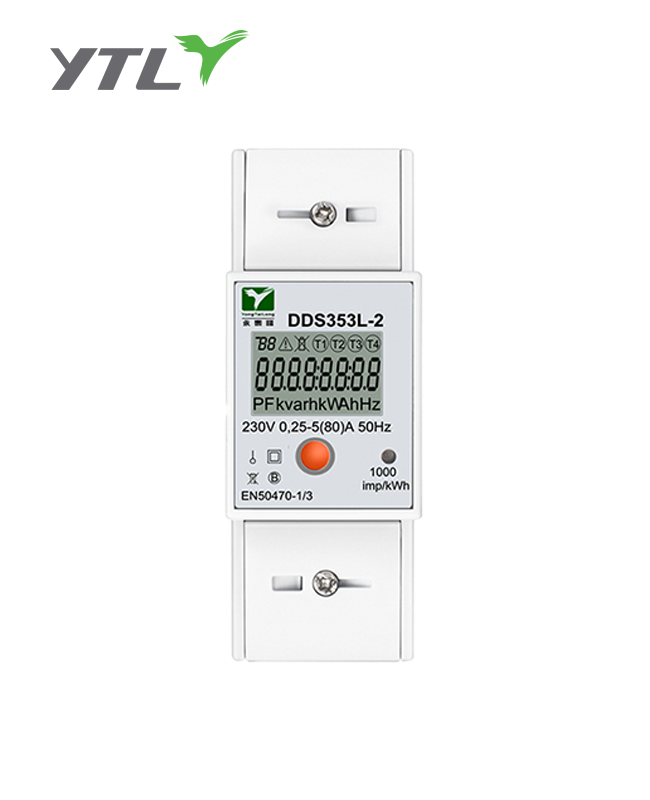
.png?imageView2/2/w/500/h/500/format/png/q/100 "YTL STS Prepaid Wi-Fine Energy Meter Single Phase Wall")
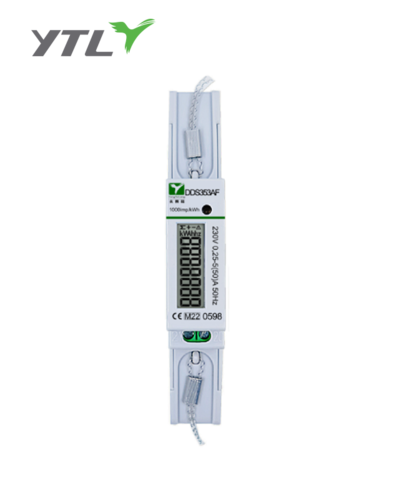
.png?imageView2/2/w/500/h/500/format/png/q/100 "YTL Single Phase Active Electronic Electricity Meter")