
 English
 简体中文
简体中文



The use of different measurement methods for electric energy meters (absolute value, algebraic sum, only counting forward and reverse directions separately) is mainly to adapt to different electricity consumption scenarios, meet the needs of fair trade, carry out refined management, and comply with technical specifications. The core lies in accurately reflecting the essence of electricity flow and the actual usage of users, especially in scenarios where there is reverse electricity (such as photovoltaic power grid connection, motor regenerative braking, reactive power compensation capacitor switching, etc.).
The following are the reasons and applicable scenarios for the existence of various measurement methods:
1. Absolute value measurement (Abs, | kWh |)
Principle: Regardless of the direction of the current (forward or reverse), the meter considers all the electrical energy flowing through it as positive and accumulates it.
Purpose:
Preventing electricity theft is the essential application of absolute value measurement in electric meters. If a user attempts to reduce billing readings by reversing the meter (reversing the meter), absolute value metering will add the measured amount of electricity (absolute value) at the time of reversal to the total electricity, rather than subtracting it. In this way, users' electricity theft behavior not only fails to reduce readings, but also increases them, playing a powerful deterrent and preventive role.
Applicable scenarios: Absolute value metering meters are mainly used for metering points of ordinary residents or commercial users who suspect or prevent electricity theft. Not suitable for users with legitimate reverse power generation (such as photovoltaics), as it will penalize the amount of electricity feedback from users back to the grid, which is also considered as active electricity.
2. Algebraic and metering/Net kWh metering
Principle: The electricity meter measures forward electricity (+kWh, usually taken from the grid) and reverse electricity (- kWh, usually fed to the grid) separately, but the final display and settlement are the algebraic sum of the two (forward electricity - reverse electricity=net electricity).
Purpose:
Fair settlement: The fair and mainstream way for electricity meters to handle bidirectional energy flow (most commonly for distributed photovoltaic users). Users pay for the net electricity consumption. If the user's electricity generation is greater than their electricity consumption (net electricity consumption is negative), they may receive electricity deduction or grid electricity charges (specific policies vary by region).
Reflecting actual net electricity demand: It truly reflects the net energy obtained by users from the public grid.
Applicable scenarios: The standard measurement method for the vast majority of grid connected distributed generation users, such as household photovoltaics and small-scale industrial and commercial photovoltaics.
3. Forward kWh Only
Principle: The electricity meter only measures the forward flow of electrical energy (flowing from the grid to the user), completely ignoring any reverse flow of electrical energy (the reverse energy meter is zero or not accumulated).
Purpose:
Preventing reverse interference: Electric meters are mainly used for pure electricity users to ensure that even if a brief and weak reverse current is generated due to certain reasons (such as excessive capacitive load, instantaneous regenerative braking of electric motors, wiring errors, etc.), it will not cause the meter to reverse or make measurement errors. To avoid users benefiting from unintentional, small amounts of reverse electricity (in areas where settlement is based on net electricity, small amounts of reverse electricity can lead to a decrease in settlement electricity).
Simplified measurement: This is a simple and reliable measurement method for users who have no reverse power generation capacity.
Applicable scenarios: Ordinary residents and commercial electricity users who do not have distributed power generation equipment and are not expected to generate significant reverse electricity. It is also the main way of traditional mechanical watches and early electronic watches.
4. Separate Forward/Reverse kWh measurement
Principle: The electricity meter independently and clearly measures and records the forward total electricity (+kWh) and reverse total electricity (- kWh). These two values are stored and displayed separately.
Purpose:
Fine measurement and settlement: The precise and comprehensive way for electricity meters to handle bidirectional energy flow. The power company can clearly see how much electricity users use from the grid and how much electricity they send to the grid.
Supporting complex electricity pricing policies: In many regions, policies stipulate that the electricity price consumed by users (grid electricity price) may not be equal to the purchase price of electricity feedback from users to the grid (grid electricity price). Separate metering of electricity meters is the basis for implementing this "dual track" electricity pricing or "net metering" policy, as independent data is required to calculate purchase and generation fees.
Data analysis and monitoring: Electric meters provide power companies with more detailed user electricity/generation behavior data for load analysis, network planning, power generation forecasting, anomaly detection (such as power generation equipment failures), etc.
Applicable scenarios: All grid connected distributed generation users (especially photovoltaic and wind power), especially those in regions where the "grid electricity price" policy is implemented (i.e. separate pricing on the generation side) or users who require detailed electricity/generation data. This is currently the standard configuration for smart meters when measuring photovoltaic users.
Different electricity consumption/generation behaviors require different measurement methods to ensure fair transactions between users and power companies. Photovoltaic users should not pay for the feedback electricity, and electricity thieves should be punished.
Adapting to technological development: The popularization of distributed energy (especially photovoltaics) has made bidirectional energy flow the norm, giving rise to the demand for meter generation and separate metering of positive and negative phases.
Refined management and policy implementation: Power companies and regulatory agencies require detailed data to manage the power grid, formulate and implement complex pricing and subsidy policies (such as separating grid electricity prices from electricity consumption prices).
Therefore, providing multiple measurement methods for electric energy meters is not redundant, but rather to accurately match various complex actual electricity consumption scenarios and commercial/regulatory needs, ensuring the accuracy, fairness, and effectiveness of electric energy measurement results. Smart meters usually have the ability to simultaneously record multiple data (such as forward active power, reverse active power, four quadrant reactive power, etc.) to meet the analysis and settlement needs of different scenarios.
.png?imageView2/2/w/500/h/500/format/png/q/100 "YTL Two Phase Three Wire Big counter Electricity Meter")
.png?imageView2/2/w/500/h/500/format/png/q/100 "YTL China Single Phase IC card Prepayment Electricity Meter")
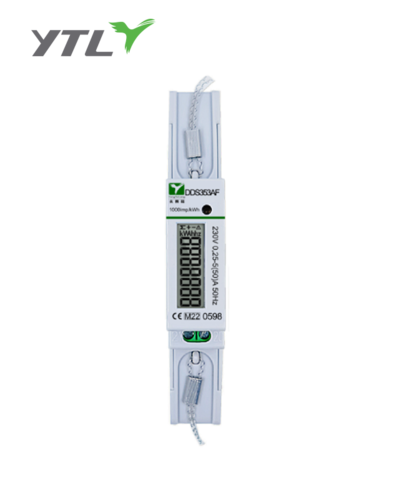
.png?imageView2/2/w/500/h/500/format/png/q/100 "YTL Single Phase Active Electronic Electricity Meter")