
 English
 简体中文
简体中文



1. Introduction to Watt Hour Meters
1.1 What is a Watt Hour Meter?
A watt-hour meter, also commonly referred to as an energy meter or electricity meter, is a highly specialized device that measures the amount of electrical energy consumed by a residence, a business, or an electrically powered device. Essentially, it is the utility company's cash register, accurately tracking the total electrical work done over a period of time.
Definition and Basic Function
The fundamental unit of measurement is the kilowatt-hour (kWh), which is equivalent to 1,000 watts of power used continuously for one hour. The meter's primary function is to continuously multiply the instantaneous voltage (V) and current (I) supplied to a load—which yields power (P, measured in watts)—and then integrate this power over time to calculate the total energy consumed (E, measured in watt-hours or kilowatt-hours).
| Key Term | Symbol | Unit of Measurement | Basic Definition |
|---|---|---|---|
| Power | P | Watts (W) | The rate at which electrical energy is transferred (how fast energy is used). |
| Time | t | Hours (h) | The duration over which power is used. |
| Energy | E | Watt-hours (Wh) / Kilowatt-hours (kWh) | Power multiplied by time (the total quantity of energy consumed). |
Why Accurate Energy Measurement Matters
The accuracy of a watt-hour meter is paramount. For utilities, it ensures fair compensation for the electricity generated and distributed. For consumers, accurate measurement guarantees they are only billed for the energy they genuinely consume, building trust and providing transparency in the billing process. High-precision meters minimize revenue loss for utilities due to measurement errors and protect consumers from overbilling.
1.2 Importance of Watt Hour Meters
Watt-hour meters serve as a crucial link between the energy supplier and the end-user, playing a vital role in the management and conservation of global energy resources.
Energy Consumption Monitoring
The most apparent importance is the ability to monitor energy consumption. Whether it's a household, a factory, or a renewable energy plant, the meter provides the raw data needed to understand usage patterns. This data is the foundation for:
- Load Profiling: Understanding peak and off-peak demand times.
- System Sizing: Correctly dimensioning electrical infrastructure and generation capacity.
- Resource Allocation: Ensuring the power grid has sufficient supply to meet demand.
Billing and Cost Management
The meter is the official instrument for billing and cost management. The periodic reading of the meter determines the amount a consumer owes. Furthermore, advanced meters enable Time-of-Use (TOU) billing, where electricity rates vary based on the time of day, encouraging consumers to shift usage away from peak hours to help stabilize the grid.
Energy Efficiency and Conservation
By providing a clear, quantifiable record of energy usage, meters are powerful tools for energy efficiency and conservation. Consumers and businesses can use meter data to:
- Identify Waste: Pinpoint appliances or processes that are disproportionately consuming energy.
- Track Improvements: Measure the effectiveness of energy-saving measures (e.g., installing LED lighting or better insulation).
- Promote Behavioral Change: Encourage conscious effort to reduce consumption, ultimately lowering electricity bills and reducing the overall carbon footprint.
2. How Watt Hour Meters Work
Watt hour meters operate by continuously monitoring the electrical energy flowing into a property. They translate the dynamic flow of electricity—a combination of electrical pressure and flow rate—into a cumulative number representing total energy consumed over time.
2.1 Basic Principles
The meter's core function is to capture two essential characteristics of the electricity supply and convert them into a single energy measurement.
Voltage and Current Measurement
The meter must simultaneously measure the two fundamental components of electricity:
- Voltage: This is the electrical potential difference, often described as the electrical "pressure" that pushes the charge through the circuit. It determines the potential for energy delivery.
- Current: This is the rate of flow of the electrical charge, often described as the volume of electricity passing through the circuit at any moment.
In modern digital meters, specialized electronic components called sensors continuously sample these two values thousands of times per second to ensure high accuracy.
Calculating Power and Energy
The meter uses the measured voltage and current to perform two subsequent calculations internally:
-
Power Determination: The meter first determines the rate at which energy is being used, which is known as Power (measured in Watts). This is found by multiplying the voltage and the current. For alternating current systems, the meter must also account for the Power Factor, which ensures that only the useful, or "real," power being consumed by the appliances is measured.
-
Energy Accumulation: The meter then continuously sums up the amount of power used over the total period of time. This cumulative total is the Energy measurement (measured in Watt-hours or Kilowatt-hours). This process of continuous summation allows the meter to keep a running tally of all the electricity consumed from the moment it was last reset or installed.
2.2 Key Components
Regardless of the type, every watt hour meter relies on specific components to perform the measurement and display the results.
Voltage and Current Sensing Mechanisms
These mechanisms are responsible for capturing the electrical signals from the supply lines:
- In Electromechanical Meters: These utilize fixed coils—a Voltage Coil connected across the supply and a Current Coil connected in line with the load. The magnetic fields generated by these coils interact to drive a physical rotating disk.
- In Electronic and Smart Meters: These use solid-state electronics, such as Shunt Resistors or Current Transformers, to sense the flow of current, and Voltage Dividers to sample the voltage. These components send proportional signals to the meter's processing chip.
Meter Register or Display
This is the user interface of the meter, translating the internal measurements into a number that the consumer or utility can read:
- Mechanical Register: Used in older electromechanical meters, this is a set of rotating numbered wheels driven by the meter's internal gears.
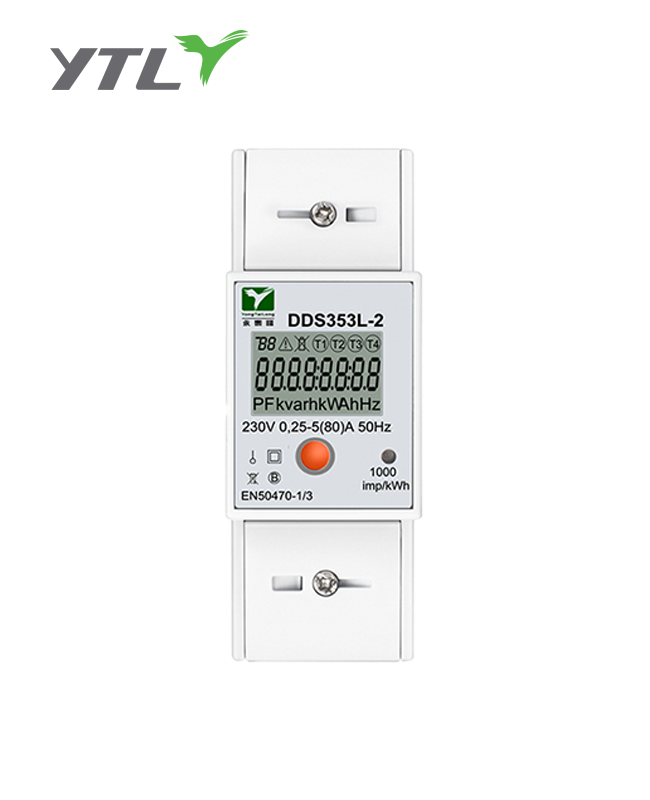
- Digital Display: Found in electronic and smart meters, this is typically a Liquid Crystal Display (LCD) screen that shows the cumulative total energy consumed in Kilowatt-hours, along with other real-time data like voltage and instantaneous power.
Calibration and Accuracy Mechanisms
All meters are built with internal systems designed to guarantee accurate billing:
- Calibration: During manufacturing, meters are precisely adjusted against known standards. For digital meters, this involves setting electronic factors in the meter's memory. This ensures the meter's output matches the actual energy consumed.
- Accuracy Rating: Meters are manufactured to meet high international standards and are assigned an Accuracy Class (e.g., Class 1.0 or Class 0.2S). This rating guarantees the measurement will not deviate from the true value by more than a specified small percentage across its operational range.
3. Types of Watt Hour Meters
The evolution of electricity metering has progressed through several generations, resulting in three primary types of watt hour meters currently in use across the globe: electromechanical, electronic, and smart meters.
3.1 Electromechanical (Induction) Meters
The electromechanical meter represents the oldest and most traditional form of energy measurement, recognizable by its spinning disk.
Construction and Working Principle
These meters operate on the principle of electromagnetic induction. Two sets of coils—a voltage coil (potential coil) and a current coil—are mounted on a soft iron core. The magnetic fields produced by these coils interact with each other and induce eddy currents in a rotating aluminum disk. The interaction of the magnetic fields and the eddy currents produces a torque that causes the disk to rotate. The speed of rotation is directly proportional to the power (Watts) being consumed. This disk is connected via a gear train to a mechanical register that records the total energy consumed in kilowatt-hours.
Advantages and Disadvantages
| Feature | Advantage | Disadvantage |
|---|---|---|
| Durability | Long lifespan and high tolerance for voltage spikes. | Susceptible to mechanical wear and tear over decades of use. |
| Simplicity | Easy to verify operation visually (the disk is spinning). | Requires manual reading by utility personnel (high operational cost). |
| Measurement | Reliable for measuring basic energy consumption. | Lower accuracy class compared to digital meters; can be less sensitive to low loads. |
| Features | No internal power source needed for metering. | Cannot record complex data like peak demand, Time-of-Use rates, or power quality. |
Applications
Electromechanical meters are primarily found in legacy installations, older residential properties, or in regions where the cost of infrastructure upgrades to digital systems is prohibitive. They are being phased out globally in favor of more advanced digital alternatives.
3.2 Electronic (Digital) Meters
Electronic meters, often called digital meters, mark a significant technological leap, replacing magnetic induction with digital signal processing.
Construction and Working Principle
Instead of coils and a spinning disk, digital meters use highly accurate electronic components, such as a Shunt resistor or Current Transformer for current measurement and a Voltage Divider for voltage measurement. These analog signals are passed through an Analog-to-Digital Converter (ADC) and processed by a dedicated Microcontroller or Digital Signal Processor (DSP). This processor executes the power and energy calculation (Watts integrated over time) and stores the resulting data in internal memory before displaying it on a Liquid Crystal Display (LCD).
Advantages (Accuracy, Features) and Disadvantages
| Feature | Advantage | Disadvantage |
|---|---|---|
| Accuracy | High accuracy class (often 1.0 or better) and excellent sensitivity to low power loads. | Can be susceptible to electrical noise and electromagnetic interference if poorly shielded. |
| Data Richness | Can measure and store multiple parameters (Voltage, Current, Power Factor, Frequency). | Requires a small amount of power for internal electronics, though typically negligible. |
| Reliability | No moving parts, eliminating mechanical wear and tear. | The electronic components have a definite lifespan, though typically long. |
| Features | Enables implementation of Time-of-Use (TOU) tariffs and remote data collection readiness. | Often requires specialized equipment or training for field testing and maintenance. |
Applications
Digital meters are the current standard for metering and are widely used in residential, commercial, and industrial settings where reliable, multi-functional, and accurate energy data is required but advanced communication features are not yet necessary.
3.3 Smart Meters
Smart meters are the latest evolution, essentially a digital meter with integrated two-way communication capabilities.
Advanced Features (Remote Reading, Communication)
The distinguishing feature of a smart meter is its ability to communicate wirelessly with the utility's network infrastructure, known as the Advanced Metering Infrastructure (AMI). This two-way communication allows the meter to:
- Transmit Data Remotely: Utility companies can read the meter automatically without sending personnel (Automatic Meter Reading - AMR).
- Receive Commands: Utilities can remotely update the meter's firmware, change billing parameters, or even connect/disconnect service.
- Provide Real-Time Feedback: Consumers can access near real-time energy usage data, often through a secure online portal or in-home display.
Benefits for Consumers and Utilities
| Stakeholder | Key Benefit |
|---|---|
| Consumers | Real-time usage awareness leads to better cost control. Faster outage detection and restoration. Enables integration with home energy management systems. |
| Utilities | Eliminates manual reading costs. Enables demand response programs (managing load during peak times). Improves grid reliability and efficiency through better data. Faster identification and resolution of faults. |
Data Privacy and Security Considerations
Because smart meters collect and transmit detailed energy consumption data, data privacy and security are critical design considerations. Manufacturers must build in robust mechanisms, including:
- Encryption: Protecting the data during transmission between the meter and the utility network.
- Authentication: Ensuring only authorized systems can access or control the meter.
- Tamper Resistance: Physical and electronic safeguards to prevent unauthorized manipulation of the meter's operation or readings.
4. Applications of Watt Hour Meters
Watt hour meters are fundamental instruments whose applications are critical across all sectors of energy consumption, from the smallest residential units to the largest industrial complexes and renewable energy generation sites.
4.1 Residential Use
In the residential sector, the watt hour meter is the primary tool for translating electricity usage into billable costs and enabling informed energy management.
- Monitoring Home Energy Consumption:
This is the core function. The meter accurately records the total electrical energy consumed by a household in units of kilowatt-hours. These readings allow consumers to track daily, monthly, or annual usage trends, providing a clear picture of their consumption habits. - Identifying Energy-Intensive Appliances:
Advanced meters, particularly smart meters or specialized sub-meters, can provide detailed data that helps residents pinpoint which appliances (such as air conditioning units, water heaters, or clothes dryers) are responsible for the largest portion of their electricity consumption. This insight is crucial for prioritizing energy-saving efforts. - Reducing Electricity Bills:
By having access to accurate usage data, consumers can make targeted changes to their habits, such as shifting high-power usage to off-peak hours. This enables them to take advantage of various rate structures, like Time-of-Use tariffs, leading directly to cost savings.
4.2 Commercial and Industrial Use
For commercial enterprises and large-scale industrial operations, accurate energy metering is essential for operational efficiency, cost control, and financial accounting.
- Measuring Energy Usage in Businesses and Factories:
Commercial and industrial facilities typically operate using three-phase power and require meters built to handle significantly higher voltage and current loads. These meters ensure high-precision measurement necessary for large-scale electrical activities and accurate revenue collection. - Load Profiling and Energy Management:
Sophisticated electronic and smart meters can record a detailed Load Profile, showing exactly when electricity demand peaks and dips throughout the day. Businesses utilize this data for critical functions:- Optimizing the operating schedules of machinery and equipment.
- Managing Maximum Demand to avoid incurring high penalty charges from the utility.
- Forecasting energy needs for better budgeting and resource planning.
- Cost Allocation and Billing:
In multi-tenant commercial buildings or large industrial campuses, sub-metering is employed. Sub-meters allow for the precise measurement of energy consumed by individual tenants, departments, or production lines. This ensures fair, transparent cost allocation and accountability across the organization.
4.3 Renewable Energy Systems
As the world transitions to sustainable power sources, the meter plays a pivotal role in integrating decentralized generation into the grid.
-
Tracking Energy Production from Solar Panels, Wind Turbines:
Dedicated generation meters are installed to accurately measure the total amount of electricity produced by renewable energy sources like solar photovoltaic panels or wind turbines. This data is vital for verifying system performance, checking efficiency, and satisfying regulatory reporting requirements. -
Grid Integration and Net Metering:
Bi-Directional Meters are the essential technology supporting the integration of customer-owned generation with the utility grid. These meters are capable of two distinct measurements:- Energy Delivered: Electricity flowing from the utility grid to the customer (consumption).
- Energy Received: Excess electricity flowing from the customer's generator back to the utility grid (export).
This dual measurement allows for Net Metering, where the customer is only billed for (or credited for) the net difference between consumption and production, strongly encouraging the adoption of distributed renewable energy.
5. Choosing the Right Watt Hour Meter
Selecting the appropriate watt hour meter is a critical decision that impacts billing accuracy, system longevity, and the potential for advanced energy management. The choice must align with the specific electrical requirements and application environment.
5.1 Factors to Consider
When specifying an energy meter, several technical and practical factors must be thoroughly evaluated:
| Factor | Description and Importance |
|---|---|
| Accuracy Class | This is a fundamental metric indicating the meter's maximum allowable percentage of error. Common classes are 1.0, 0.5, or the highly precise 0.2S (often required for large industrial or utility billing). Choosing a meter with the correct accuracy class ensures fair billing and reliable data acquisition. |
| Voltage and Current Ratings | The meter must be compatible with the electrical system's specifications. This includes the nominal voltage (e.g., 120 Volts, 240 Volts, 480 Volts) and the maximum current (Amperes) the meter is designed to safely handle. Mismatching these ratings can lead to damage or inaccurate readings. |
| Single-Phase vs. Three-Phase | Single-phase meters are suitable for most residential and small commercial applications. Three-phase meters are mandatory for large commercial, industrial, and heavy-load systems, as they are designed to measure the power flow across three separate circuits simultaneously. |
| Communication Protocols | For smart and electronic meters, consider the required method of data communication. Protocols like Modbus, DLMS/COSEM, or wireless options (e.g., cellular, LoRaWAN) ensure the meter can integrate seamlessly with the utility's or the building's energy management system. |
| Environmental Conditions | The meter's ingress protection (IP) rating must be appropriate for its location. Outdoor installations require meters designed to resist exposure to moisture, dust, and temperature extremes. Harsh industrial environments may also require enhanced resistance to vibration and electromagnetic interference. |
5.2 Installation and Maintenance
Proper installation and routine maintenance are essential to ensure the meter's safety, accuracy, and operational lifespan.
Safety Precautions
Working with electrical metering equipment involves handling high voltages and currents. Safety must be the highest priority:
- De-Energization: The power to the circuit must always be disconnected at the main breaker before any installation or maintenance work begins.
- Verification: A certified electrician or technician must use a voltage tester to confirm that the circuit is completely de-energized.
- Personal Protective Equipment (PPE): Appropriate safety gear, including insulated gloves, safety glasses, and voltage-rated tools, must be used to mitigate the risk of electrical shock.
- Code Compliance: All installations must strictly adhere to national and local electrical safety codes and utility requirements.
Proper Wiring and Connections
Accurate measurement hinges on correct wiring:
- Manufacturer's Diagram: Always follow the specific wiring diagram provided by the meter manufacturer for the type of installation (single-phase, three-phase, direct-connect, or transformer-rated).
- Secure Connections: All wire connections to the meter terminals must be tight and secure to prevent overheating, arcing, and contact resistance, which can lead to measurement errors or meter failure.
- Phase Sequence: For three-phase meters, the correct phase sequence must be maintained to ensure the meter accurately measures the power factor and total energy.
Calibration and Testing
To maintain billing integrity and performance:
- Initial Verification: All meters, particularly those used for revenue metering, must be tested and certified by recognized authorities before installation.
- Periodic Testing: Utilities and regulatory bodies mandate periodic re-calibration or field testing, especially for industrial and high-value meters. This process verifies that the meter's accuracy has not drifted over time due to component aging or environmental factors.
- Tamper Detection: Modern electronic and smart meters include internal features to detect and record attempts at tampering or unauthorized access, safeguarding the revenue stream.
6. Advanced Features and Technologies
The evolution from basic electronic meters to advanced smart meters has introduced powerful capabilities that transform how energy is measured, managed, and consumed.
6.1 Automatic Meter Reading (AMR)
Automatic Meter Reading represents the first step toward remote data collection, replacing costly and error-prone manual visits.
- Remote Data Collection:
AMR systems enable the meter to automatically capture usage data and transmit it to the utility's central system. This transmission often happens periodically (e.g., daily or monthly) and can use various methods like radio frequency, power line carrier, or mobile communication (drive-by reading). - Improved Efficiency and Accuracy:
By eliminating human error associated with manual transcription, AMR significantly boosts billing accuracy. Furthermore, it drastically lowers the utility's operational costs by reducing the need to dispatch personnel to every meter location. However, AMR is typically a one-way communication system—the meter sends data out, but the utility cannot send control commands back.
6.2 Smart Metering Infrastructure (AMI)
Advanced Metering Infrastructure is the sophisticated, two-way communication system that defines a true smart grid. It moves beyond simple data collection to enable comprehensive grid management and dynamic customer interaction.
- Two-Way Communication:
AMI is characterized by its bidirectional communication capability. This means the meter not only transmits detailed energy usage data (often in 15-minute or hourly intervals) back to the utility, but the utility can also send commands and information back to the meter. - Real-Time Pricing and Demand Response:
Two-way communication allows utilities to implement real-time pricing and Time-of-Use tariffs with high flexibility. This capability is foundational to Demand Response programs, where the utility can send signals to the meter (or directly to smart appliances) to temporarily reduce load during system-wide peak demand, helping to prevent blackouts and stabilize the grid. - Remote Service Management:
Utilities can remotely connect or disconnect service, update meter firmware, and change metering configurations without needing a technician to visit the premise, dramatically improving customer service response times and reducing field service costs.
6.3 Data Analytics and Energy Management
The sheer volume of granular data collected by smart meters is the raw material for advanced energy intelligence, benefiting both the utility and the end-user.
- Identifying Patterns and Trends:
Smart meter data, when processed through specialized analytic software, can identify subtle consumption patterns. Utilities use this to accurately forecast regional load, optimize generation resources, and detect potential issues like energy theft or faulty equipment within the grid. - Optimizing Energy Consumption (Non-Intrusive Load Monitoring):
For consumers, data analytics enables detailed Load Disaggregation (also called Non-Intrusive Load Monitoring). This technology can analyze the aggregate electricity waveform measured by the meter and infer the consumption of individual appliances within the home or business. This provides actionable insights, such as alerts that a refrigerator is consuming more power than normal, signaling a maintenance need. - Enhancing Power Quality Monitoring:
Smart meters often measure and report on power quality issues, such as voltage sags, swells, and momentary interruptions. This information allows utilities to proactively identify and fix grid problems before they lead to widespread outages or equipment damage for consumers.
7. Troubleshooting Common Issues
While watt hour meters are designed for long-term reliability, various issues can arise, leading to inaccurate readings, operational malfunctions, or safety concerns.
7.1 Inaccurate or High Readings
A common concern is a sudden, unexplained spike in the energy bill, which can lead customers to suspect the meter is running too fast.
- Standby Power Consumption: Modern smart meters are significantly more sensitive than older mechanical models and accurately record the small currents consumed by appliances even when they are "off" (e.g., TVs, chargers, routers). This cumulative standby power can account for a perceived increase in usage compared to older meters.
- Creep Test: To check for a fundamental meter fault, perform a basic creep test:
- Turn off all appliances and lighting in the premises, including unplugging any devices with standby lights.
- Observe the meter. If an older mechanical meter's disc continues to rotate or a digital meter's consumption indicator continues to flash/increment, a fault or external load (like a wiring short or neighbor tapping the line) may exist.
- Faulty Appliances or Wiring: An increase in consumption is often due to a change in usage habits or a malfunctioning high-power appliance (e.g., a refrigerator with a failing compressor or a water heater element shorting out). These problems increase actual energy use, making the meter appear to run faster.
7.2 Malfunctions and Display Errors
Electronic and smart meters rely on internal components and communication networks, which can sometimes fail.
- No Display/Blank Screen: This usually indicates a problem with the auxiliary power supply to the meter or an internal component failure.
- Action: Verify that the main power supply to the building is active. If the meter remains blank, a professional inspection is required, as the meter's sensing function may have failed.
- Error Codes: Digital meters often display specific alphanumeric codes (e.g., "Error," "Fault," or a numbered code).
- Action: Consult the meter's user manual or contact the utility company immediately. These codes indicate a wide range of issues, from loss of communication with the utility to internal hardware faults or tamper attempts.
- Loss of Communication (Smart Meters): The meter records data correctly but cannot transmit it to the utility's system.
- Action: The utility will usually detect this remotely and attempt a system reset. If the communication link is physically damaged, a service technician will need to repair the connection hardware or antenna.
7.3 When to Call a Professional
Only utility personnel or licensed electricians should ever service or attempt to repair a meter or the service wiring connected to it due to severe shock hazards.
| Symptom | Professional to Call | Reason |
|---|---|---|
| Physical Damage | Utility or Electrician | Visible cracks, corrosion, or burnt marks on the meter base or wiring indicate immediate danger and a potential fire hazard. |
| No Power | Utility | If the main breaker is on but there is no power to the house, the problem may be upstream at the meter or the service line, which is the utility's responsibility. |
| Burning Smell or Noise | Emergency Services / Utility | A smell of burning plastic or a buzzing/crackling sound coming from the meter or breaker panel indicates arcing or overheating, requiring immediate power shut-off and emergency attention. |
| Suspected Fault | Utility | If initial tests (like the Creep Test) confirm the meter is inaccurate or faulty, the utility must verify and replace it, as they own the metering equipment. |
8. Conclusion and The Future of Metering
8.1 Summary: A Foundation for Modern Energy
The watt hour meter has evolved from a simple mechanical device for utility billing into the sophisticated digital cornerstone of the modern electric grid.
- From Analog to Digital: The journey began with the Electromechanical Induction Meter, a reliable but limited technology. It advanced through Electronic Meters which brought accuracy and data logging, culminating in Smart Meters (AMI), which provide real-time, two-way communication.
- Defining the Infrastructure: The difference between one-way AMR (Automated Meter Reading) and bidirectional AMI (Advanced Metering Infrastructure) marks the shift from passive data collection to active grid management.
- The Power of Data: Smart meter data analytics now enables advanced features like load forecasting, power quality monitoring, and non-intrusive load monitoring, benefiting both utilities and consumers.
8.2 The Future of Watt Hour Meters
The metering landscape is not static; it is rapidly evolving to support the challenges and opportunities of the Smart Grid and a decentralized energy future.
- Integration with Renewable Energy and EVs: The rise of rooftop solar and electric vehicles (EVs) is driving the need for bidirectional metering. Future meters will not only measure consumption but also the electricity a consumer sells back to the grid, managing the complex flow of energy in two directions.
- Enhanced Cybersecurity: As meters become highly connected IoT devices, robust cybersecurity measures will be paramount to prevent data breaches and grid attacks, ensuring the integrity of both billing and grid operations.
- AI-Driven Energy Management: Future meters will integrate more tightly with Artificial Intelligence (AI) and Machine Learning (ML). This will enable predictive maintenance (fixing a meter before it fails) and hyper-personalized energy consumption feedback for users, moving beyond simple data to offer genuine energy-saving coaching.
- The Role in the Smart Home and City: Meters will become central gateways for energy data in smart homes and smart cities, enabling seamless control of appliances, better coordination of distributed energy resources, and more efficient public energy infrastructure.
The modern watt hour meter is no longer just a billing tool; it is a critical sensor that is fundamental to the world's transition to a more efficient, resilient, and sustainable energy system.
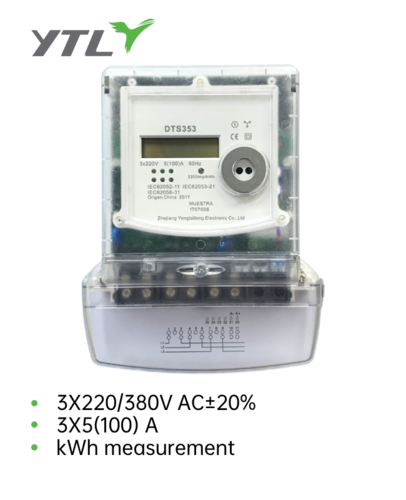
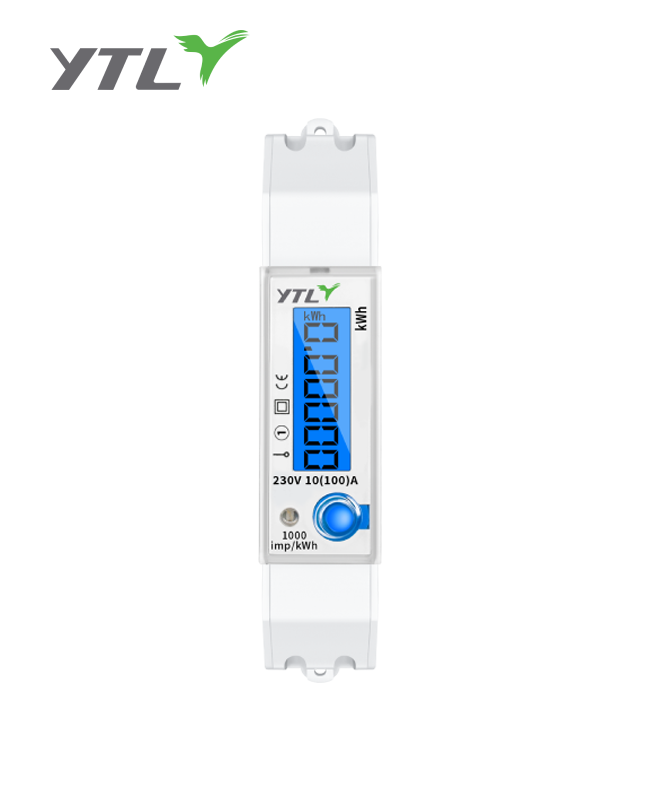
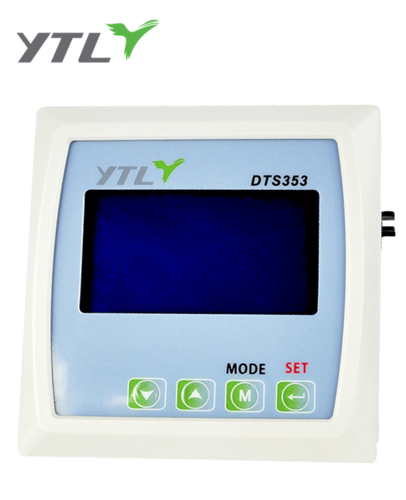
.jpg?imageView2/2/w/500/h/500/format/png/q/100 "YTL Company DTS353C DIN Rail 3P 4 Model Electricity Meter MID")
.png?imageView2/2/w/500/h/500/format/png/q/100 "YTL Single Phase Active Electronic Electricity Meter")